Ornamental grasses for garden hedging - natural privacy solutions
Trawy ozdobne do ogrodu to praktyczny sposób na nowoczesny „żywy parawan”, który daje prywatność, porządkuje strefy i wygląda dobrze przez większość roku. Sprawdzą się w ogrodach przydomowych, gdy zależy Ci na małej pielęgnacji, sezonowej dekoracyjności i szybkim efekcie bez regularnego formowania.
TL;DR
- Trawy ozdobne mogą pełnić funkcję żywopłotu, tworząc naturalny ekran i zwiększając prywatność.
- Większość traw jest mało wymagająca i zwykle potrzebuje jednego cięcia wiosną.
- Gatunek dobiera się do wysokości „żywopłotu” oraz stanowiska, bo trawy różnią się potrzebami słońca i wilgoci.
- Wysokie trawy tworzą tło i osłonę, średnie budują przegrody, a niskie sprawdzają się jako obwódki i akcenty.
- Jesienią warto wiązać wysokie kępy i zabezpieczać wrażliwsze odmiany, szczególnie młode i doniczkowe.
Published
30 October 2026
Share this article


 Copied
TOC
- Ornamental grasses for garden hedging - natural privacy solutions
- What is ornamental grass?
- Which grasses to choose for hedging?
- What are the requirements of ornamental grasses for hedging?
- What sites do ornamental grasses prefer?
- Pruning grasses - when to do it?
- What to do with ornamental grass before winter?
- Ornamental grass hedge step by step
- Tall ornamental grasses for hedging examples
- Medium grasses for garden hedging
- Low grasses for gardens
- Ready to transform your outdoor space with professional garden design?
- Frequently asked questions about grasses for hedging
- How to care for ornamental grass hedges?
- When is the best time to plant ornamental grasses?
- How much space should I leave between grass plants in a hedge?
- Do ornamental grasses attract wildlife?
- Can I plant ornamental grasses in containers?
- How long do ornamental grasses live?
- Are ornamental grasses deer resistant?
- Can ornamental grass hedges provide year-round privacy?
- How fast do ornamental grass hedges grow?
- Do I need to fertilize ornamental grasses regularly?
Ornamental grasses for garden hedging - natural privacy solutions
Ornamental grasses for gardens aren't just decoration – they're also a way to create an original hedge that provides privacy and space for plant development. Discover the benefits of ornamental grasses and check which ones will work in your modern garden design!
In this article you'll learn:
- Why choose ornamental grasses for your garden
- What are the biggest advantages of grasses as hedging
- Which species work best for tall, medium and low hedges
Get inspired by natural privacy solutions and discover how to use ornamental grasses in contemporary landscape design!

What is ornamental grass?
Ornamental grass is a group of decorative plants that includes numerous species and varieties used in horticulture for their striking habit, leaf color and movement in the wind. Each ornamental grass species has its unique characteristics – some form compact clumps, others reach impressive heights and sway like waves.
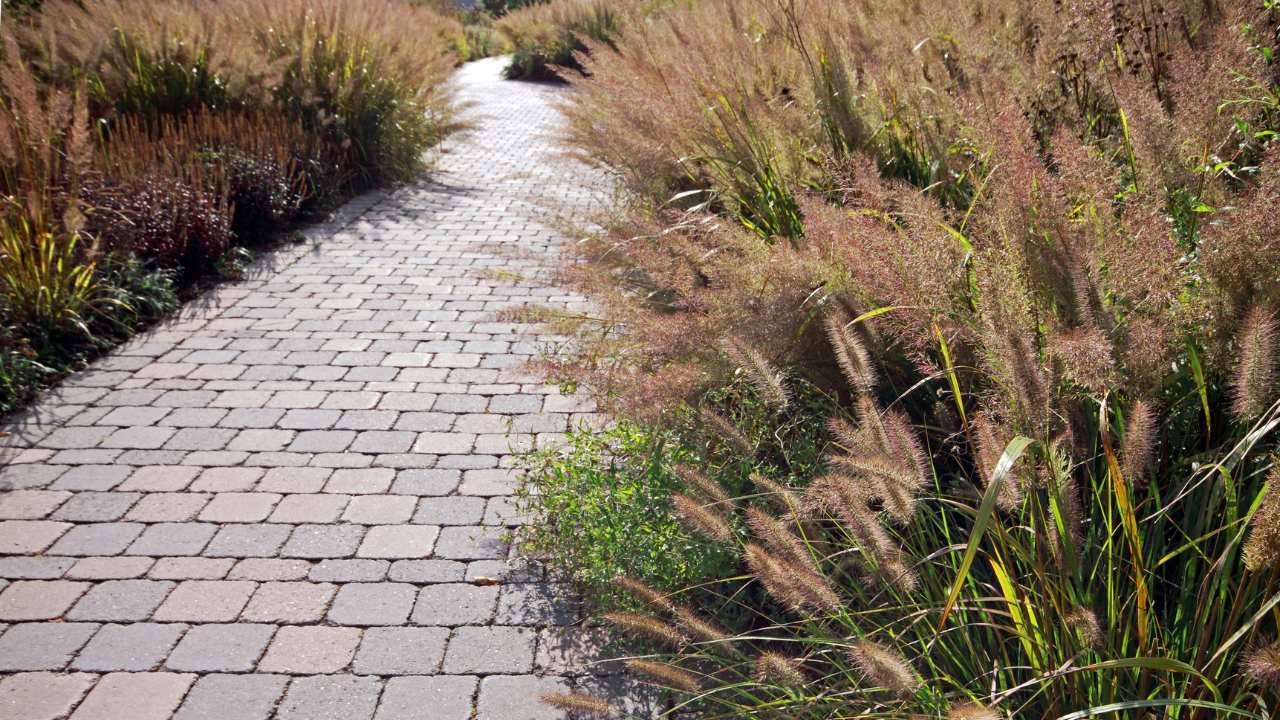
- Beautiful ornamental grasses swaying in the breeze, creating dynamic movement in contemporary landscape design
- Year-round decoration – ornamental grasses delight not only in summer, but also in autumn and winter, when their dried stems add lightness and structure to the garden.
- Low maintenance – most species require minimal care – just one cutting in spring and occasional fertilization.
- Universal applications – they work well in gardens, along pathways, on terraces, in containers or as arrangements by fences – they suit every garden design style.
- Unique atmosphere – ornamental grasses bring a touch of exoticism and lightness to the garden. Their gently rustling leaves create a unique atmosphere that evokes vacation moments in sunny Greece – relaxation, peace and nature at its finest.
Most of these plants have minimal soil requirements, making them easy to grow and extremely versatile in garden arrangements.
Which grasses to choose for hedging?
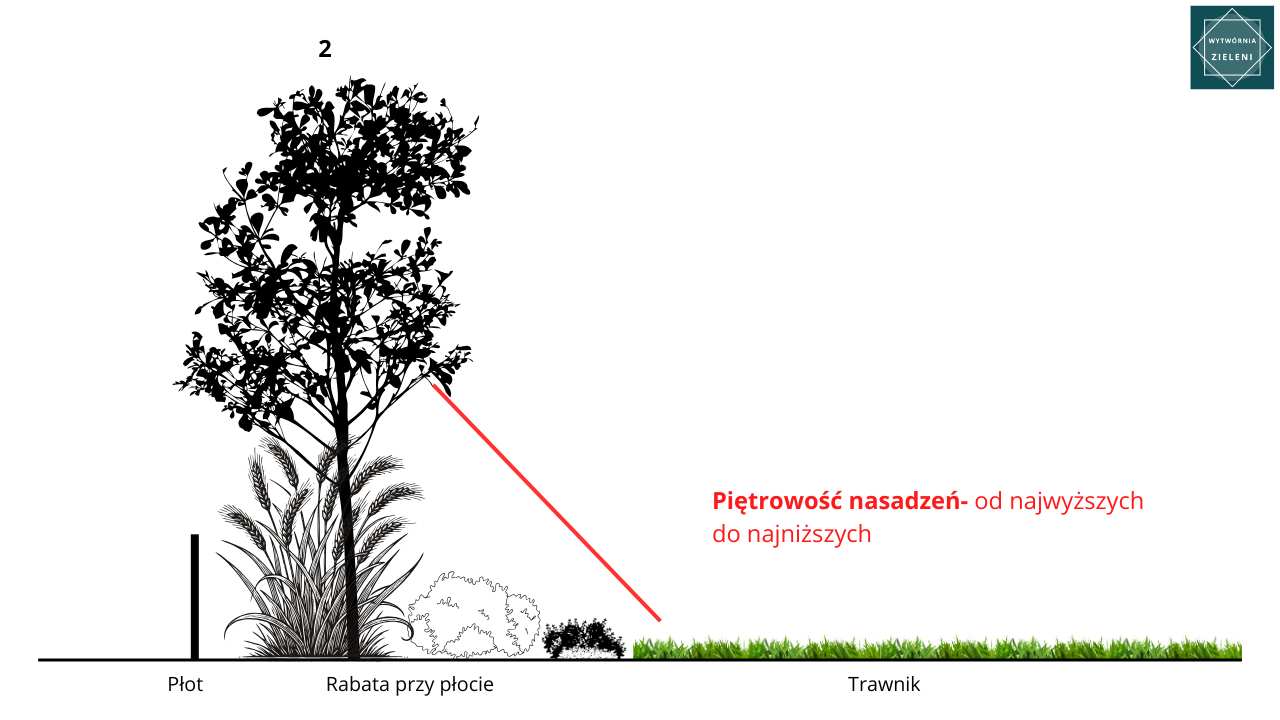
When choosing ornamental grasses for your garden, it's worth following several key criteria that affect visual impact, ease of cultivation and adaptation to space:
- Grass size - Match plants to the garden scale. Low ornamental grass, like Stipa pony tails, works great for garden beds or borders. Medium grasses, like Miscanthus gracillimus or Rotsilber, create light partitions. Tall ornamental grasses, e.g. giant Miscanthus, work for hedges or as backgrounds for lower plants.
- Site requirements - Pay attention to whether the chosen grass needs sun, partial shade, moisture or dry substrate. For example, Imperata cylindrica Red Baron requires moister and fertile sites, while Stipa pony tails grows better in dry and sunny places.
- Growth rate and final effect - Some grasses quickly reach full height (e.g. giant Miscanthus), others need several seasons. If you want quick results, choose fast-growing varieties from nurseries with well-developed root systems.
- Plant habit and form - Grasses can form compact clumps, like Gracillimus, or looser, more airy forms, like Stipa. Choose a form adapted to your garden style – naturalistic, modern or classic.
- Is the grass expansive? - Watch out for varieties that may spread excessively. Miscanthus usually forms compact clumps and isn't expansive, but some grass species (e.g. some Panicum or Pennisetum) may need limitation over time.

When designing your garden, it's worth choosing appropriate grasses – you gain not only beautiful decoration, but also a functional garden element. Understanding proper garden zones planning helps create cohesive landscapes – so it's worth taking time to choose those really suited to your needs.
What are the requirements of ornamental grasses for hedging?
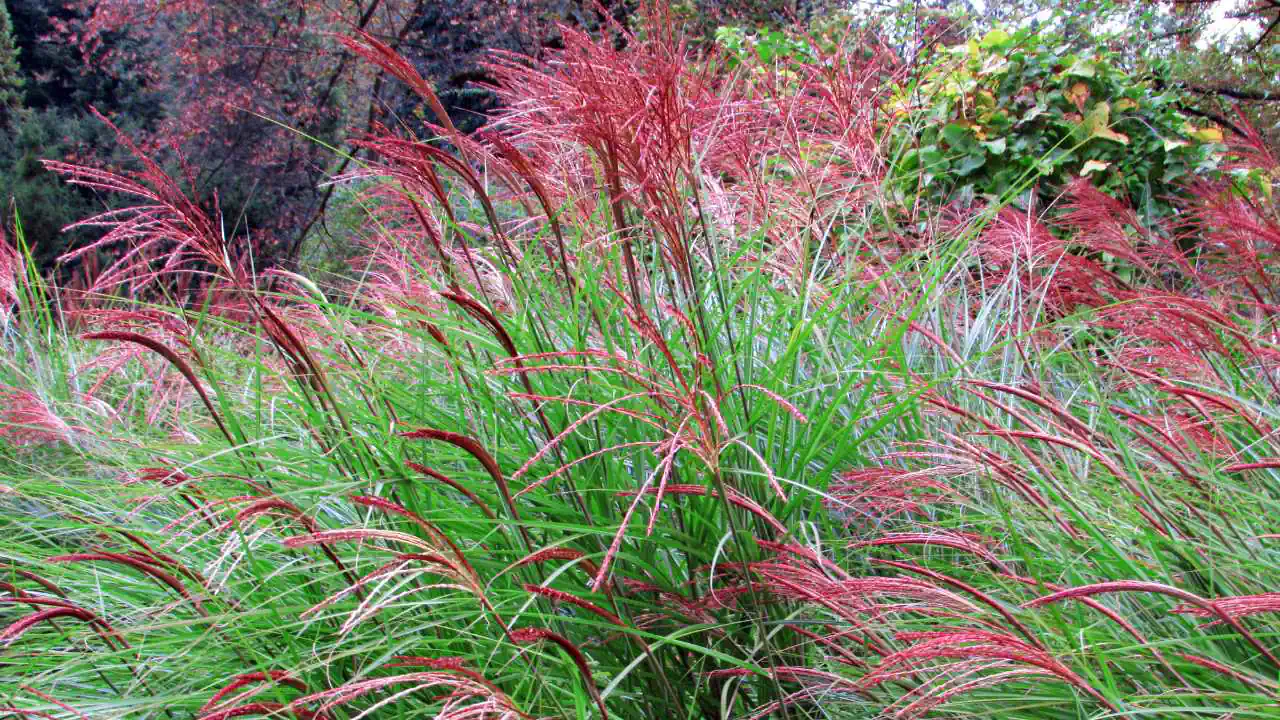
Ornamental grass requirements differ depending on species, however most ornamental grasses cope well even in difficult conditions. Grasses should be planted in well-draining soil, and young plants should be supported with watering, especially during drought periods.
What sites do ornamental grasses prefer?
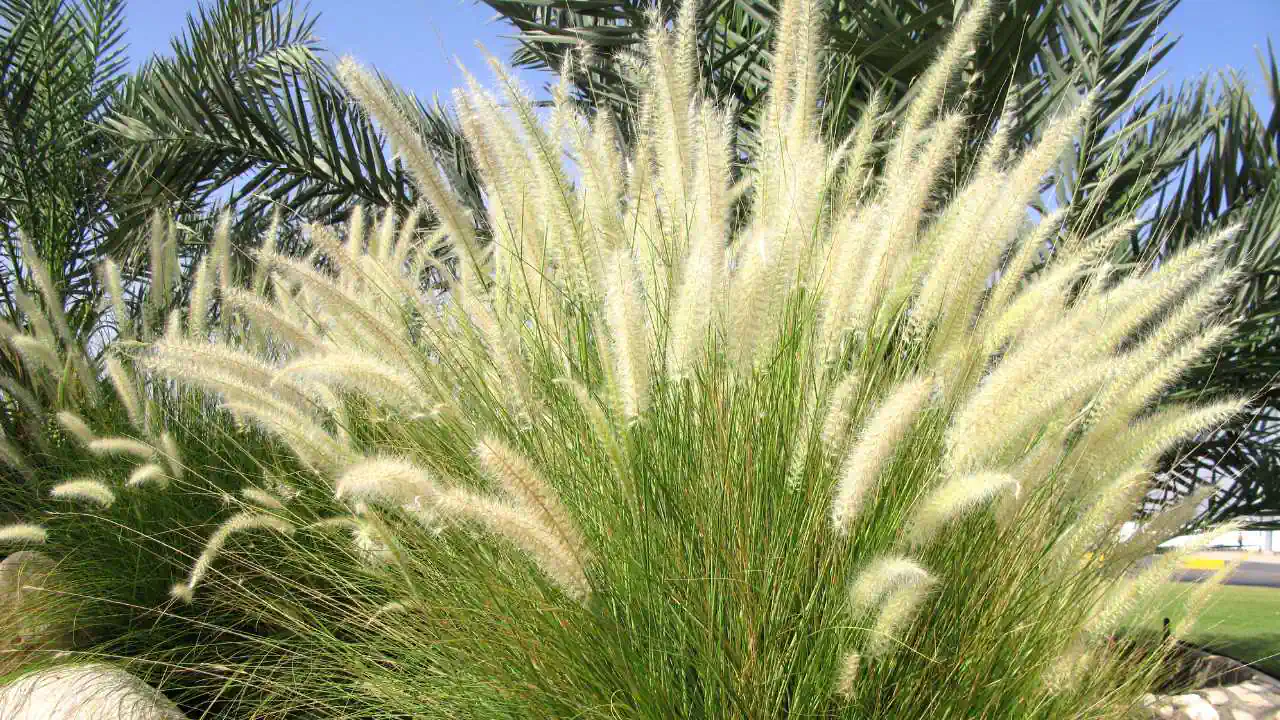
Ornamental grasses grow in sunny or lightly shaded locations. They work perfectly in various parts of the garden, along paths, in flower beds, and even on balconies or in containers. It's worth checking the needs of specific species before planting.
Pruning grasses - when to do it?
Ornamental grasses shouldn't be cut during the season – it's better to leave them until spring, when their dried stems serve a protective function. In early spring they should be cut to 2-4 inches (5-10 cm) high before they begin new growth. It's best to plant them where this annual procedure will be easy to perform.
What to do with ornamental grass before winter?
Before winter, it's worth tying taller grasses into bundles, which protects their center from moisture and rot. Plants can be protected from freezing with a layer of mulch, especially young seedlings or those growing in containers. If you want to create an effective perennial composition, take care of grass protection from frost from the first year.
Ornamental grass hedge step by step

Ornamental grasses are an excellent choice for a natural screen in the garden. Here's simple instruction on how to plant an ornamental grass hedge step by step:
- Choose appropriate species - Tall and dense varieties work best, e.g. miscanthus, which quickly create a green wall. You can also combine different grass clumps of varied height and texture.
- Plan the planting line - Mark the location along garden paths, fencing or as patio screening. Ensure proper spacing between plants – usually 24-40 inches (60-100 cm), depending on species.
- Prepare the planting site - Remove weeds and loosen soil. If needed, add compost or fertilizer to ensure a good start. For challenging soils, consider soil quality improvement techniques.
- Plant the grasses - Dig holes slightly larger than the root ball and place seedlings at the same depth they grew before. Backfill with soil, lightly compact and water thoroughly.
- Care for young plants - In the first season, water regularly and control weeds. Over time, the grass hedge will require only basic maintenance.
Such a hedge grows quickly, looks modern and doesn't need shaping. Additionally, it's perfect for defining garden areas and creating natural privacy screening – an ideal choice for any garden.
Tall ornamental grasses for hedging examples
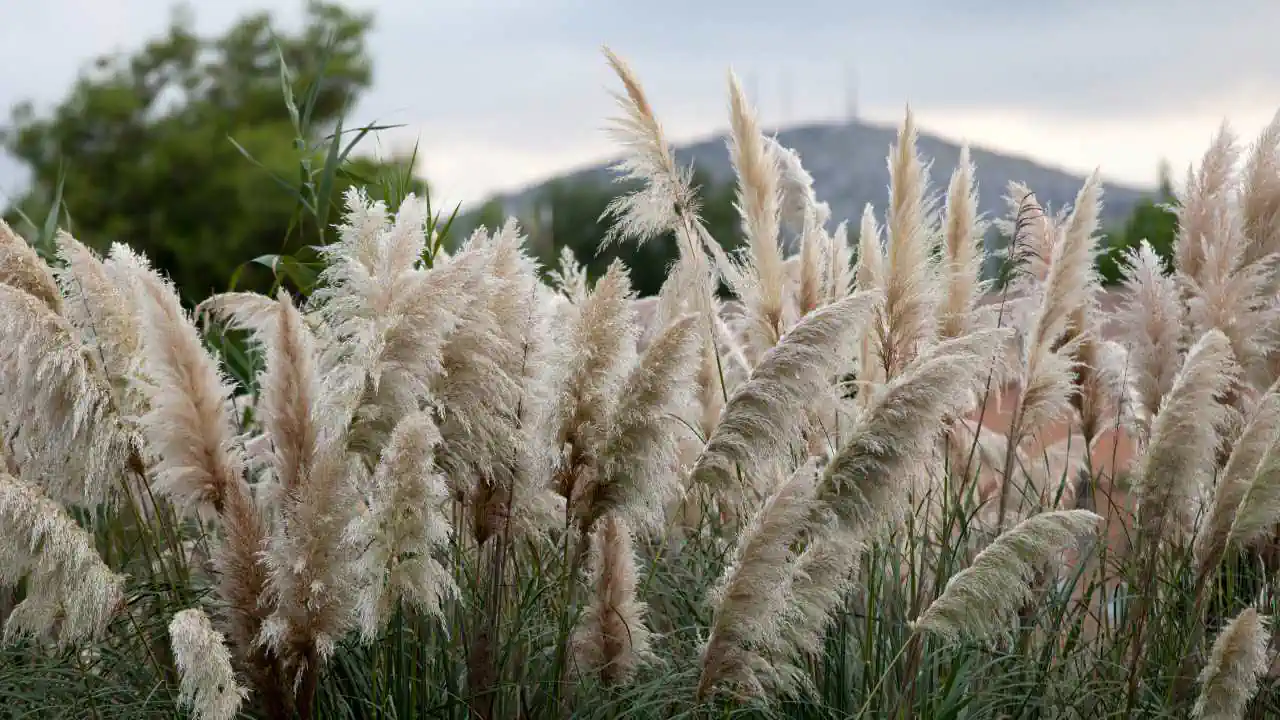
Giant Miscanthus (Miscanthus × giganteus)
Tall, clumping grass reaching 6-13 feet (2-4 m), with upright habit and striking, arching leaves. Forms spectacular, exotic-looking clumps that are garden ornaments until winter.
Height: 6-13 feet (2-4 m) Habit: clumping, upright, leaves arching gracefully Ornamental value: wide leaves with white midrib, golden in autumn; spectacular silvery-cream plumes (September-October) Site and hardiness: sunny, sheltered; fertile, well-draining, moderately moist soil; fully hardy (zone 5), young clumps worth protecting in winter
Ravenna grass (Saccharum ravennae)
Spectacular, tall grass reaching 8 feet (2.5 m) resembling pampas grass, but much more cold-hardy. Forms dense clumps of silvery plumes and leaves.
Height: 6-8 feet (2-2.5 m) Habit: clumping, upright Ornamental value: cream-silver plumes up to 8 feet (2.5 m); silver-green leaves Site and hardiness: sunny; well-draining, moderately moist soil; hardy to -13°F (-26°C)
Purple moor grass 'Skyracer' (Molinia arundinacea 'Skyracer')
Tall variety of native grass with loose habit and airy plumes floating above leaves. Reaches 8 feet (2.5 m) with flower heads.
Height: 6-8 feet (2-2.5 m) with flowers Habit: clumping, loose, upright Ornamental value: purple, later light beige plumes; leaves golden-orange in autumn Site and hardiness: sunny or partial shade; moist soil, tolerates periodic flooding; fully hardy
Sugar miscanthus (Miscanthus sacchariflorus)
Very tall grass with expansive habit, reaching 6-10 feet (2-3 m), forming dense clumps through runners. Its silvery plumes and copper-red autumn leaves catch the eye.
Height: 6-10 feet (2-3 m) Habit: spreading, forms compact clumps Ornamental value: green leaves with white midrib, copper-red in autumn; silvery plumes rustling in wind Site and hardiness: sunny; moist and fertile soil; very expansive, requires root barriers; completely hardy (zone 4)
👉See more options in our comprehensive hedge plants guide.
Medium grasses for garden hedging
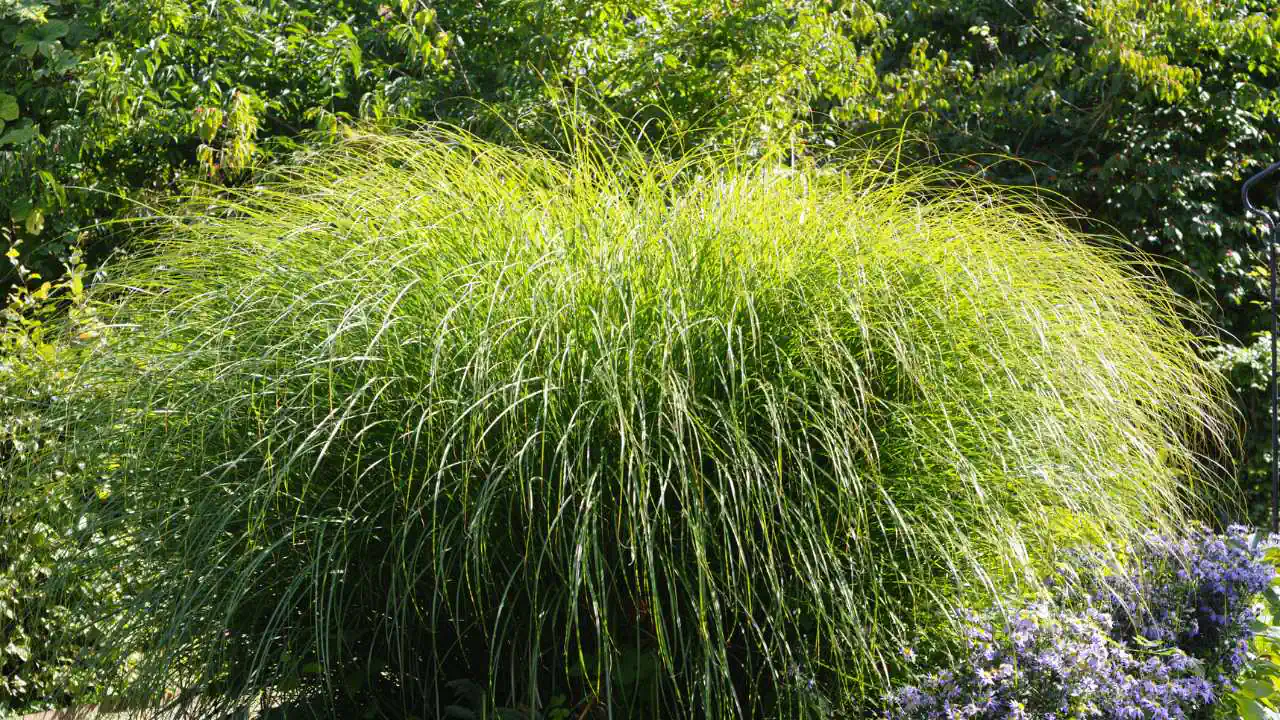
Feather reed grass 'Karl Foerster' (Calamagrostis × acutiflora 'Karl Foerster')
Upright grass reaching 6 feet (1.8 m) height, forming compact, vertical clumps with rigid habit. Its columnar flower heads grace the garden from early summer until winter.
Height: 5-6 feet (1.5-1.8 m) Habit: upright, narrow (columnar) Ornamental value: purple-brown flower heads (June-July), turning beige and persisting long into winter Site requirements: moderately fertile, well-draining soil Site and hardiness: full sun; completely hardy, trouble-free
Chinese miscanthus 'Gracillimus' (Miscanthus sinensis 'Gracillimus')
Delicate and airy variety with open habit reaching 5 feet (1.5 m), distinguished by slender, arching leaves and autumn flowering.
Height: 5 feet (1.5 m) Habit: clumping, slightly fountain-like Ornamental value: narrow leaves, copper plumes (October), autumn color change Site requirements: well-draining, moderately fertile soil Site and hardiness: full sun; fully hardy (zone 5)
Chinese miscanthus 'Morning Light' (Miscanthus sinensis 'Morning Light')
Elegant grass reaching 5.2 feet (1.6 m) height with very thin, silvery-gray leaves. Even without flowers, it's an exceptional flower bed ornament.
Height: 5-5.2 feet (1.5-1.6 m) Habit: clumping, compact Ornamental value: delicate leaves with white midrib, late flowering (October-November) Site requirements: fertile, moderately moist, slightly acidic soil Site and hardiness: sunny; completely hardy, protect young plants in winter
Switchgrass 'Shenandoah' (Panicum virgatum 'Shenandoah')
Compact grass reaching 5 feet (1.5 m) height with seasonally changing leaf color – from green to burgundy. Additionally decorated with delicate, red plumes.
Height: 4-5 feet (1.2-1.5 m) Habit: clumping, upright Ornamental value: burgundy autumn leaves, red plumes (July-September) Site requirements: average to dry soil Site and hardiness: full sun; fully hardy (zone 5)
👉Explore more perennial grasses varieties for your landscape.
Low grasses for gardens
Red Baron grass (Imperata cylindrica 'Red Baron')
Decorative grass 16-24 inches (0.4-0.6 m) high, forming loose clumps of rigid leaves intensely turning red. Spreading habit, narrow and upright leaves.
Height: 16-24 inches (0.4-0.6 m) Habit: loose clumping, spreading Ornamental value: carmine-red leaves from midsummer to autumn, "red carpet" effect Requirements: well-draining, moderately moist soil Site and hardiness: sunny; not fully hardy – requires winter protection (zone 6b)
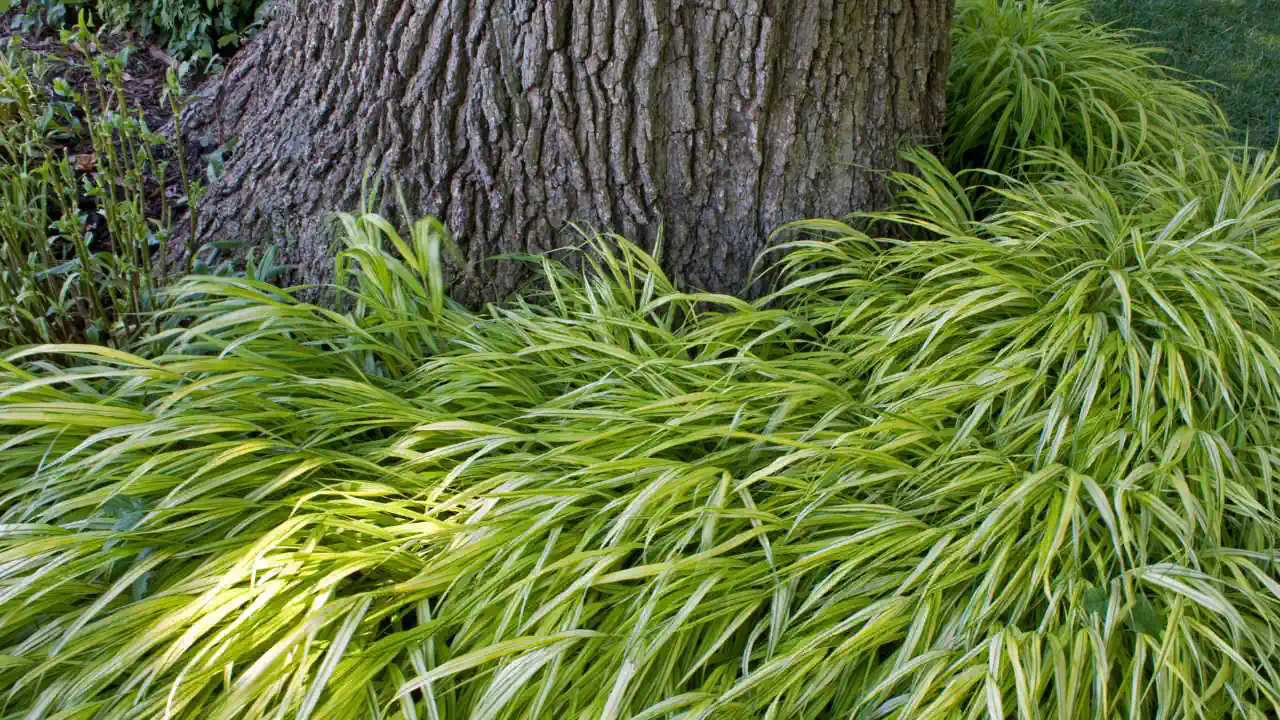
Japanese forest grass 'Aureola' (Hakonechloa macra 'Aureola')
Striking Japanese grass 12-16 inches (0.3-0.4 m) high, forming cascading clumps with golden leaves. Semi-circular habit, long and arching leaves.
Height: 12-16 inches (0.3-0.4 m) Habit: clumping, cascading Ornamental value: golden leaves with green stripes, gentle movement in wind Requirements: fertile, humus-rich, consistently lightly moist soil Site and hardiness: partial shade or shade; fully hardy (zone 5), worth protecting the base
Chinese miscanthus 'Little Zebra' (Miscanthus sinensis 'Little Zebra')
Small miscanthus reaching 4 feet (1.2 m) high, forming compact clumps of striped leaves. Compact and dense habit.
Height: 32-48 inches (0.8-1.2 m) Habit: clumping, dense Ornamental value: horizontally striped leaves, fluffy purple flower heads Requirements: fertile, moderately moist soil Site and hardiness: sunny; fully hardy (zone 5)
Japanese fountain grass 'Hameln' (Pennisetum alopecuroides 'Hameln')
Low fountain grass 20-32 inches (0.5-0.8 m) high with semi-circular habit, decorated with fluffy "foxtails."
Height: 20-32 inches (0.5-0.8 m) Habit: clumping, fountain-like Ornamental value: numerous light beige flower heads, yellowing autumn leaves Requirements: well-draining, moderately fertile soil Site and hardiness: sunny and warm; requires winter protection (zone 6a)
👉Discover more options in our evergreen hedge plants collection.
Ready to transform your outdoor space with professional garden design?
Ornamental grasses offer endless possibilities for creating stunning, low-maintenance landscapes that provide both beauty and functionality. Whether you're looking to establish privacy screening or add dramatic texture to your garden, the right grass selection can transform your outdoor space into a modern sanctuary.

Ready to bring your vision to life? Get a professional garden design consultation and discover how expert planning can bring your landscaping vision to life.
Frequently asked questions about grasses for hedging
How to care for ornamental grass hedges?
Ornamental grass hedging doesn't require complicated maintenance, but a few simple procedures will ensure healthy appearance throughout the season. Fertilizing – in early spring, it's worth feeding grasses with multi-component fertilizer to stimulate intensive growth. Pruning – in early spring, dry stems should be cut just above ground before the new growth cycle begins. Tying grasses – in autumn, before first snow, it's worth tying taller species into bundles to protect their stems from breaking. Proper care is the key to beautiful, lush grass hedging for many years!
When is the best time to plant ornamental grasses?
The best time to plant ornamental grasses is early spring (March-April) or early autumn (September-October). Spring planting allows plants to establish well before winter, while autumn planting takes advantage of natural moisture and cooler temperatures. For detailed guidance, check our planting schedule guide. Avoid planting during hot summer months or freezing winter periods.
How much space should I leave between grass plants in a hedge?
Spacing depends on the grass species and desired effect. For most hedging grasses, plant 24-40 inches (60-100 cm) apart. Use our soil calculator to determine the right amount of materials needed. Faster-spreading varieties can be planted further apart (40-48 inches/100-120 cm), while slower-growing compact varieties may need closer spacing (20-24 inches/50-60 cm) for quicker coverage.
Do ornamental grasses attract wildlife?
Yes! Ornamental grasses are excellent for wildlife. Birds use the stems for nesting material and eat the seeds. The dense growth provides shelter for small animals and beneficial insects. Native grass species are particularly valuable for supporting local ecosystems and biodiversity.
Can I plant ornamental grasses in containers?
Absolutely! Many ornamental grasses thrive in containers. Choose compact varieties like Hakonechloa, small fountain grasses, or dwarf miscanthus. Ensure containers have drainage holes and use quality potting mix. Container grasses may need more frequent watering and winter protection in cold climates.
How long do ornamental grasses live?
Most perennial ornamental grasses live 10-15 years with proper care. Some species like miscanthus and feather reed grass can live even longer. To maintain vigor, divide clumps every 3-5 years in early spring. This rejuvenates the plants and provides new plants for expansion.
Are ornamental grasses deer resistant?
Most ornamental grasses are naturally deer resistant due to their tough, fibrous leaves. Miscanthus, fountain grass, and feather reed grass are particularly deer-proof. However, very young plants may need protection until established, as deer might browse tender new growth.
Can ornamental grass hedges provide year-round privacy?
While ornamental grasses provide excellent summer and autumn screening, they're deciduous and die back in winter. For year-round privacy, consider mixing grasses with evergreen plants or planting them in front of existing fences. The dried winter stems still provide some visual barrier and attractive texture.
How fast do ornamental grass hedges grow?
Growth rate varies by species. Fast-growing varieties like giant miscanthus and pampas grass can reach near-mature size in 2-3 years. Medium growers like feather reed grass typically take 3-4 years to fully establish. Most grasses provide significant screening within the first growing season.
Do I need to fertilize ornamental grasses regularly?
Ornamental grasses are generally low-maintenance and don't require heavy fertilization. A single application of balanced fertilizer in early spring is usually sufficient. Over-fertilizing can cause excessive growth and reduce drought tolerance. In poor soils, annual compost addition is more beneficial than chemical fertilizers. For calculating the right amount of mulch for your beds, use our practical calculator tool.

Wojciech Kazimierowicz – Author of the Article
Co-owner of Wytwórnia Zieleni and an expert in garden design and landscaping with over 13 years of experience. He specializes in creating modern, functional green spaces tailored to the budget and needs of homeowners.

Find Out How Much Your Garden Design Will Cost!
Take a quick quiz and discover the estimated cost of a custom garden design tailored to your needs. No strings attached – it takes just 2 minutes!


Wytwórnia Zieleni | Garden Design
KRS 0001107384 NIP 6452587627 REGON 528715049 St. Strzelców Bytomskich 51/1 42-600 Tarnowskie Gory, Poland
Resources
© Wytwórnia Zieleni 2026


