Is spruce a good solution for hedging? Complete guide to spruce hedge
Świerk może być dobrym rozwiązaniem na żywopłot, jeśli potrzebujesz całorocznej osłony, masz miejsce na docelowe rozmiary i możesz zapewnić umiarkowanie wilgotną glebę. Najlepiej sprawdza się jako wysoki ekran lub wiatrochron w średnich i dużych ogrodach, a w wersji formowanej wymaga regularnego cięcia od młodego wieku.
TL;DR
- Świerk na żywopłot daje zimozieloną osłonę, dobrze tłumi wiatr i tworzy gęstą barierę przez cały rok.
- Najlepiej rośnie w słońcu i na glebie przepuszczalnej, lekko kwaśnej oraz umiarkowanie wilgotnej, bo źle znosi przesuszenie.
- W formie żywopłotu wymaga planowania przestrzeni, bo docelowo to duże drzewa i mogą zacieniać ogród.
- Gęstość żywopłotu buduje odpowiedni rozstaw sadzenia oraz cięcie przyrostów po ruszeniu wegetacji.
- W praktyce do szpalerów najczęściej wybiera się świerk pospolity lub świerk serbski, bo mają przewidywalny pokrój i dobrze tworzą ekran.
Published
05 February 2026
Share this article


 Copied
TOC
- Is Spruce a Good Solution for Hedging?
- Why choose spruce for hedging?
- Best growing conditions for spruce hedging
- How densely should you plant spruce for hedging?
- Formal vs natural – which spruce hedge to choose?
- How and when to trim spruce to create a dense hedge?
- Spruce varieties for hedging - which to choose?
- Norway Spruce – (Picea abies)
- Norway Spruce 'Cupressina' – (Picea abies 'Cupressina')
- Norway Spruce 'Końca' – (Picea abies 'Końca')
- Engelmann Spruce – (Picea engelmannii)
- Engelmann Spruce 'Glauca' – (Picea engelmannii 'Glauca')
- White Spruce – (Picea glauca)
- Serbian Spruce – (Picea omorika)
- Colorado Blue Spruce 'Blue Mountain' – (Picea pungens 'Blue Mountain')
- Colorado Blue Spruce 'Erich Frahm' – (Picea pungens 'Erich Frahm')
- Colorado Blue Spruce forma glauca – (Picea pungens f. glauca)
- Colorado Blue Spruce 'Fat Albert' – (Picea pungens 'Fat Albert')
- Colorado Blue Spruce 'Hoopsii' – (Picea pungens 'Hoopsii')
- Colorado Blue Spruce 'Hoto' – (Picea pungens 'Hoto')
- Colorado Blue Spruce 'Koster' – (Picea pungens 'Koster')
- Colorado Blue Spruce 'Oldenburg' – (Picea pungens 'Oldenburg')
- Creating your perfect spruce privacy hedge
- Maintenance tips for healthy spruce hedges
- Transform your landscape with professional hedge design
- Frequently asked questions
- How fast do spruce hedges grow?
- What spacing should I use when planting spruce hedges?
- When is the best time to plant spruce hedges?
- How often should spruce hedges be trimmed?
- Do spruce hedges provide good privacy screening?
- What soil conditions do spruce hedges prefer?
- Are spruce hedges suitable for urban environments?
- How much maintenance do spruce hedges require?
- Can spruce hedges withstand strong winds?
- What's the difference between formal and natural spruce hedges?
Is Spruce a Good Solution for Hedging?
Spruce hedge plants are becoming an increasingly popular choice in modern garden design, especially where reliable protection and natural aesthetics are valued year-round. Norway spruce is a native species that works excellently as an evergreen hedge plants – not only does it provide excellent wind protection, but it also effectively reduces noise and handles air pollution well.
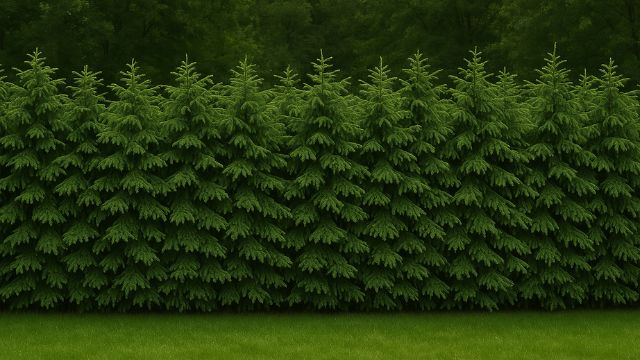
Thanks to its fast growth rate and sharp needles, it creates a dense, impenetrable wall of greenery. This is precisely why it's perfect for hedging, both formal and natural hedge designs that require minimal maintenance.
Why choose spruce for hedging?
Are you wondering what's best to choose for hedge plants? There's plenty of evidence that Norway spruce (Picea abies) is one of the best candidates for creating hedges – both in residential gardens and larger spaces.
Why should you choose spruce hedge plants?
- Wind protection – creates a natural, dense protective barrier. Spruce is a large tree that provides complete privacy and shelter.
- Excellent tolerance – Picea abies handles pruning exceptionally well and has a dense habit.
- Perfect screen – spruce is an ideal shield from neighbors' views and street traffic.
- Fast growth – rapid growth ensures quick results – perfect for impatient gardeners.
- Variety options – possibility to choose different spruce varieties adapted to needs and space.
- Versatile use – indispensable for creating both formal and natural hedge designs.
Best growing conditions for spruce hedging
Spruce trees perform best in sunny or lightly shaded locations, but the optimal spot for their growth will be an area in full sun. Before planting, it's worth thoroughly digging the soil around the planting area to aerate it and ensure good root ball development. Although spruces are evergreen conifer species, they prefer moderately moist, well-draining, and slightly acidic soil.
For detailed soil preparation guide, proper ground preparation is essential for healthy hedge establishment. They handle urban conditions excellently – they're resistant to pollution, making them ideal for planting along streets or in urbanized areas. Since these are tall trees, they require space, but under proper conditions, they quickly form a dense, healthy hedge.
How densely should you plant spruce for hedging?
Proper spacing planning when planting is key to achieving a dense and healthy hedge. When deciding to plant spruce for hedging, it's worth considering not only the number of plants but also their positioning relative to each other. Too little density may weaken the screening effect, while too much can lead to diseases and malnutrition of the trees. For accurate planning costs, consider using a landscaping cost calculator to estimate your project budget. So how densely should you plant spruce for hedging? Here are several proven examples:
- Formal hedge – it's best to plant spruces in a single row, maintaining about 20-40 inches (50-100 cm) distance between plants. This arrangement allows for quick density achievement and a regular line.
- Natural hedge – if we want free growth and a natural effect, planting at intervals of 40-120 inches (100-300 cm) is sufficient (depending on variety and expected height).
- Tiered or double hedge – in difficult conditions or on large areas, you can plant spruces in two rows staggered, which increases density and protection.
Regardless of the type chosen, before planting it's worth digging appropriate holes or a single hole for each sapling – deep and wide enough for the root ball to fit comfortably. A soil preparation calculator can help determine the right amount of amendments needed. Such a prepared location will ensure young spruces a good start and even development.
Formal vs natural – which spruce hedge to choose?
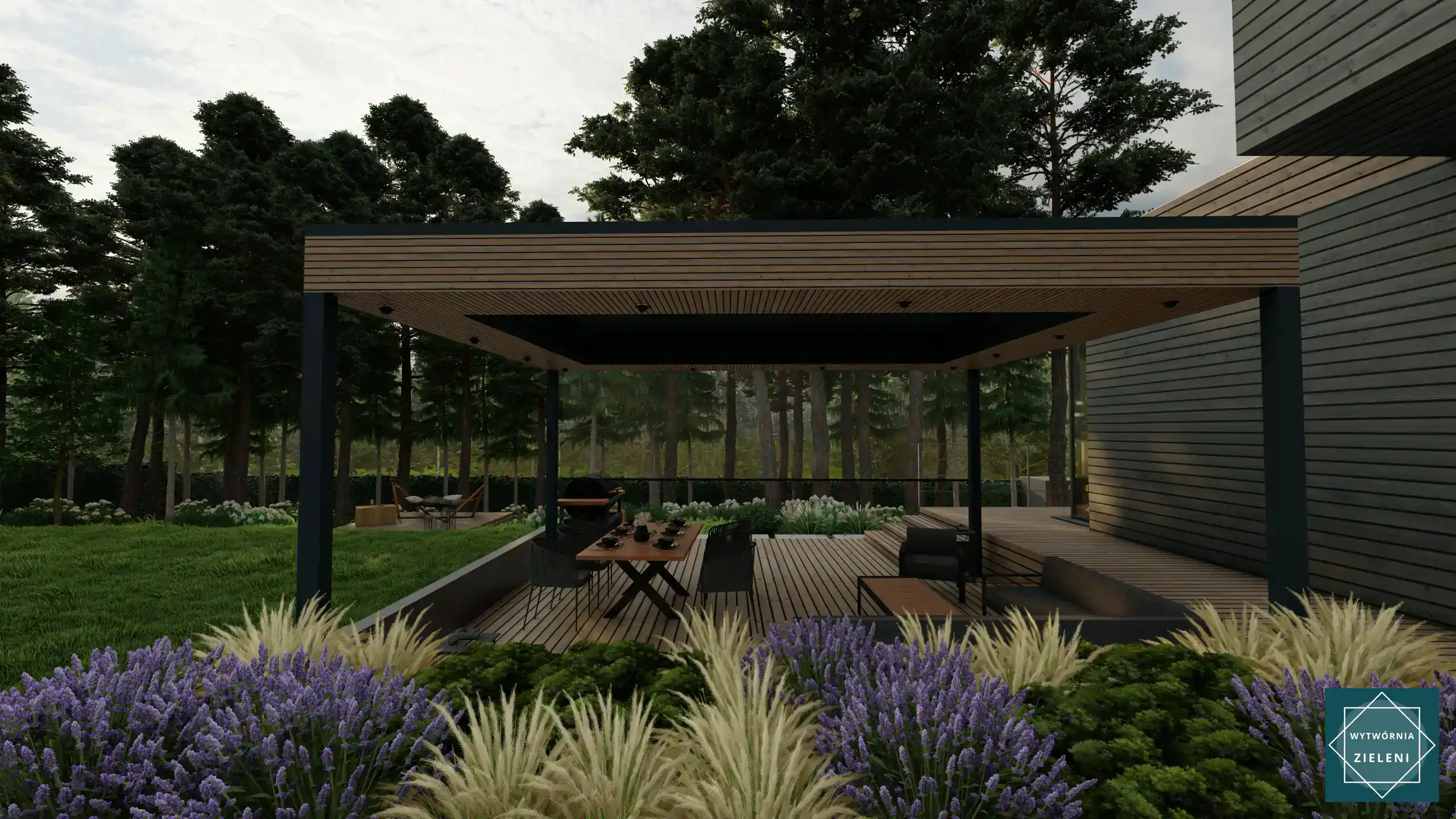
A spruce hedge can take a free form or be regularly trimmed. This decision should align with your overall garden zones planning and desired landscape style. Formal hedges require more frequent cutting but look elegant and help limit growth. In hedge form, spruces with slender habits work well, though not every spruce is suitable for shaping – some varieties are too expansive.
How and when to trim spruce to create a dense hedge?
To achieve a dense hedge, you should trim spruces after the first growth appears. Use sharp pruning shears to cut new shoots and encourage branching. It's best to work moderately – trimming last year's growth by 4-8 inches (10-20 cm), even though they can reach up to 40 inches (100 cm) annually. Regular pruning will ensure healthy and dense growth.
Spruce varieties for hedging - which to choose?
Norway Spruce – (Picea abies)
Conical, slender tree with branches growing from the base. Grows to 100-165 feet (30-50 m) in height (in most regions typically to about 130 feet/40 m), reaching 20-26 feet (6-8 m) width. Excellent for formal, tall hedges and windbreaks – handles pruning well. Grows best in full sun, in clay-sandy, humus-rich, moderately moist soil – sensitive to drought and salinity.
Norway Spruce 'Cupressina' – (Picea abies 'Cupressina')
Upright, narrow-conical habit resembling cypress. After 20 years reaches about 33 feet (10 m) height and 5-6.5 feet (1.5-2 m) width. Works as a specimen or narrow screen – doesn't require shaping. Grows best in full sun, in fresh, clay-sandy, constantly moderately moist soil – doesn't tolerate drought and salinity.
![Narrow columnar Cupressina spruce variety perfect for space-efficient hedge planting]
Norway Spruce 'Końca' – (Picea abies 'Końca')
Regular, conical habit and bright yellow growth make this variety very decorative. Grows to about 33 feet (10 m) height and 13 feet (4 m) width (after 30 years). Recommended as a specimen in large gardens and parks – not suitable for hedges. Likes sunny or semi-shaded locations, humus-rich, clay-sandy, slightly acidic and moderately moist soils.
Engelmann Spruce – (Picea engelmannii)
Conical tree with slightly drooping branches, growing to 65-80 feet (20-25 m) (naturally up to 165 feet/50 m) and about 16-20 feet (5-6 m) width. Works as a specimen or in informal, tall screens on large areas. Grows in sun or partial shade, in fertile, moderately moist soil – sensitive to root drying, but handles dry air and urban pollution well.
Engelmann Spruce 'Glauca' – (Picea engelmannii 'Glauca')
Narrow, conical habit and intensely blue-silver needles are this variety's distinctive features. Grows to 65-100 feet (20-30 m) height and 13-16 feet (4-5 m) width. Excellent as a specimen in parks and for tall screens. Grows best in full sun, in well-draining and moderately moist soil – very tolerant, resistant to frost and urban climate.
![Blue-silver Engelmann Glauca spruce showing distinctive needle color in landscape setting]
White Spruce – (Picea glauca)
Densely branched, narrow-conical spruce growing to 80-100 feet (25-30 m) height and 16-26 feet (5-8 m) width. Works excellently in formal, tall hedges and as windbreak. Grows in full sun, in slightly acidic, well-draining soil with moderate moisture – handles dry air and pollution well.
Serbian Spruce – (Picea omorika)
Very narrow, conical habit with characteristic drooping and upright branches and two-colored needles. Grows to 50-65 feet (15-20 m) height and 10-13 feet (3-4 m) width. Creates excellent screening in informal hedges – planted every 5-6.5 feet (1.5-2 m). Grows in sun or partial shade, in well-draining, slightly acidic and moderately moist soil – exceptionally resistant to drought, frost and urban pollution.
Colorado Blue Spruce 'Blue Mountain' – (Picea pungens 'Blue Mountain')
Compact, densely pyramidal habit and intensely silver-blue needles make this variety exceptionally ornamental. These ornamental evergreen plants are increasingly popular in contemporary landscape design. Grows slowly – after 10 years reaches 6-10 feet (2-3 m), eventually grows to 26-33 feet (8-10 m) height and 10-13 feet (3-4 m) width. More often planted as specimen, but also suitable for medium-high hedges. Grows best in full sun, in fertile, moderately moist and well-drained soil – tolerates drought and urban pollution.
![Compact Blue Mountain spruce variety with distinctive silver-blue needles in residential hedge application]
Colorado Blue Spruce 'Erich Frahm' – (Picea pungens 'Erich Frahm')
Broadly conical, very dense spruce with distinctly blue needle coloring. Grows to 33-50 feet (10-15 m) height and about 16 feet (5 m) width. Excellent for tall, formal hedges or as an impressive specimen. Prefers full sun and well-draining, slightly acidic, moderately moist soils – handles dry air and pollution excellently.
Colorado Blue Spruce forma glauca – (Picea pungens f. glauca)
Classic conical habit and broad crown with beautiful, silver-blue needles. Grows to about 65 feet (20 m) height and 16-20 feet (5-6 m) width. Suitable for tall, formal hedges and as windbreak. Grows well in sun, in well-drained, moderately moist soil – exceptionally resistant variety to drought, frost and pollution.
Colorado Blue Spruce 'Fat Albert' – (Picea pungens 'Fat Albert')
Broadly conical, massive habit with compact, "bulky" appearance. After 10 years grows to about 20 feet (6 m) height and 5-6.5 feet (1.5-2 m) width, eventually reaches about 33 feet (10 m) height and 13-16 feet (4-5 m) width. Often planted as specimen, but works well in hedges too. Grows best in full sun, in moderately moist, well-draining and slightly acidic soil – tolerates drought and urban climate.
Colorado Blue Spruce 'Hoopsii' – (Picea pungens 'Hoopsii')
Conical, regular habit and intensely silver-blue needles. Grows slowly – after 10 years reaches about 10 feet (3 m), eventually to 33-40 feet (10-12 m) height and 13-16 feet (4-5 m) width. Suitable for formal screens, though most often planted as decorative specimen. Requires sunny location and fertile, moderately moist and well-draining soil.
![Hoopsii variety showing perfect conical form with intense silver-blue needles]
Colorado Blue Spruce 'Hoto' – (Picea pungens 'Hoto')
Conical, dense spruce with blue-green needles. Grows to about 50 feet (15 m) height and 13 feet (4 m) width – grows at medium pace. Used in tall hedges, group plantings and as specimen. Prefers full sun and average, moderately moist soil – handles drought and pollution well.
Colorado Blue Spruce 'Koster' – (Picea pungens 'Koster')
Slightly irregular, conical habit and silver-blue needles. Reaches 40-50 feet (12-15 m) height and 13-20 feet (4-6 m) width. Though rarely used for hedges, often planted as specimen in gardens and parks. Likes sun, well-draining and moderately moist soil – resistant to frost and urban climate.
Colorado Blue Spruce 'Oldenburg' – (Picea pungens 'Oldenburg')
Compact, conical habit and blue-green needles give this variety an elegant appearance. Grows to about 33-40 feet (10-12 m) height and 10-16 feet (3-5 m) width. Tolerates shearing – suitable for medium and tall hedges as well as specimen plantings. Grows well in sun, in average, moderately moist soils – resistant to drought, frost and pollution.
Creating your perfect spruce privacy hedge

When planning your evergreen hedge, consider these key factors for your privacy hedge ideas:
Growth rate – For fast-growing hedge results, choose varieties like Norway spruce or White spruce that can add 12-36 inches (30-90 cm) annually.
Mature size – Plan for the eventual height and width. Most spruce varieties will reach 15-50 feet (4.5-15 m) if left unpruned.
Maintenance level – Formal hedges require 1-2 annual trimmings, while natural hedges need minimal intervention.
Climate adaptability – All listed varieties are cold-hardy and suitable for USDA zones 2-8, making them excellent choices for northern climates.
Maintenance tips for healthy spruce hedges
Watering – Deep, infrequent watering is best. Newly planted hedges need consistent moisture for the first 1-2 growing seasons. Consider installing garden irrigation systems for efficient water management.
Fertilizing – Apply balanced, slow-release fertilizer in early spring to promote healthy growth.
Pruning timing – Best done in late spring after new growth hardens but before extreme summer heat.
Disease prevention – Ensure good air circulation between plants and avoid overhead watering to prevent fungal issues.
Transform your landscape with professional hedge design
Whether you're planning a formal privacy screen or a natural windbreak, the right spruce variety can transform your outdoor space into a private sanctuary. These versatile evergreen hedge plants offer year-round beauty, require minimal maintenance once established, and provide excellent value for your landscaping investment. For comprehensive planning, explore our complete garden planning guide to ensure your project success.

Ready to create your perfect privacy hedge? Consider consulting with professional garden design consultation and discover how expert planning can bring your landscaping vision to life.
Frequently asked questions
How fast do spruce hedges grow?
Most spruce varieties grow 12-36 inches (30-90 cm) per year under optimal conditions. Norway spruce and White spruce are among the fastest-growing, while Colorado Blue spruce varieties tend to grow more slowly but offer superior ornamental value.
What spacing should I use when planting spruce hedges?
For formal hedges, plant spruces 20-40 inches (50-100 cm) apart in a single row. For natural hedges, allow 40-120 inches (100-300 cm) between plants depending on the variety and desired mature height.
When is the best time to plant spruce hedges?
The ideal planting time is early spring after the last frost or early fall when temperatures are cooler. This gives the root system time to establish before extreme weather conditions. For irrigation planning during establishment, use our garden irrigation cost calculator to budget for proper watering systems.
How often should spruce hedges be trimmed?
Formal spruce hedges typically need trimming 1-2 times per year – once in late spring after new growth hardens and optionally again in mid-summer. Natural hedges may need minimal pruning or can be left to grow freely.
Do spruce hedges provide good privacy screening?
Yes, spruce hedges create excellent dense privacy screening due to their evergreen nature and compact growth habit. When properly spaced and maintained, they form an impenetrable barrier that provides year-round privacy.
What soil conditions do spruce hedges prefer?
Spruce trees thrive in well-draining, slightly acidic soil with consistent moisture. They adapt to various soil types but perform best in fertile, humus-rich ground with good drainage to prevent root rot.
Are spruce hedges suitable for urban environments?
Most spruce varieties are excellent for urban hedging as they tolerate air pollution, urban heat, and various soil conditions. Serbian spruce and Colorado Blue spruce varieties are particularly resilient in city environments. When selecting plants for urban settings, consider consulting with experienced garden service providers for best results.
How much maintenance do spruce hedges require?
Once established, spruce hedges are relatively low-maintenance. They require regular watering during dry periods, annual fertilization, and periodic pruning to maintain shape. Disease and pest issues are generally minimal. For comprehensive maintenance planning, explore professional garden design services to ensure long-term success.
Can spruce hedges withstand strong winds?
Yes, spruce hedges are excellent windbreaks due to their dense branching structure and strong root systems. They're often planted specifically for wind protection in exposed locations and rural properties.
What's the difference between formal and natural spruce hedges?
Formal hedges are regularly pruned into geometric shapes with clean lines, requiring more maintenance but offering a structured appearance. Natural hedges grow more freely with minimal pruning, creating a softer, more organic landscape element. To see examples of both styles, view our landscape design examples portfolio for inspiration.

Wojciech Kazimierowicz – Author of the Article
Co-owner of Wytwórnia Zieleni and an expert in garden design and landscaping with over 13 years of experience. He specializes in creating modern, functional green spaces tailored to the budget and needs of homeowners.

Find Out How Much Your Garden Design Will Cost!
Take a quick quiz and discover the estimated cost of a custom garden design tailored to your needs. No strings attached – it takes just 2 minutes!


Wytwórnia Zieleni | Garden Design
KRS 0001107384 NIP 6452587627 REGON 528715049 St. Strzelców Bytomskich 51/1 42-600 Tarnowskie Gory, Poland
Resources
© Wytwórnia Zieleni 2026


