Drip Irrigation System: Complete Installation Guide for Your Garden
Nawadnianie kropelkowe to metoda podlewania, w której woda trafia bezpośrednio do strefy korzeniowej roślin w kontrolowanych ilościach. Rozwiązanie to ogranicza straty wody, zwiększa efektywność nawadniania i sprawdza się w ogrodach, donicach, szklarniach oraz na rabatach.
TL;DR
- Nawadnianie kropelkowe dostarcza wodę bezpośrednio do korzeni roślin, ograniczając parowanie i spływ.
- System wykorzystuje linie kroplujące, taśmy, kapilary lub emitery o stałym lub regulowanym przepływie.
- Podlewanie kropelkowe pozwala znacząco zmniejszyć zużycie wody w porównaniu do zraszaczy.
- Instalacja systemu kropelkowego jest prosta i możliwa do wykonania samodzielnie.
- Rozwiązanie najlepiej sprawdza się na rabatach, w donicach, szklarniach i przy żywopłotach.
Published
21 May 2026
Share this article


 Copied
TOC
- What is a Drip Irrigation System?
- Benefits of Using Drip Irrigation Systems
- Drip Irrigation Installation Schematic
- Drip Irrigation Components: Tubing, Hoses, Regulators, Filters, Controllers
- Types of Drip Irrigation
- Where to Use Drip Irrigation Lines
- DIY Drip Irrigation System Installation Step by Step
- Drip Irrigation for Lawns - Does it Make Sense?
- How Much Water Does Drip Irrigation Use?
- Common Drip Irrigation Installation Mistakes and How to Avoid Them
- FAQ
What is a Drip Irrigation System?
A drip irrigation system is a method where water is delivered in small amounts directly to plant roots through a network of specialized garden tubing and emitters. This approach minimizes water loss from evaporation and surface runoff, making it one of the most efficient watering methods available. When planning your garden irrigation systems, drip irrigation should be your primary consideration for water conservation.
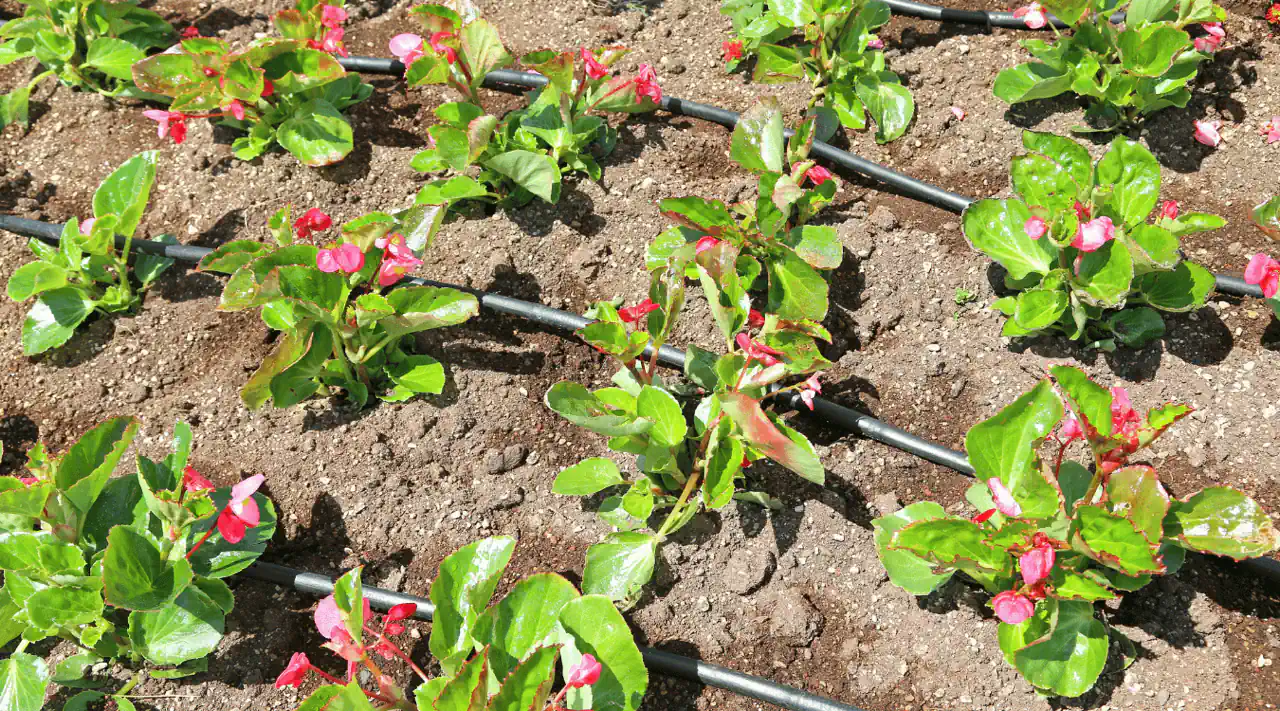
In this comprehensive guide, we'll cover:
- What is a drip irrigation system?
- How does drip irrigation work?
- Types of tubing, drip tape, and emitters available
- How to install your own drip watering system
Drip irrigation can be part of an automatic garden irrigation system or function as a standalone system for watering greenhouses, containers, slopes, and garden beds. Professional landscape design services often incorporate drip systems into comprehensive irrigation planning.
Benefits of Using Drip Irrigation Systems
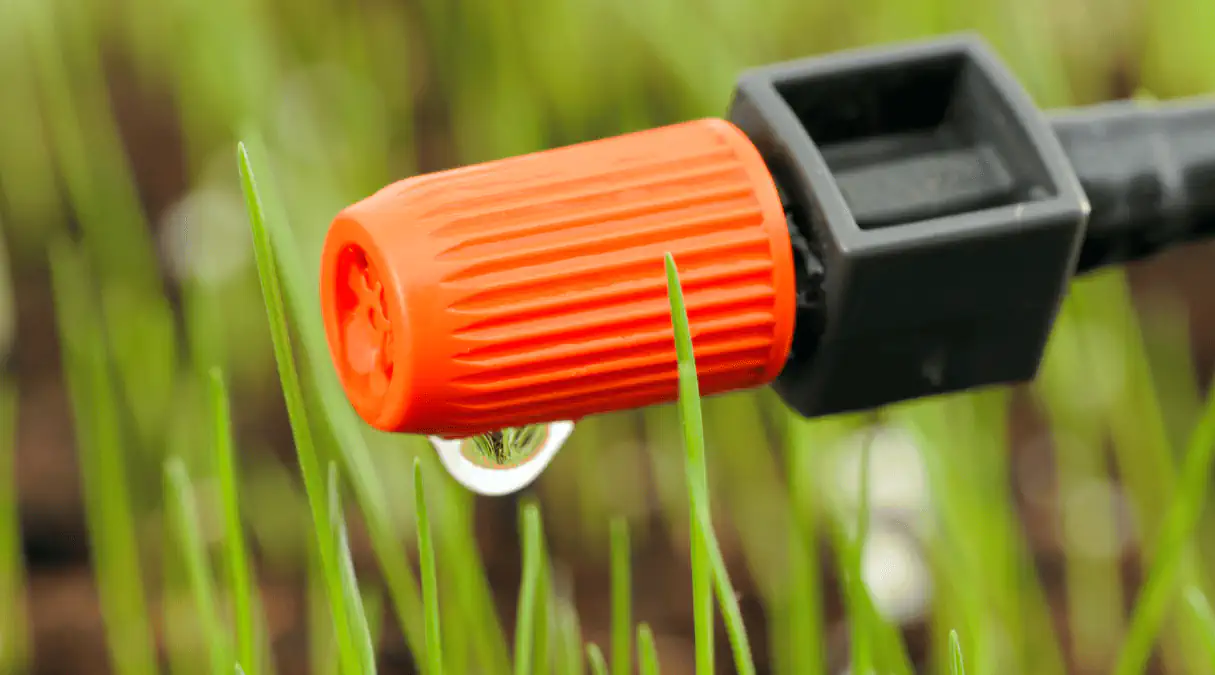
A drip irrigation system is an excellent solution that's simple to operate and install, offering numerous advantages:
Water Conservation - Drip systems use the optimal amount of water, with each emitter delivering 2-6 liters per hour, resulting in up to 50% water savings compared to traditional sprinklers. Use our water usage calculator to determine potential savings for your garden.
- Time Savings - A properly designed drip watering system delivers water exactly where needed without your involvement, automating your garden maintenance.
- Disease Reduction - By avoiding leaf wetting, drip irrigation reduces the risk of fungal and bacterial diseases that can affect plants in humid environments.
- Precise Watering - Moisture is slowly delivered directly to the root zone, increasing irrigation efficiency, supporting plant development, and preventing runoff.
- Easy Installation - Installing drip irrigation tubing is possible without specialized knowledge or technical skills.
- Low Implementation Cost - Purchasing a drip irrigation kit can cost anywhere from $50 to several hundred dollars depending on the application. For accurate project budgeting, try our landscape pricing calculator to estimate total installation costs.
Drip Irrigation Installation Schematic
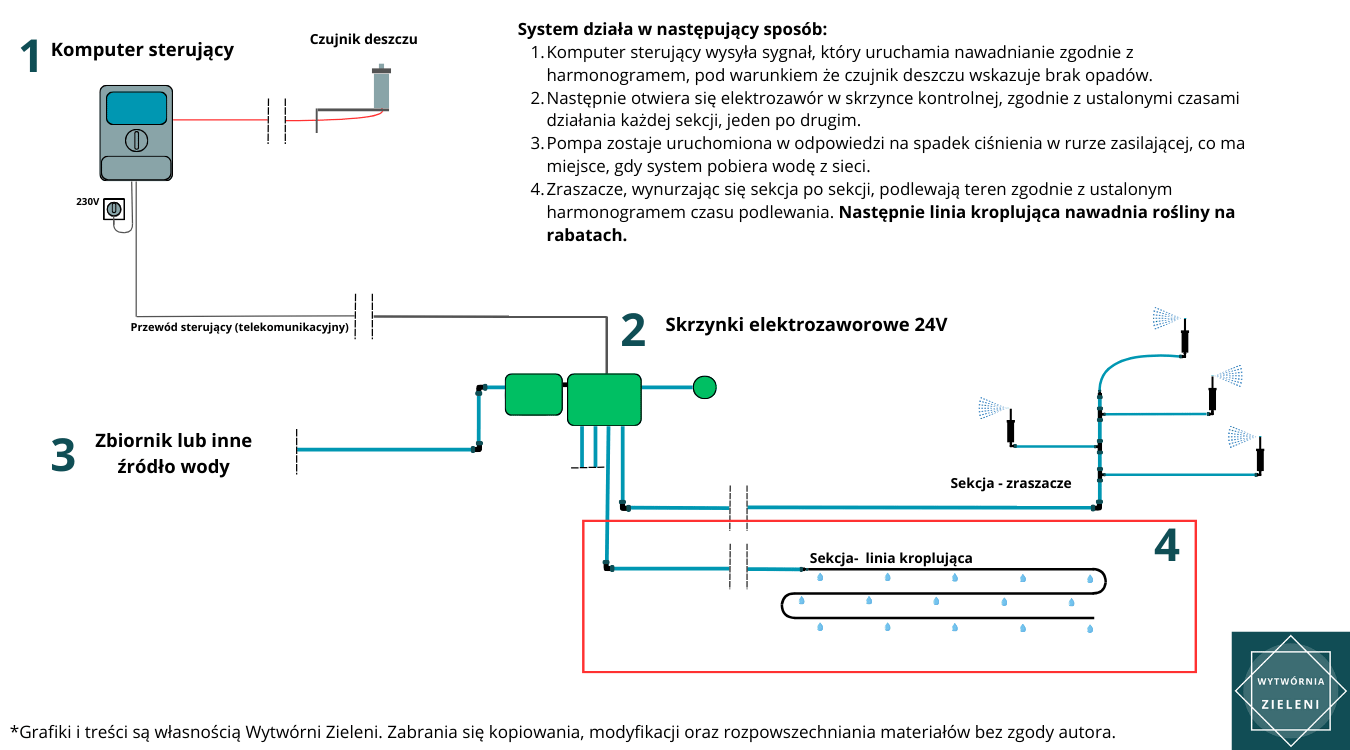
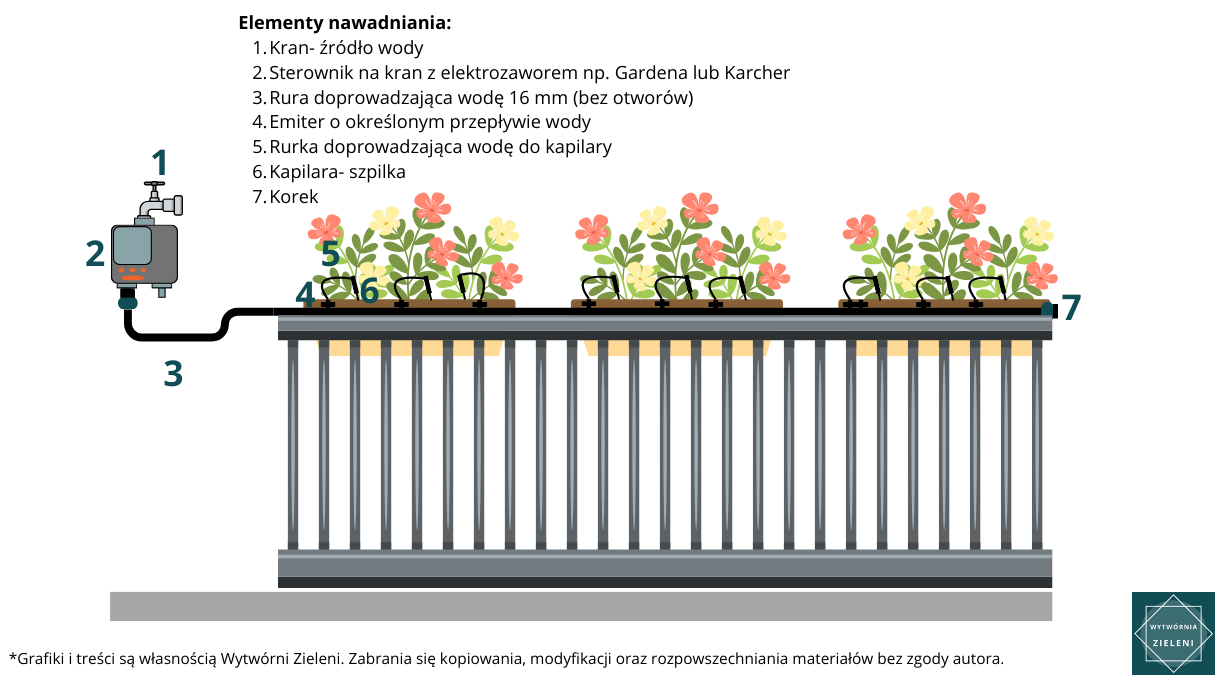
Drip irrigation lines are very simple to install. They're laid between plants in parallel strips and secured to the ground using plastic or steel anchors. The tubing has a 16mm diameter with emitters placed every 33cm. These types of pipes are sold in 50m and 100m lengths.
Automatic Container and Pot Irrigation
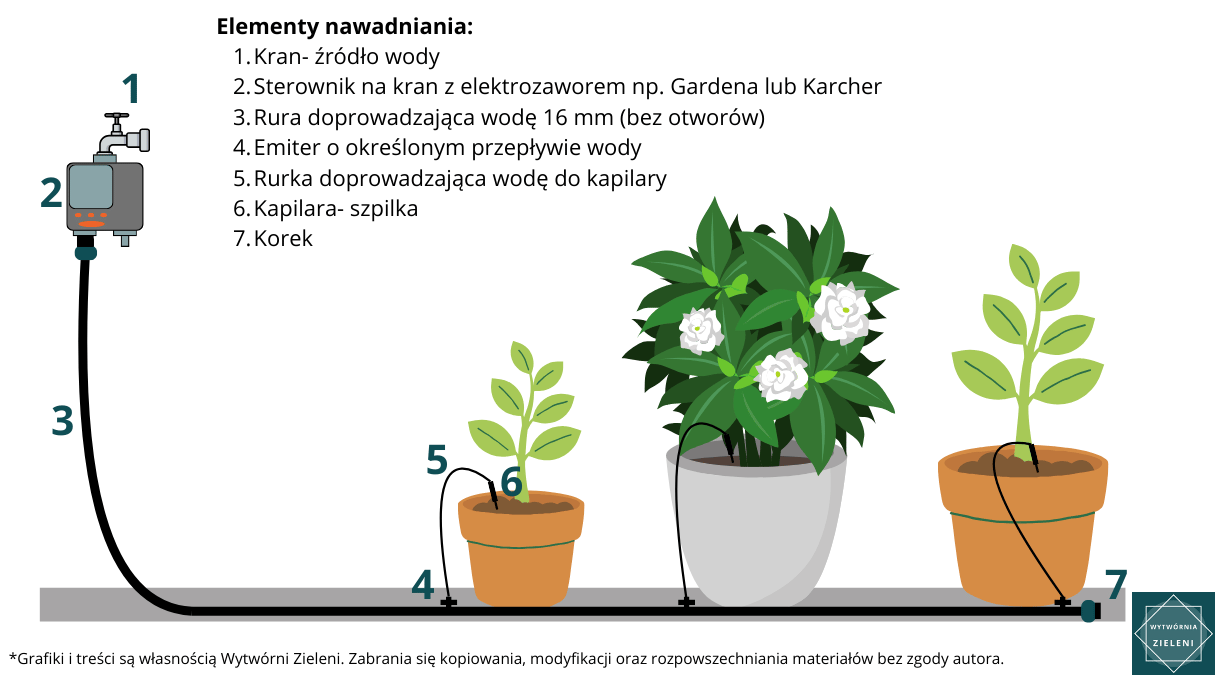
Automatic Balcony Flower Watering
Greenhouse Irrigation System

Drip Irrigation Components: Tubing, Hoses, Regulators, Filters, Controllers
- Drip Lines: 16mm tubes with built-in emitters spaced at regular intervals, typically every 33cm
- Individual Emitters: Allow customization of water amounts for individual plant needs
- Filters: Prevent emitter clogging from debris and sediment
- Fittings, Tees, and Reducers, Valves: Essential connecting elements for 16mm drip lines
- Pressure Regulators: Maintain proper system pressure, ensuring even irrigation throughout the system
- Controllers for Drip Lines: The system's brain, ranging from simple faucet-mounted timers to sophisticated computer controllers from renowned brands like Hunter or Rain Bird. For comprehensive guidance on controller selection, see our detailed automatic sprinkler system installation guide.
Types of Drip Irrigation
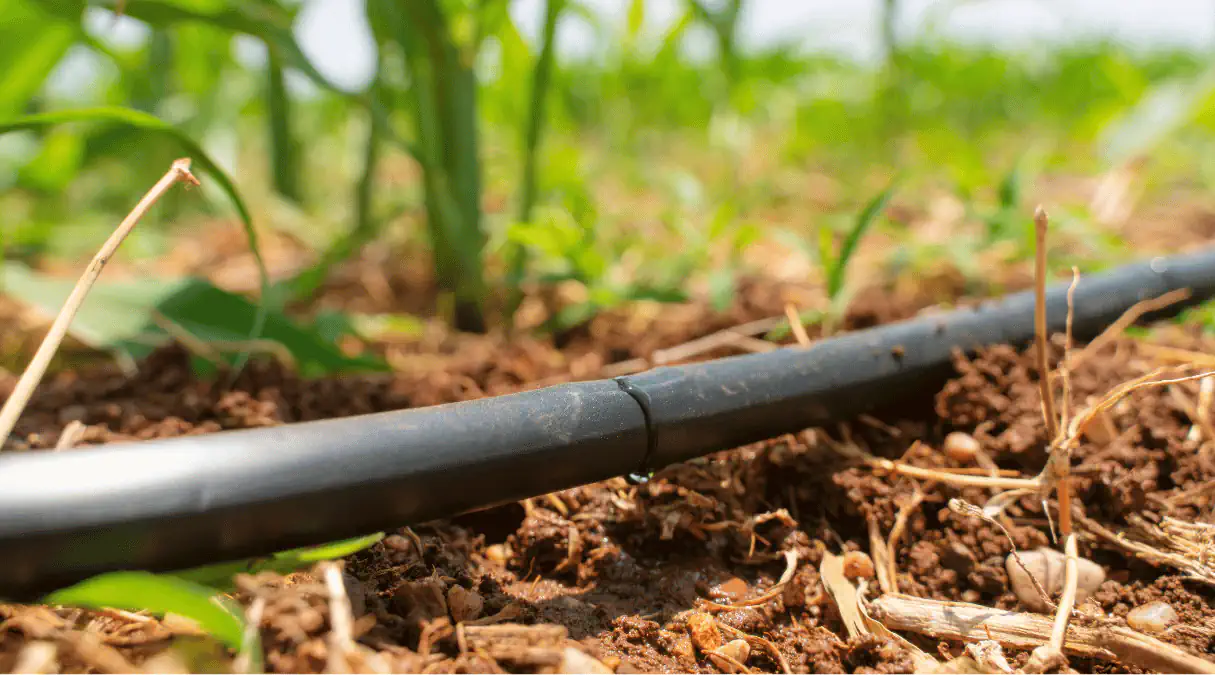
Drip Hoses
Drip hoses (commonly called drip lines) are most frequently used for garden irrigation. They're applied to garden beds under trees, shrubs, perennials, and flower beds. Use them where there's high plant density or extensive root coverage areas. When planning fence line landscaping, drip irrigation provides efficient watering for privacy plants and boundary gardens.
Drip Tape
Drip tape is a lightweight and flexible solution used primarily in agriculture and horticulture for irrigating crops over large areas, in greenhouses, and in fields.
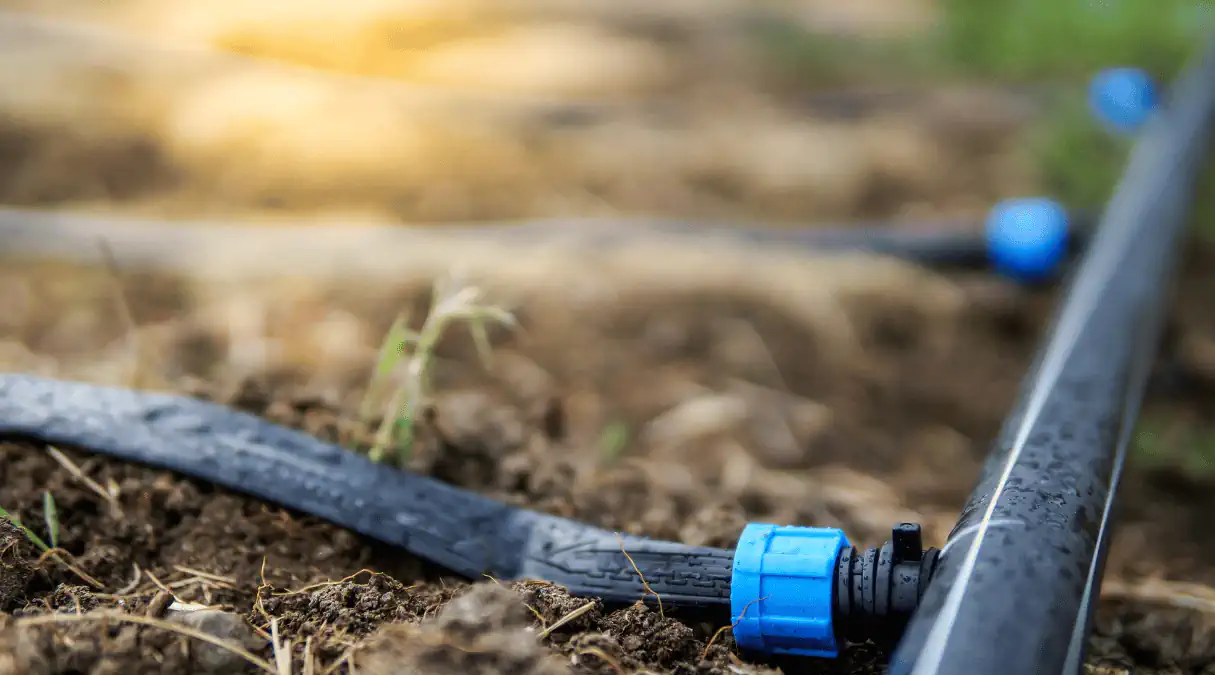
Drip Capillaries
Drip capillaries are thin tubes that precisely deliver water to individual plants or specific garden locations. They're used where exceptional irrigation accuracy is required, such as in containers, balcony boxes, or flower beds.
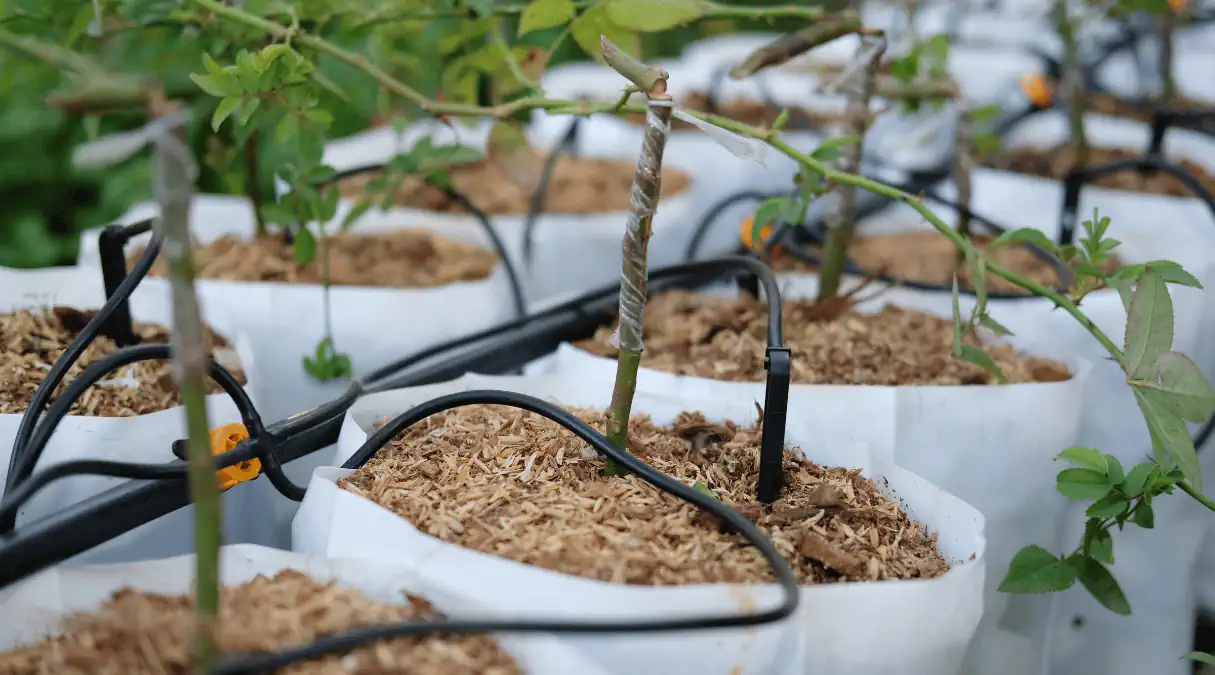
Drippers - Emitters
Drippers, also called emitters, are key components of any drip irrigation system that regulate water flow. They can be mounted directly in drip hoses or as individual emitters connected to the main irrigation line.
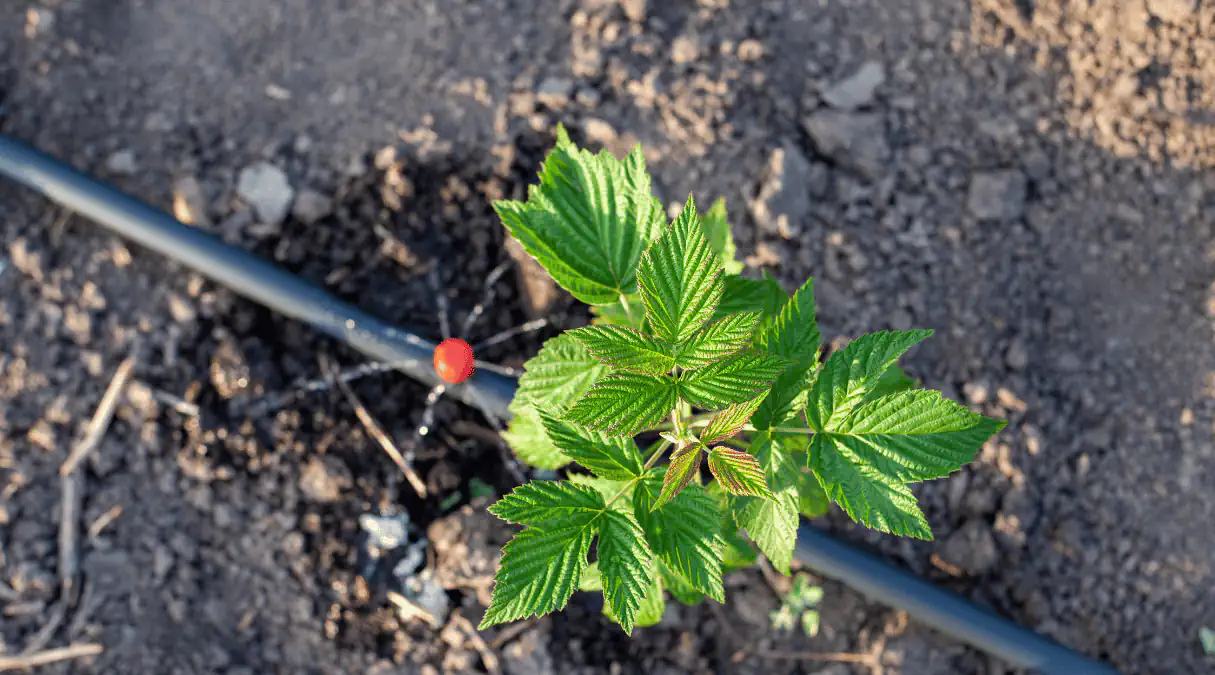
Where to Use Drip Irrigation Lines
Drip Irrigation for Containers
Drip irrigation is an extremely convenient solution for watering plants in containers on balconies and patios. Drip lines or emitters precisely deliver water directly to plant roots, helping maintain proper soil moisture. This system eliminates the need for daily watering with a watering can, providing time savings and optimal water amounts for each plant.
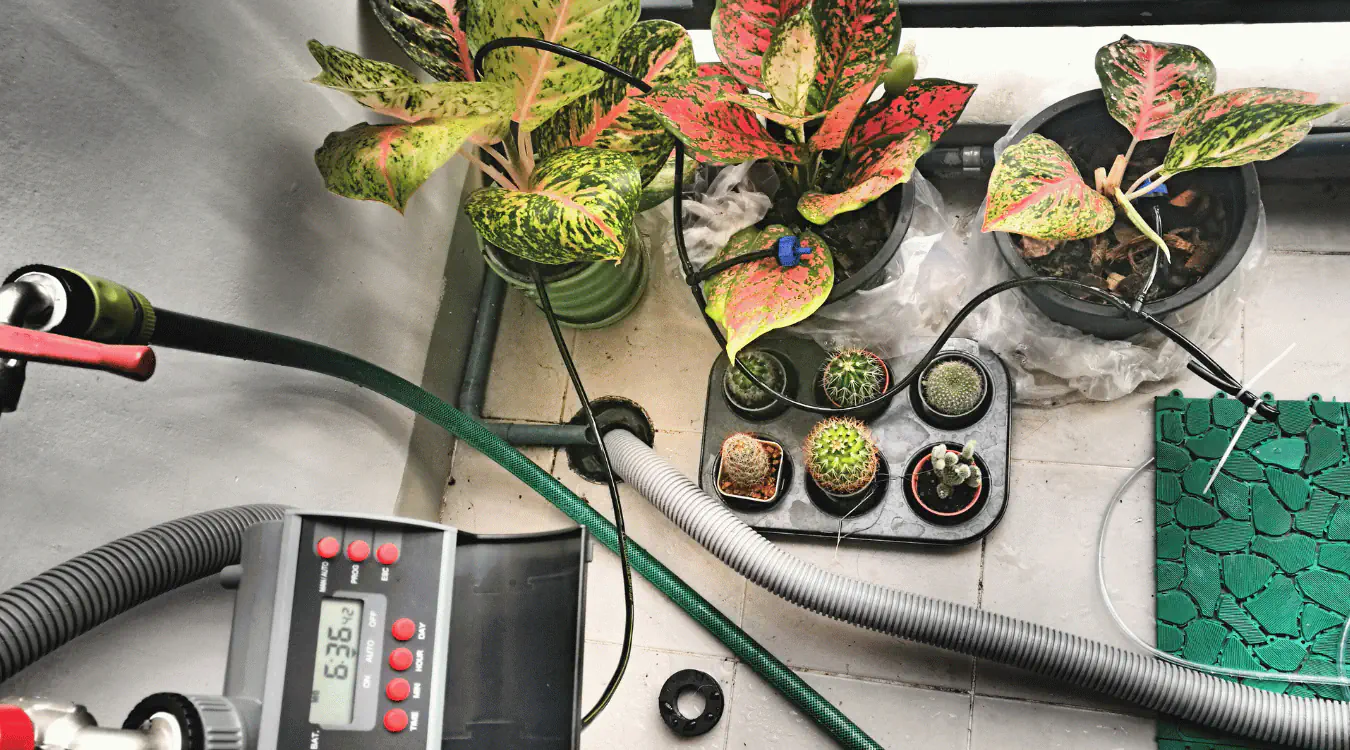
Using Drip Lines for Greenhouse Growing
In greenhouses, drip irrigation lines are fundamental elements of plant watering installations. Thanks to pressure compensation, drip hoses guarantee even irrigation of the entire area, regardless of line length. Emitters installed in the system allow precise water delivery to roots, limiting water waste and supporting healthy crop growth. This solution is particularly effective in field cultivation and greenhouse foil growing operations. For optimal system design, consider our irrigation system design principles.
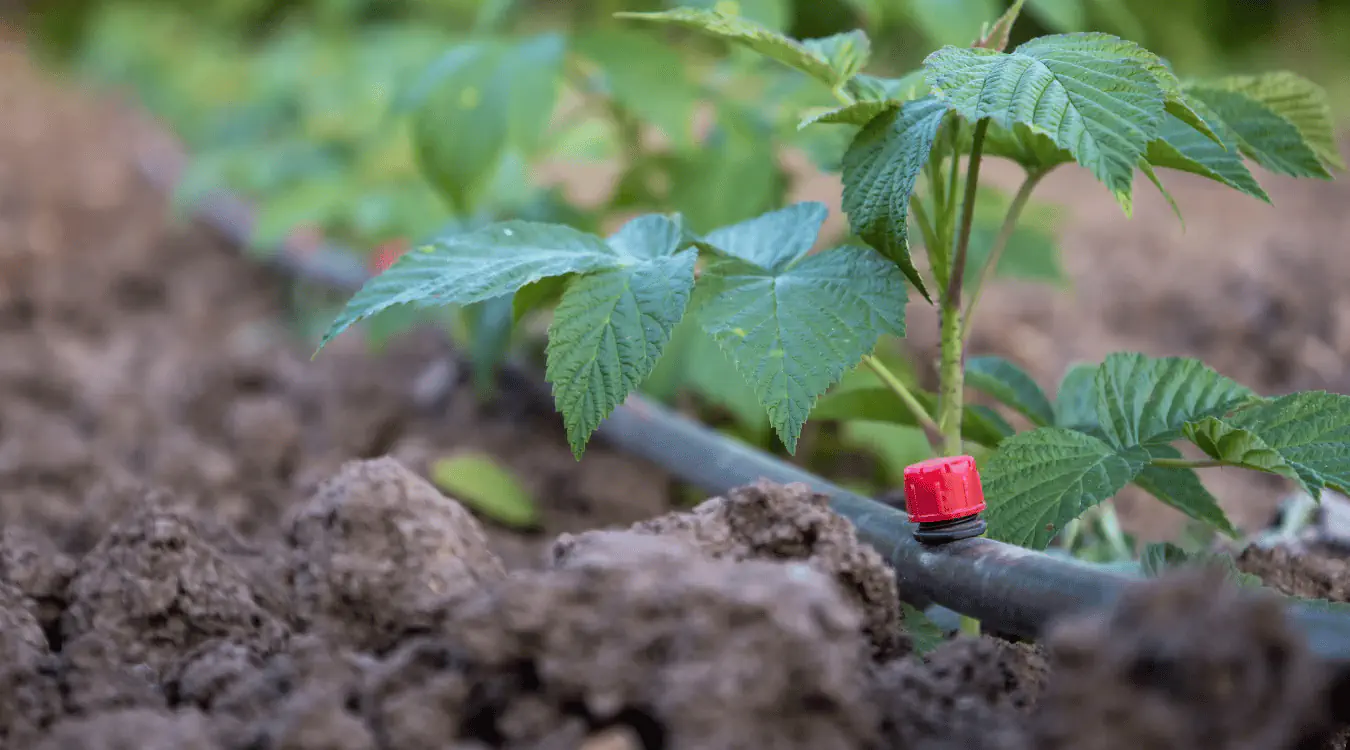
Drip Irrigation for Patios
A drip irrigation system is ideal for patios where plants in containers or planters require regular and precise watering. A surface-mounted system equipped with emitters and drip hoses can be easily installed along patios or balconies. Thanks to solutions like Rain Bird XFS or pressure-compensating drip lines, plants receive optimal water amounts without waste or excessive consumption.
Garden Drip Irrigation
Drip irrigation lines are the perfect solution for watering garden plants. They'll water hedges, trees, perennial plants, and annuals in your garden. Without them, efficient watering of larger gardens would be impossible. When selecting hedging plants, consider their water requirements for proper drip system sizing. There are also underground drip lines that serve to water lawns instead of sprinklers, but this isn't a popular solution in many regions.
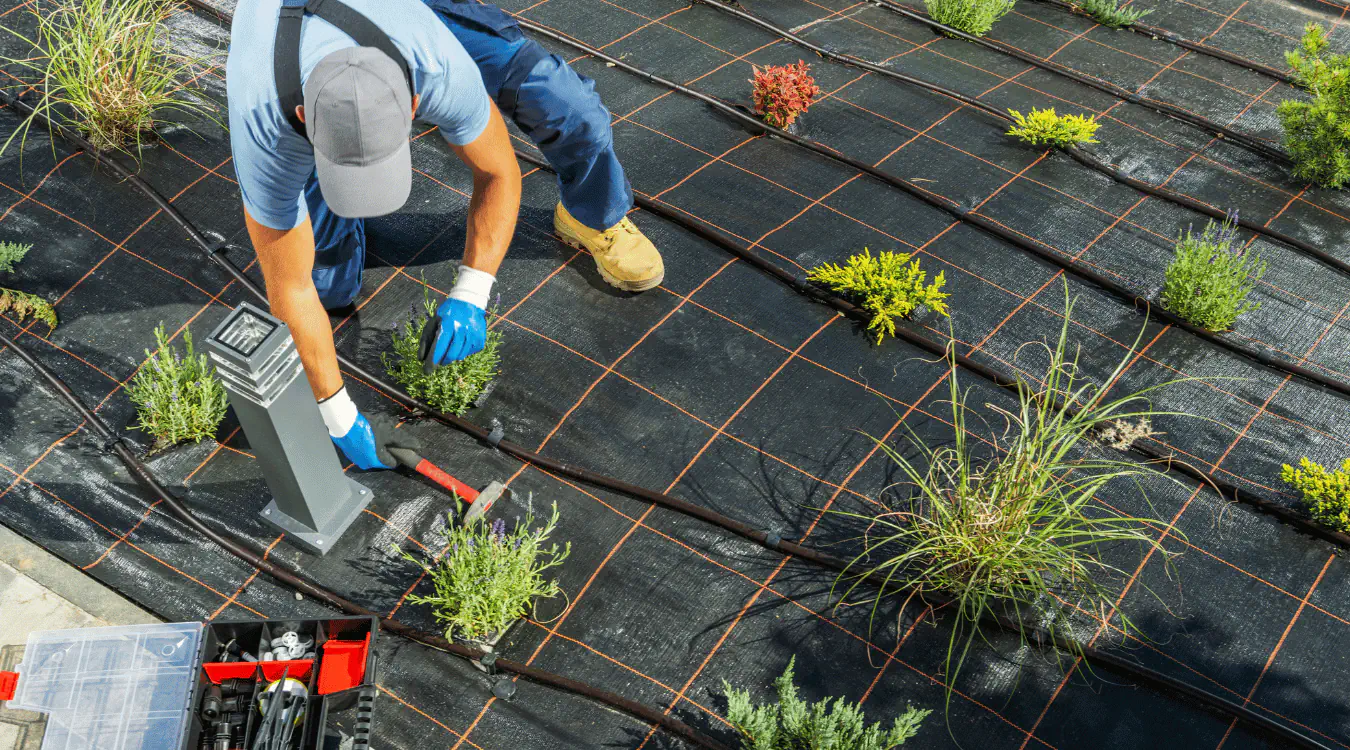
DIY Drip Irrigation System Installation Step by Step
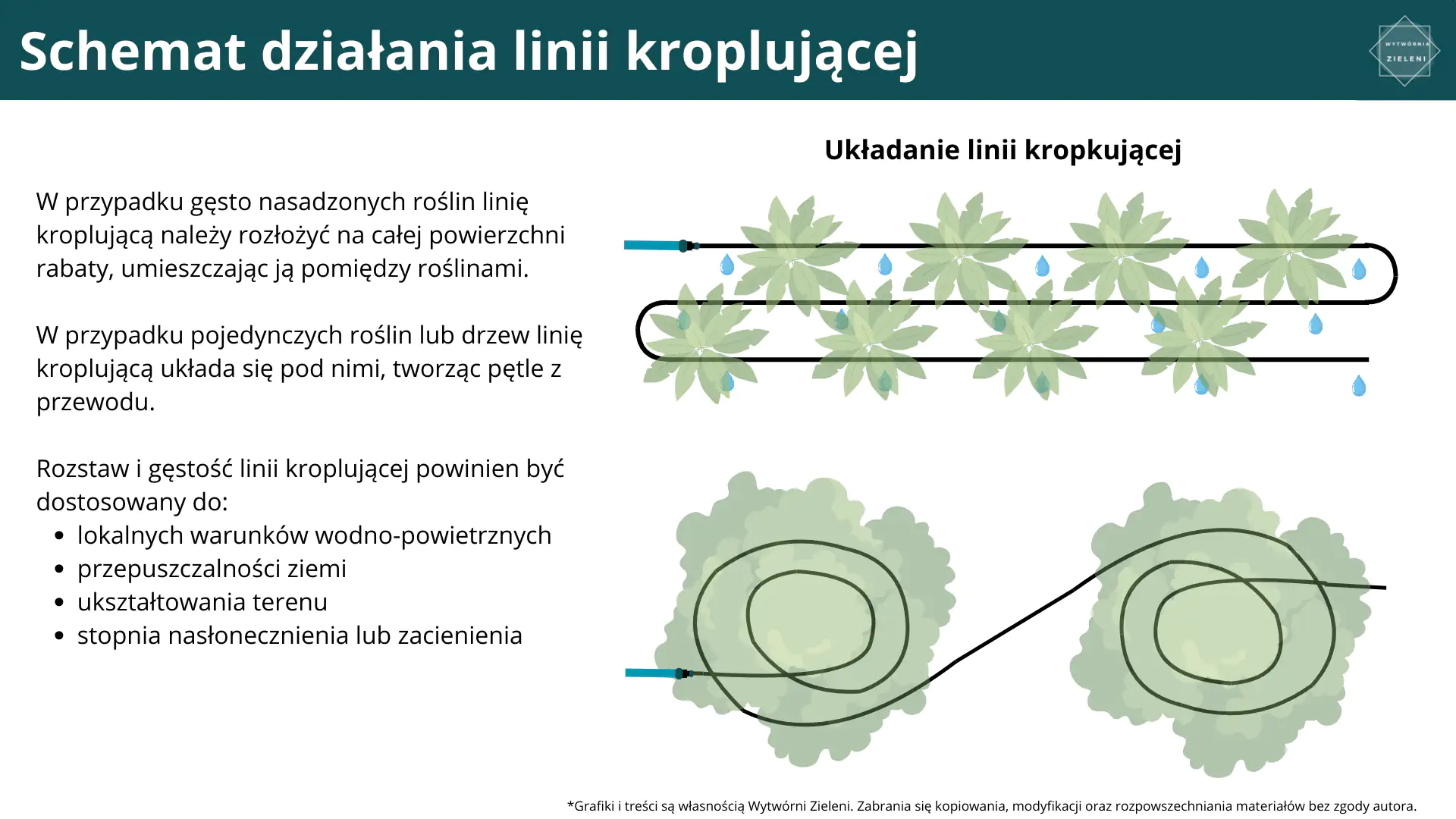
- Preparation: Choose the appropriate location and gather necessary tools and components.
- Tubing and Emitter Installation: Lay drip lines along plants, installing emitters in appropriate locations.
- Water Source Connection: Connect the system to a faucet or other water source, using filters and pressure regulators. Proper
- Testing: Start the system and check that water is evenly delivered to all plants. Use a
Want more information about designing and installing drip irrigation lines? Check our blogs describing how to design garden irrigation systems and sprinkler system installation techniques.
Drip Irrigation for Lawns - Does it Make Sense?
Underground drip pipes are a modern solution used for lawn watering. They're designed to be root-intrusion resistant, allowing for long-term, trouble-free operation. While such systems have advantages, they're still not very popular in many regions, and their use involves certain significant drawbacks:
- Modification Difficulties - After installing an underground system, any layout changes or expansion are time-consuming and expensive.
- Complex Installation - Installing such a system requires precision and experience, increasing labor costs and error risks.
- Limited Maintenance Options - Underground pipes exclude important maintenance work like lawn aeration, which is crucial for healthy grass growth.
- Damage Risk During Ground Work - Any ground intervention, such as planting new plants or construction work, carries the risk of accidentally damaging pipes.
- Higher Repair Costs - In case of failure, finding and repairing a damaged pipe section are more difficult and expensive than in traditional irrigation systems.
Underground drip pipes are a solution requiring careful consideration, especially if garden layout changes or intensive lawn maintenance are anticipated. In many cases, traditional irrigation systems may prove more practical. For comprehensive landscape garden design planning, consult with professionals who can evaluate the best irrigation approach for your specific needs.
How Much Water Does Drip Irrigation Use?
Water consumption depends on many factors such as soil type, climate, and plant types.
- On average, drip lines deliver 2 to 4 liters of water per hour per emitter
- Average water amount per 1 meter of drip tubing is 6-12 liters per hour
- Precise water delivery allows significant savings compared to traditional watering methods
For detailed analysis of your garden's water consumption, explore our soil calculator to determine optimal moisture retention and irrigation scheduling.
Common Drip Irrigation Installation Mistakes and How to Avoid Them
- Improper Pressure: Lack of pressure regulator can lead to uneven irrigation
- No Water Filtration: Unfiltered water can cause emitter clogging
- Non-Pressure Compensating Drip Hose on terrain with significant slope causes water not to reach all parts of the property evenly
- Improper Drip Line Placement: Can result in insufficient watering of some plants
To avoid these common mistakes, consider working with a professional landscape architecture company that specializes in efficient irrigation design.

Installing a drip irrigation system can revolutionize your garden maintenance while dramatically reducing water consumption. With proper planning and quality components, you'll achieve healthier plants and significant time savings. Ready to upgrade your garden's watering system? Get a professional garden design consultation and discover how expert planning can bring your irrigation vision to life.

FAQ
How long should I run my drip irrigation system daily?
Most gardens need 30-60 minutes of drip irrigation daily, depending on plant types, soil conditions, and weather. Start with 30 minutes and adjust based on soil moisture levels.
Can I install a drip irrigation kit myself?
Yes, most drip irrigation kits are designed for DIY installation. Basic systems require no special tools or plumbing experience, making them perfect for homeowners.
What's the difference between drip irrigation and soaker hoses?
Drip irrigation provides precise water delivery through individual emitters, while soaker hoses release water along their entire length. Drip systems offer better water control and efficiency.
How do I prevent my drip irrigation emitters from clogging?
Install a quality filter at your water source and use pressure-compensating emitters. Regular system flushing and proper water pressure maintenance also prevent clogs.
Is drip irrigation suitable for all plant types?
Drip irrigation works excellently for most garden plants, vegetables, trees, and shrubs. It's particularly beneficial for plants that prefer consistent soil moisture without wet foliage.

Wojciech Kazimierowicz – Author of the Article
Co-owner of Wytwórnia Zieleni and an expert in garden design and landscaping with over 13 years of experience. He specializes in creating modern, functional green spaces tailored to the budget and needs of homeowners.

Find Out How Much Your Garden Design Will Cost!
Take a quick quiz and discover the estimated cost of a custom garden design tailored to your needs. No strings attached – it takes just 2 minutes!


Wytwórnia Zieleni | Garden Design
KRS 0001107384 NIP 6452587627 REGON 528715049 St. Strzelców Bytomskich 51/1 42-600 Tarnowskie Gory, Poland
Resources
© Wytwórnia Zieleni 2026


