Backyard playground ideas: Creating the perfect children play area
Published
16 February 2026
Share this article


 Copied
TOC
- Backyard playground ideas: Creating the perfect children play area
- Essential elements for your backyard play area
- How to design the perfect children playground
- Plants and landscaping around the children play area
- Cost considerations for children playground design
- Safety considerations and maintenance
- Creating memories that last
- Transform your backyard into a children's paradise
- Frequently asked questions
- What is the ideal size for a backyard playground?
- How do I choose age-appropriate playground equipment?
- What are the safest playground surface materials?
- How much space should I leave between playground equipment?
- Can I install playground equipment myself?
- What plants should I avoid near children's play areas?
- How do I maintain playground equipment throughout the seasons?
- What's the best location for a playground in my backyard?
- How can I make a small backyard playground functional?
- What permits do I need for playground installation?
Backyard playground ideas: Creating the perfect children play area
A children play area is a dedicated garden space designed with the youngest family members in mind, combining safe entertainment with elements that promote healthy development. Swings, sandboxes, and slides are classic attractions that bring children endless joy. A treehouse or climbing wall, on the other hand, are perfect options for little explorers, developing their imagination and physical fitness.

Such a play zone allows children to spend more quality time outdoors, engaging in creative and active play. This outdoor play space becomes a cornerstone of childhood memories while supporting physical and social development. When planning your garden step by step, incorporating a dedicated children's area should be a priority consideration for families.
Essential elements for your backyard play area
When designing a kids play area garden, consider incorporating diverse elements that match their interests and age groups:
Classic playground equipment:
- Swings and slides – timeless favorites that never lose their appeal
- Modular playground systems – offering multiple activities in one compact area
- Climbing frames and monkey bars – perfect for building strength and coordination
Adventure and exploration features:
- Treehouses and play tunnels – ideal for imaginative explorer games
- Sandboxes and water play sets – encouraging creative and sensory play
- Obstacle courses and balance beams – supporting motor skill development
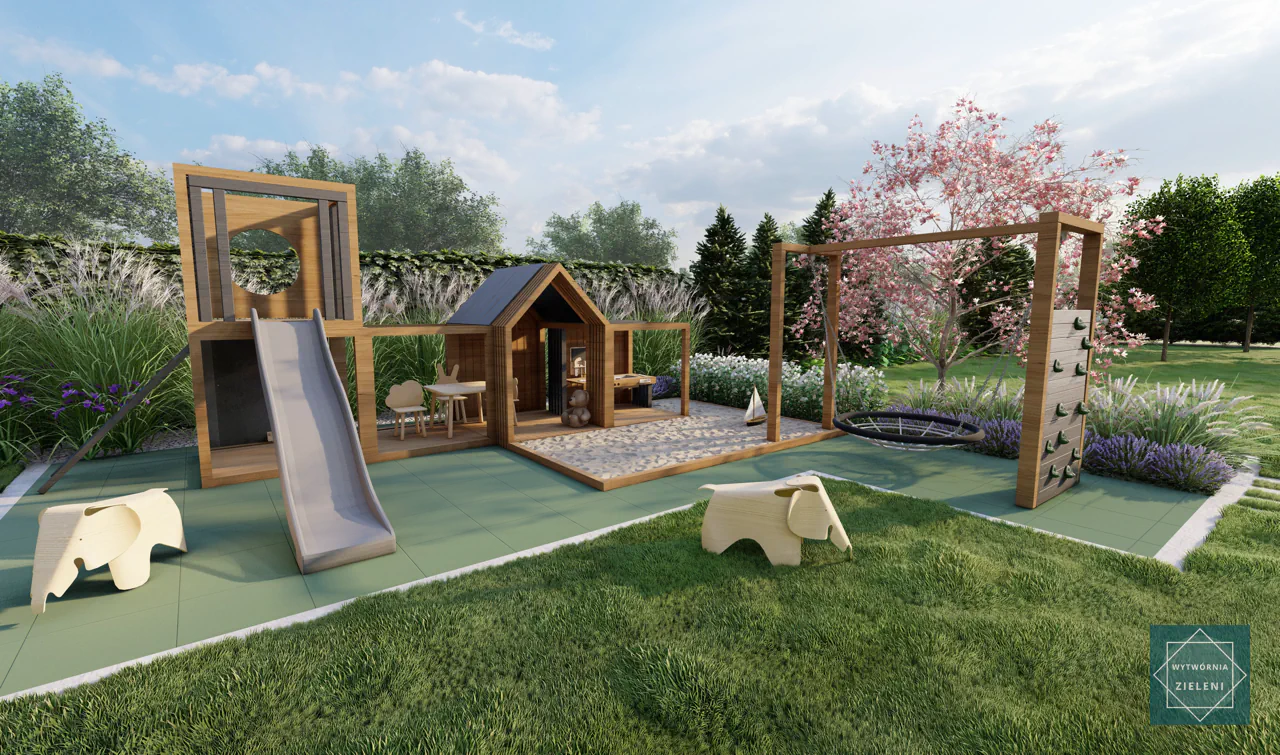
Active play equipment:
- Sensory pathways and trampolines – supporting children's motor development
- Sports equipment zones – basketball hoops, soccer goals
- Swinging and spinning elements – developing balance and coordination
Additionally, ensure safe surfacing such as impact-absorbing mats, rubber mulch, or sand (6-8 inches/15-20 cm deep), which significantly increase safety during play. These safety surfaces should extend at least 6 feet (1.8 meters) beyond equipment on all sides. Professional landscape architecture firms can help you select appropriate materials and ensure proper installation according to safety standards.
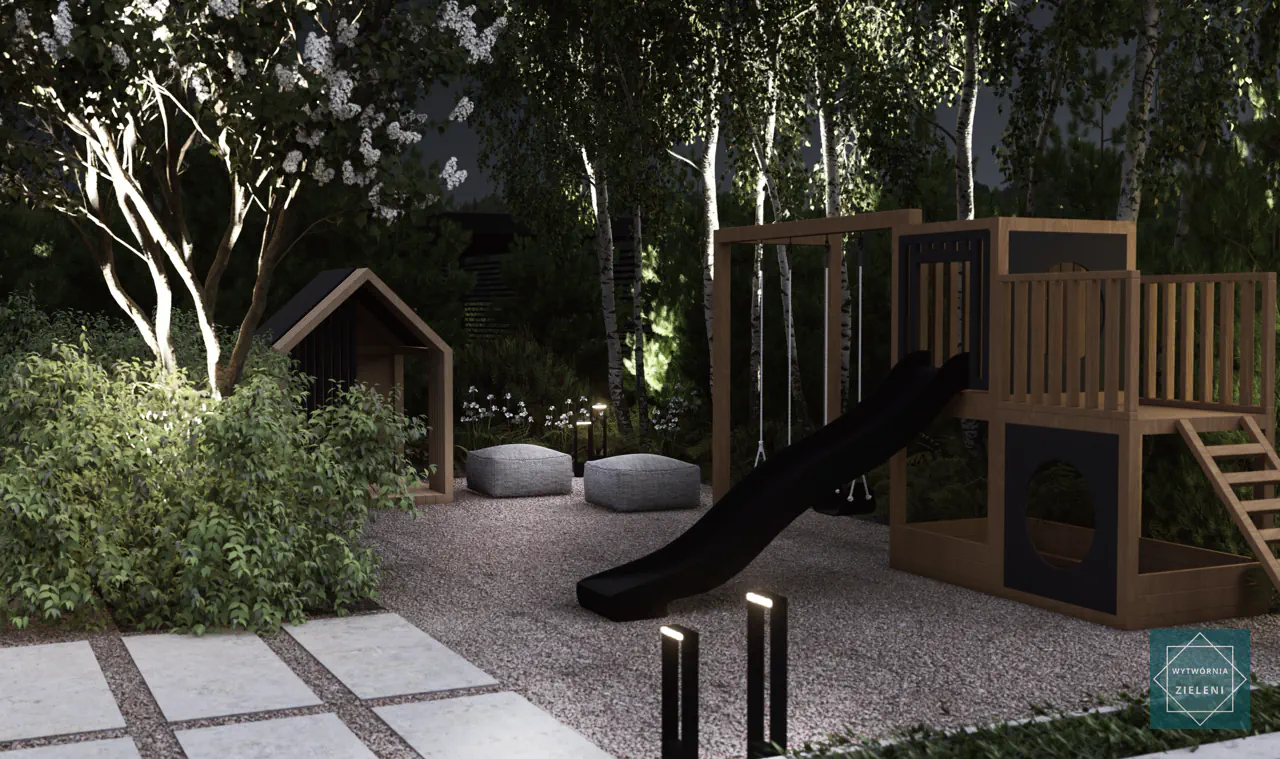
For inspiration on natural playground integration, explore this children's play area in modern garden setting. The wooden climbing structure perfectly balances adventure opportunities with landscape aesthetics, proving that functional doesn't mean compromising on design quality.
How to design the perfect children playground
Plan your outdoor play area in a quiet but clearly visible part of your garden where you can maintain supervision. Choose elements that match your children's needs – for toddlers (ages 2-5), sandboxes and spring-mounted swings work best, while older children (ages 5-12) will enjoy trampolines, climbing walls, or wooden bridges.
Age-appropriate design considerations:
- Ages 2-5: Lower equipment (maximum 4 feet/1.2 meters high), wider platforms, shorter slides
- Ages 5-12: Higher climbing structures (up to 8 feet/2.4 meters), more challenging obstacles
- Multi-age areas: Separate zones or equipment with multiple difficulty levels
Ensure colorful and functional equipment along with appropriate fencing for safety. A well-designed children play area should blend seamlessly with your overall garden zones while maintaining clear sight lines for supervision.
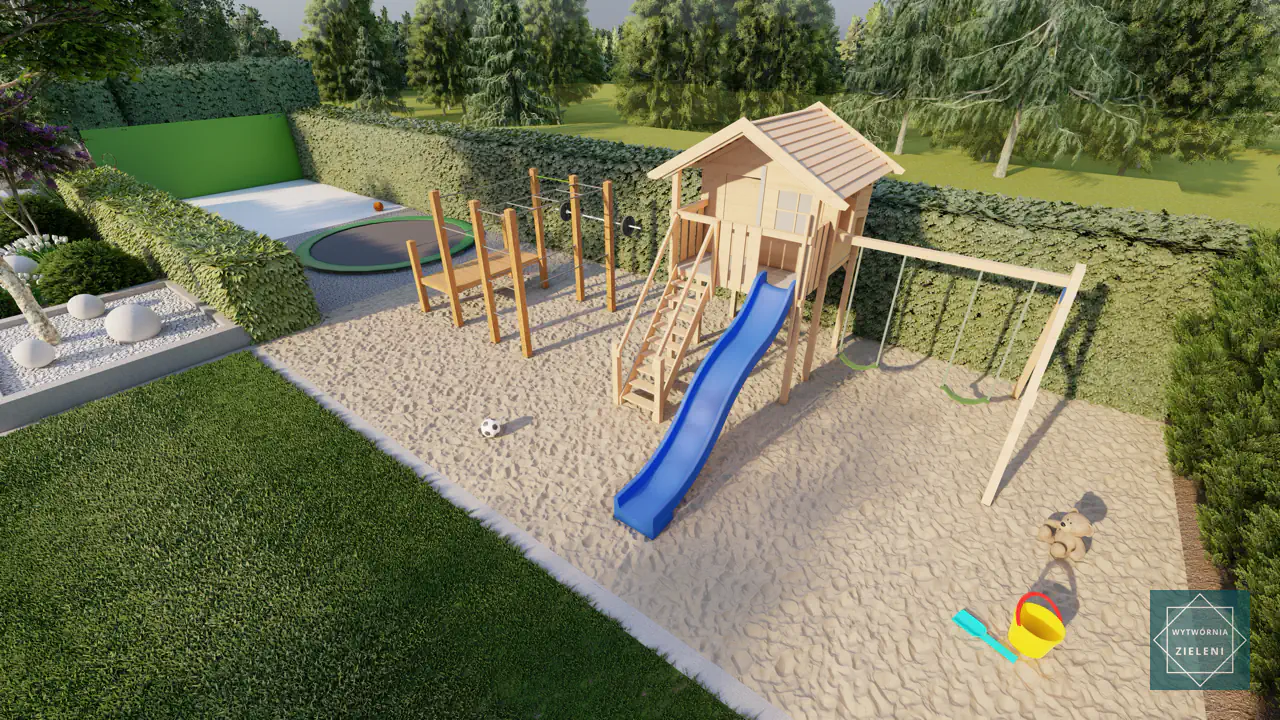
Consider the daily sun patterns when positioning equipment – morning shade is ideal for active play, while afternoon shade provides comfort during peak heat. Incorporate storage solutions for toys and equipment to maintain an organized appearance. Understanding how to plan garden zones will help you create distinct areas that serve different family functions while maintaining overall design cohesion.
Plants and landscaping around the children play area
The surrounding environment of your play zone should be child-friendly and encourage exploration:
Shade trees for comfort:
- Maple or oak trees – providing generous canopy coverage
- Fruit trees – offering seasonal interest and natural snacks
- Fast-growing options like willow or poplar for quicker results
Colorful plantings:
- Child-safe flowering plants – marigolds, sunflowers, zinnias
- Sensory plants – lamb's ear, ornamental grasses, aromatic herbs
- Educational garden beds where children can learn about plant growth
Natural boundaries:
- Low hedging plants – boxwood or small shrubs defining space boundaries
- Ornamental fencing – attractive barriers that complement your landscape design
- Natural stone borders – creating clear pathways and zones
Choosing the right hedge plants is crucial for creating safe boundaries that won't pose risks to children during active play.
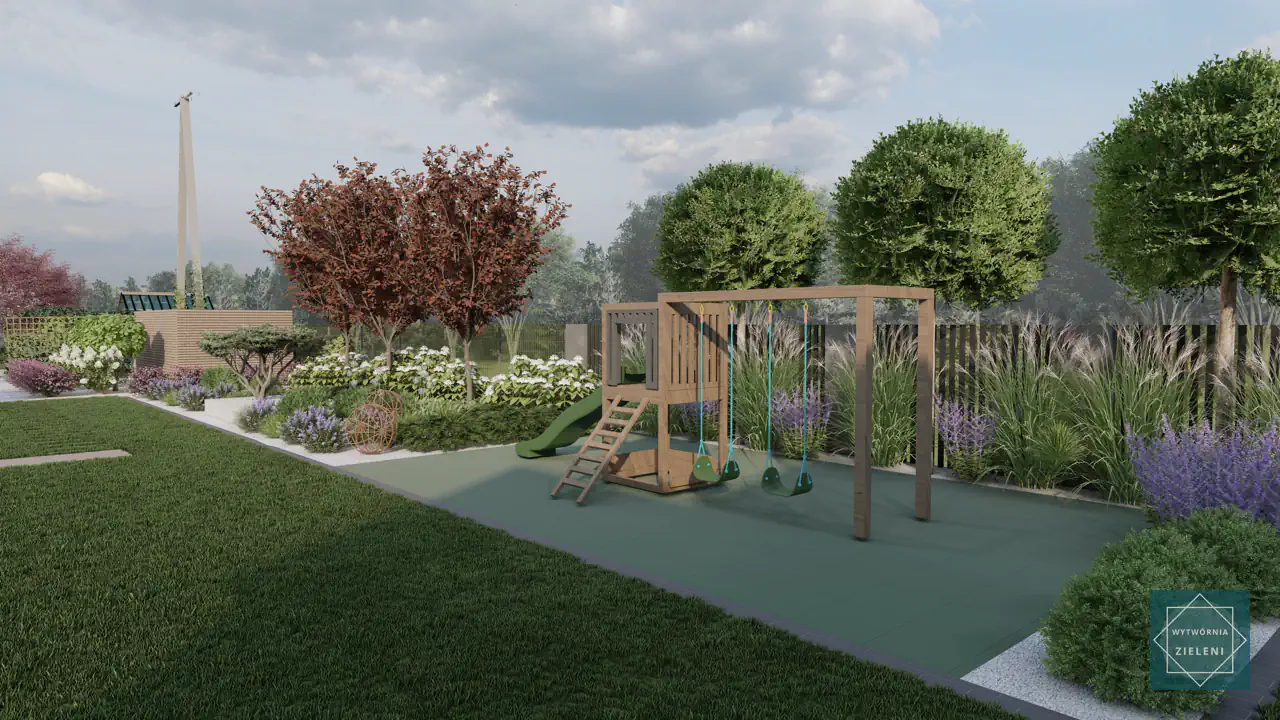
Ensure a natural and aesthetic character of this space while maintaining safety. Avoid plants with thorns, toxic berries, or those that attract stinging insects near play areas. Consider incorporating a small vegetable garden section where children can learn about growing their own plants. For families interested in creating educational opportunities, exploring fast growing grasses can provide quick results and engaging learning experiences for young gardeners.
Cost considerations for children playground design
Costs vary significantly depending on project scale and chosen elements:
Budget-friendly options ($500-2,000):
- Basic swing sets and slides – $800-1,500
- Simple sandboxes with covers – $300-600
- Spring-mounted equipment – $400-800
- DIY obstacle courses – $200-500
Mid-range installations ($2,000-8,000):
- Modular playground equipment – $3,000-6,000
- In-ground trampolines – $1,500-3,000
- Custom wooden play structures – $2,500-5,000
- Professional safety surfacing – $800-2,000
Premium playground systems ($8,000-25,000):
- Commercial-grade equipment – $10,000-20,000
- Custom treehouses – $5,000-15,000
- Complete landscape integration – $3,000-8,000
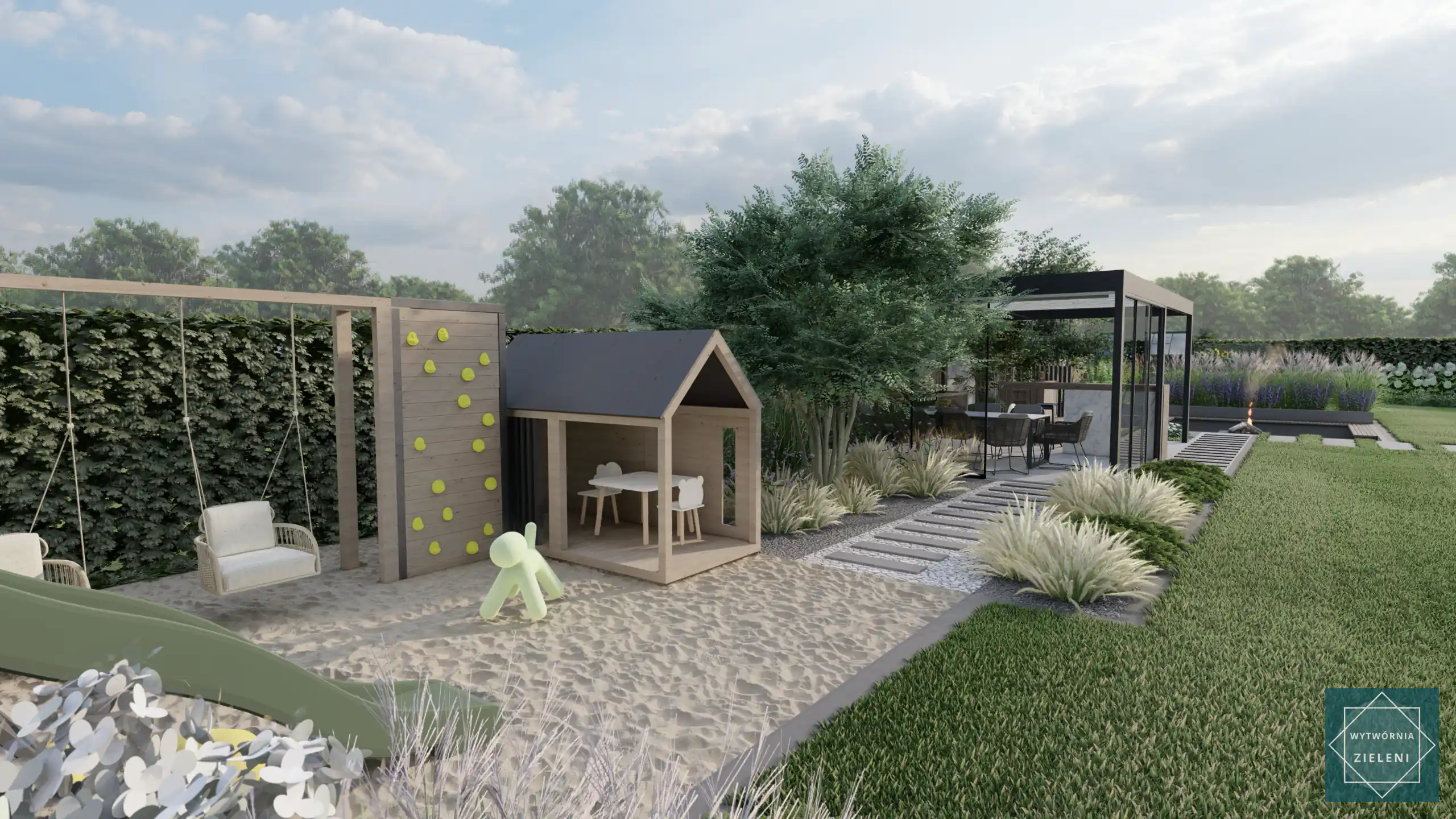
Professional design consultation can help you create a safe and functional space within your available budget. Use our garden cost calculator to estimate your project expenses and explore financing options for larger installations. Understanding the complete landscape design cost structure helps families make informed decisions about their investment.
Remember that investing in quality equipment and professional installation often provides better long-term value and safety. Consider phased implementation – start with essential elements and add features over time as budget allows.
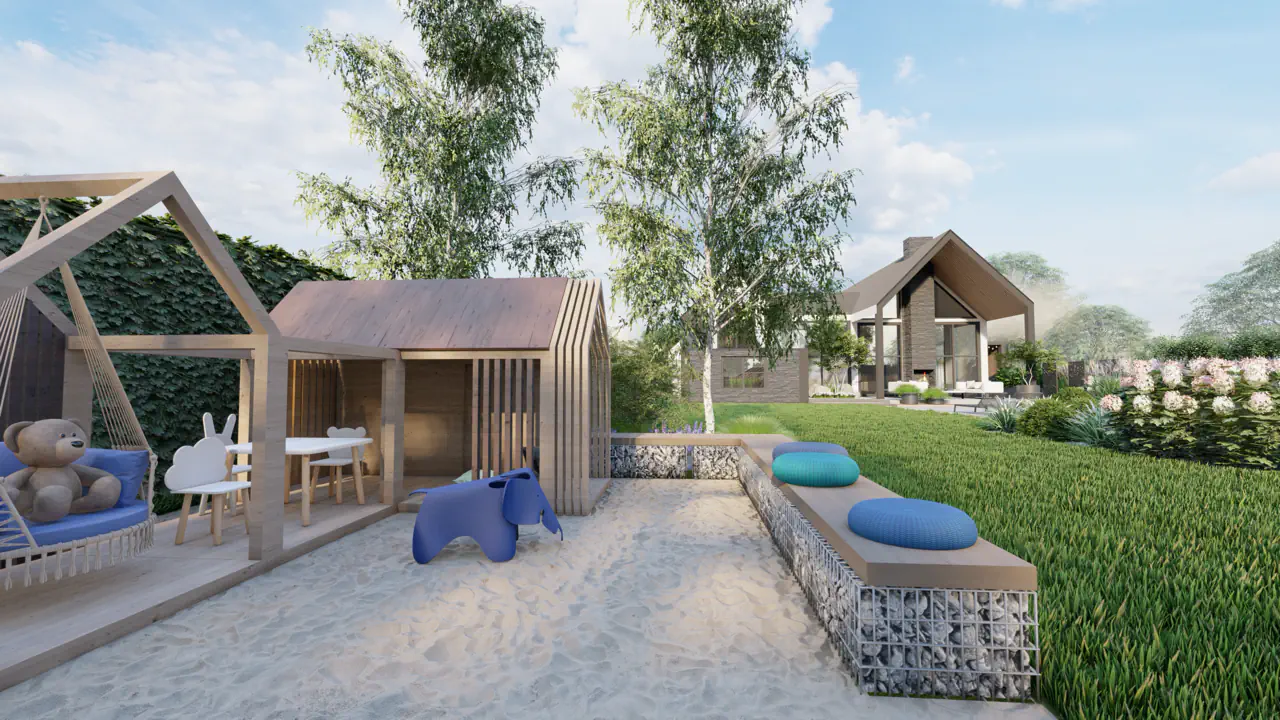
This comprehensive Bristol garden design features playground with premium Modulaki equipment and natural hedge boundaries.
Safety considerations and maintenance
Essential safety measures:
- Proper spacing between equipment (minimum 6 feet/1.8 meters)
- Age-appropriate equipment selection and clear labeling
- Regular inspection of all hardware and structural elements
- Adequate drainage to prevent water accumulation
Maintenance requirements:
- Weekly safety inspections during active use seasons
- Annual professional equipment inspection
- Seasonal cleaning and minor repairs
- Surface material refresh (sand, mulch) as needed
Installing outdoor lighting can extend play hours safely while providing security. Consider solar-powered options for energy efficiency and easy installation without electrical work. For comprehensive guidance on creating illuminated spaces, explore our garden lighting planning resources that cover both safety and aesthetic considerations.
Creating memories that last
A children play area represents an investment in your family's happiness and your children's development. Your garden transforms into a place filled with joy and shared moments that will remain in memory for years to come.
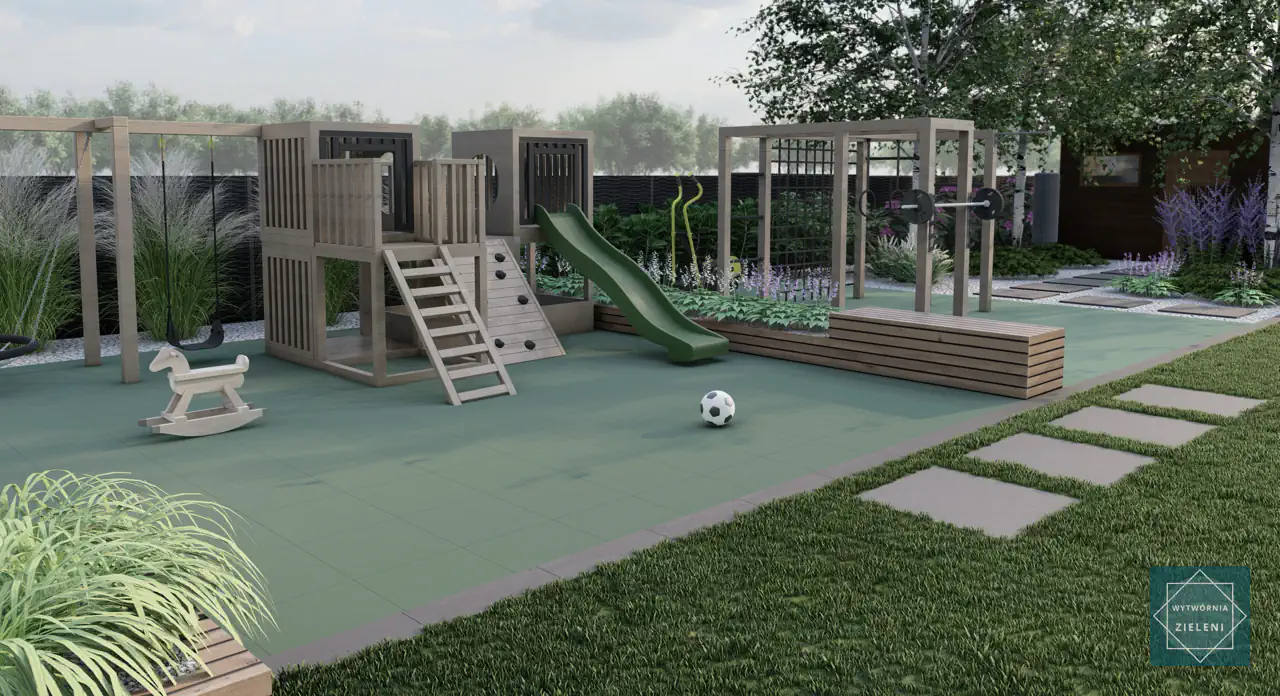
The benefits extend beyond entertainment – outdoor play supports physical development, social skills, creativity, and environmental awareness. A well-designed play area encourages children to develop independence while providing parents peace of mind about safety. When combined with other functional garden areas, your backyard becomes a comprehensive family living space that serves all generations.
Transform your backyard into a children's paradise
Creating the perfect outdoor play space requires careful planning that balances fun, safety, and aesthetics. Every child deserves a magical place where imagination can flourish and childhood memories are made. Professional landscape design services ensure your investment provides years of safe enjoyment while enhancing your property value.

Ready to create an extraordinary play space that will bring joy to your family for years to come? Get a professional garden design consultation and discover how expert planning can bring your children's playground vision to life.
Frequently asked questions
What is the ideal size for a backyard playground?
A functional children play area typically requires 200-400 square feet (18-37 square meters) for basic equipment, while comprehensive playground designs may need 600-1,000 square feet (55-93 square meters). The size depends on the number and ages of children, available space, and desired equipment variety.
How do I choose age-appropriate playground equipment?
Select equipment based on developmental stages: ages 2-5 need lower structures (under 4 feet/1.2 meters), wider platforms, and gentler slopes. Ages 5-12 can handle higher climbing elements (up to 8 feet/2.4 meters) and more challenging obstacles. Always check manufacturer age recommendations and consider your children's individual abilities.
What are the safest playground surface materials?
The safest options include engineered wood fiber, rubber mulch, poured-in-place rubber, or rubber mats. These materials should be 6-12 inches (15-30 cm) deep for fall zones and extend 6 feet (1.8 meters) beyond equipment. Avoid concrete, asphalt, or packed dirt under play equipment. For comprehensive surface planning, consider using our mulch calculator to determine exact material quantities needed.
How much space should I leave between playground equipment?
Maintain minimum 6 feet (1.8 meters) between stationary equipment and 9 feet (2.7 meters) for equipment with moving parts like swings. This prevents collisions and allows safe movement around the garden playground.
Can I install playground equipment myself?
Simple equipment like sandboxes or basic swing sets can be DIY projects with proper tools and instructions. However, complex modular playground systems require professional installation to ensure safety standards and warranty coverage. Always verify local building codes and permit requirements.
What plants should I avoid near children's play areas?
Avoid plants with thorns (roses, barberry), toxic berries (yew, holly), poisonous leaves (foxglove, oleander), and those attracting stinging insects (fruit trees during blooming). Choose child-friendly options like marigolds, sunflowers, and ornamental grasses for your landscape design. Consider incorporating climbing plants on structures away from active play zones to add natural beauty without safety concerns.
How do I maintain playground equipment throughout the seasons?
Perform monthly safety inspections checking for loose bolts, wear, and damage. Clean equipment regularly, apply protective coatings annually, and refresh surface materials as needed. Winter preparation includes removing or securing lightweight equipment and ensuring proper drainage to prevent ice formation.
What's the best location for a playground in my backyard?
Choose a level area visible from the house for supervision, with morning shade and afternoon sun protection. Ensure good drainage and easy access from the home. Consider prevailing winds and proximity to neighbors when planning your outdoor entertainment area. Professional site preparation ensures proper drainage and foundation stability for long-term equipment safety.
How can I make a small backyard playground functional?
Maximize vertical space with multi-level equipment, choose compact modular systems, and incorporate dual-purpose elements like storage benches that double as seating. Consider wall-mounted climbing features and hanging equipment that can be stored when not in use. Learn more about small garden design ideas.
What permits do I need for playground installation?
Requirements vary by location, but typically permanent structures over certain heights or sizes require permits. Check with local building departments about setback requirements, fence regulations, and safety standards. Professional installation companies usually handle permit applications as part of their service.

Wojciech Kazimierowicz – Author of the Article
Co-owner of Wytwórnia Zieleni and an expert in garden design and landscaping with over 13 years of experience. He specializes in creating modern, functional green spaces tailored to the budget and needs of homeowners.

Find Out How Much Your Garden Design Will Cost!
Take a quick quiz and discover the estimated cost of a custom garden design tailored to your needs. No strings attached – it takes just 2 minutes!


Wytwórnia Zieleni | Garden Design
KRS 0001107384 NIP 6452587627 REGON 528715049 St. Strzelców Bytomskich 51/1 42-600 Tarnowskie Gory, Poland
Resources
© Wytwórnia Zieleni 2026


