Deciduous hedge plants - complete guide to choosing the best options
Żywopłot liściasty najlepiej dobierać do celu (osłona, granica, dekoracja) oraz wysokości, jakiej potrzebujesz. Najlepsze wybory to gatunki odporne, dobrze znoszące cięcie i dopasowane do stanowiska, bo to one decydują o gęstości i trwałości żywopłotu.
TL;DR
- Żywopłot liściasty dobiera się do funkcji i docelowej wysokości: niski, średni lub wysoki.
- Najpewniejsze rośliny na gęsty, formowany żywopłot to grab i buk, bo świetnie znoszą regularne cięcie.
- Ligustr, dereń i pęcherznica to szybkie i łatwe opcje na żywopłot średniej wysokości.
- Gęstość żywopłotu buduje systematyczne cięcie od pierwszego sezonu oraz odpowiedni rozstaw sadzenia.
- Większość żywopłotów liściastych zrzuca liście zimą, ale część gatunków utrzymuje zaschnięte liście i nadal osłania.
Published
30 October 2026
Share this article


 Copied
TOC
- Deciduous hedge plants - complete guide
- Which plants to choose for deciduous hedge?
- How to care for deciduous hedge plants?
- Pruning deciduous hedge - how to trim deciduous hedge plants?
- Planting hedge plants
- Shrubs for deciduous hedge
- Serviceberry Lamarck (Amelanchier lamarckii)
- Ottawa Barberry 'Silver Miles' (Berberis × ottawensis 'Silver Miles')
- Ottawa Barberry 'Superba' (Berberis × ottawensis 'Superba')
- Box-leaf Barberry 'Nana' (Berberis buxifolia 'Nana')
- 'Indian Summer' Barberry (Berberis 'Indian Summer')
- Korean Barberry (Berberis koreana)
- 'Red Tears' Barberry (Berberis 'Red Tears')
- Thunberg's Barberry (Berberis thunbergii)
- Small-leaf Boxwood 'Faulkner' (Buxus microphylla 'Faulkner')
- Common Boxwood (Buxus sempervirens)
- Flowering Quince (Chaenomeles sp.)
- White Dogwood (Cornus alba)
- Bloodtwig Dogwood 'Compressa' (Cornus sanguinea 'Compressa')
- Common Hazel 'Aurea' (Corylus avellana 'Aurea')
- Filbert 'Purpurea' (Corylus maxima 'Purpurea')
- Cotoneaster bullatus
- Diels Cotoneaster (Cotoneaster dielsianus)
- Spreading Cotoneaster (Cotoneaster divaricatus)
- Glossy Cotoneaster (Cotoneaster lucidus)
- 'Ursynów' Cotoneaster (Cotoneaster 'Ursynów')
- Russian Olive (Elaeagnus angustifolia)
- Border Forsythia (Forsythia × intermedia)
- 'Maluch' Forsythia (Forsythia 'Maluch')
- Green Forsythia 'Weber's Bronx' (Forsythia viridissima 'Weber's Bronx')
- Garden Hydrangea (Hydrangea macrophylla)
- Meserve Holly (Ilex ×meserveae)
- English Holly (Ilex aquifolium)
- English Lavender (Lavandula angustifolia)
- Common Privet (Ligustrum vulgare)
- Common Privet 'Atrovirens' (Ligustrum vulgare 'Atrovirens')
- Chinese Honeysuckle (Lonicera pileata)
- Tatarian Honeysuckle 'Arnold Red' (Lonicera tatarica 'Arnold Red')
- Oregon Grape (Mahonia aquifolium)
- Mock Orange (Philadelphus sp.)
- Ninebark (Physocarpus opulifolius)
- Shrubby Cinquefoil (Potentilla fruticosa)
- Cherry Plum (Prunus cerasifera)
- Cherry Laurel (Prunus laurocerasus)
- Cherry Laurel 'Otto Luyken' (Prunus laurocerasus 'Otto Luyken')
- Blackthorn (Prunus spinosa)
- Firethorn (Pyracantha sp.)
- Alpine Currant 'Schmidt' (Ribes alpinum 'Schmidt')
- Arguta Spirea (Spiraea ×arguta)
- Gray Spirea 'Grefsheim' (Spiraea ×cinerea 'Grefsheim')
- Vanhoutte Spirea (Spiraea ×vanhouttei)
- Vanhoutte Spirea 'Gold Fountain' (Spiraea ×vanhouttei 'Gold Fountain')
- Birchleaf Spirea (Spiraea betulifolia)
- Dense-flower Spirea (Spiraea densiflora)
- Douglas Spirea var. Menziesii (Spiraea douglasii var. menziesii)
- Japanese Spirea (Spiraea japonica)
- Japanese Spirea 'Bullata' (Spiraea japonica 'Bullata')
- Japanese Spirea 'Golden Princess' (Spiraea japonica 'Golden Princess')
- Japanese Spirea 'Japanese Dwarf' (Spiraea japonica 'Japanese Dwarf')
- Japanese Spirea Magic Carpet 'Walbuma' (Spiraea japonica 'Walbuma')
- Nippon Spirea (Spiraea nipponica)
- Snowberry (Symphoricarpos sp.)
- Hungarian Lilac (Josiki) (Syringa josikaea)
- Meyer's Lilac 'Palibin' (Syringa meyeri 'Palibin')
- Little-leaf Lilac 'Superba' (Syringa microphylla 'Superba')
- Spreading Lilac 'Miss Kim' (Syringa patula 'Miss Kim')
- Common Lilac (Syringa vulgaris)
- Burkwood Viburnum (Viburnum ×burkwoodii)
- Wayfaring Tree (Viburnum lantana)
- European Cranberrybush (Viburnum opulus)
- Prague Viburnum 'Pragense' (Viburnum 'Pragense')
- Leatherleaf Viburnum (Viburnum rhytidophyllum)
- Common Periwinkle (Vinca minor)
- Weigela (Weigela sp.)
- Trees for deciduous hedge
- Field Maple (Acer campestre)
- Norway Maple 'Columnare' (Acer platanoides 'Columnare')
- Tatarian Maple (subsp. ginnala) (Acer tataricum subsp. ginnala)
- Black Alder 'Pyramidalis' (Alnus glutinosa 'Pyramidalis')
- Silver Birch 'Fastigiata' (Betula pendula 'Fastigiata')
- Silver Birch 'Obelisk' (Betula pendula 'Obelisk')
- European Hornbeam (Carpinus betulus)
- European Hornbeam 'Columnaris' (Carpinus betulus 'Columnaris')
- European Hornbeam 'Fastigiata' (Carpinus betulus 'Fastigiata')
- European Hornbeam 'Frans Fontaine' (Carpinus betulus 'Frans Fontaine')
- European Hornbeam 'Purpurea' (Carpinus betulus 'Purpurea')
- American Tulip Tree 'Fastigiatum' (Liriodendron tulipifera 'Fastigiatum')
- Lombardy Poplar (Populus nigra 'Italica')
- Simon's Poplar 'Fastigiata' (Populus simonii 'Fastigiata')
- European Aspen 'Erecta' (Populus tremula 'Erecta')
- Choke Cherry 'Shubert' (Prunus virginiana 'Shubert')
- Callery Pear 'Chanticleer' (Pyrus calleryana 'Chanticleer')
- 'Monument' Oak (Quercus 'Monument')
- English Oak 'Fastigiata' (Quercus robur 'Fastigiata')
- English Oak 'Fastigiata Koster' (Quercus robur 'Fastigiata Koster')
- European Mountain Ash 'Fastigiata' (Sorbus aucuparia 'Fastigiata')
- 'Autumn Spire' Mountain Ash ('Flanrock') (Sorbus AUTUMN SPIRE 'Flanrock')
- Little-leaf Linden (Tilia cordata)
- Little-leaf Linden 'Greenspire' (Tilia cordata 'Greenspire')
- Large-leaf Linden (Tilia platyphyllos)
- Silver Linden 'Brabant' (Tilia tomentosa 'Brabant')
- Silver Linden 'Varsaviensis' (Tilia tomentosa 'Varsaviensis')
- Transform your garden with seasonal beauty
- Frequently asked questions
- How to plant small-leaf boxwood varieties?
- Is it worth shaping deciduous hedge?
- Which deciduous shrubs are suitable for hedges?
- How does evergreen hedge differ from deciduous?
- How to plant hedge in garden?
- Is beech a good tree for hedge?
- What advantages does hornbeam have as hedge plant?
- Does spiraea work for formal hedge?
- Can holly be used for hedge?
- What to know about planting European beech?
Deciduous hedge plants - complete guide
Planning to plant a deciduous hedge but don't know which plants to choose? In this article, we'll help you find the best hedge plants for your garden and how to select them according to your individual needs.
We'll show you:
- Which plants to choose for deciduous hedge
- How to care for deciduous hedge plants to keep them ornamental and healthy
- How to plan and plant hedge shrubs in your garden
If you want to create a functional and aesthetic hedge that will be a garden ornament for many years - read on!
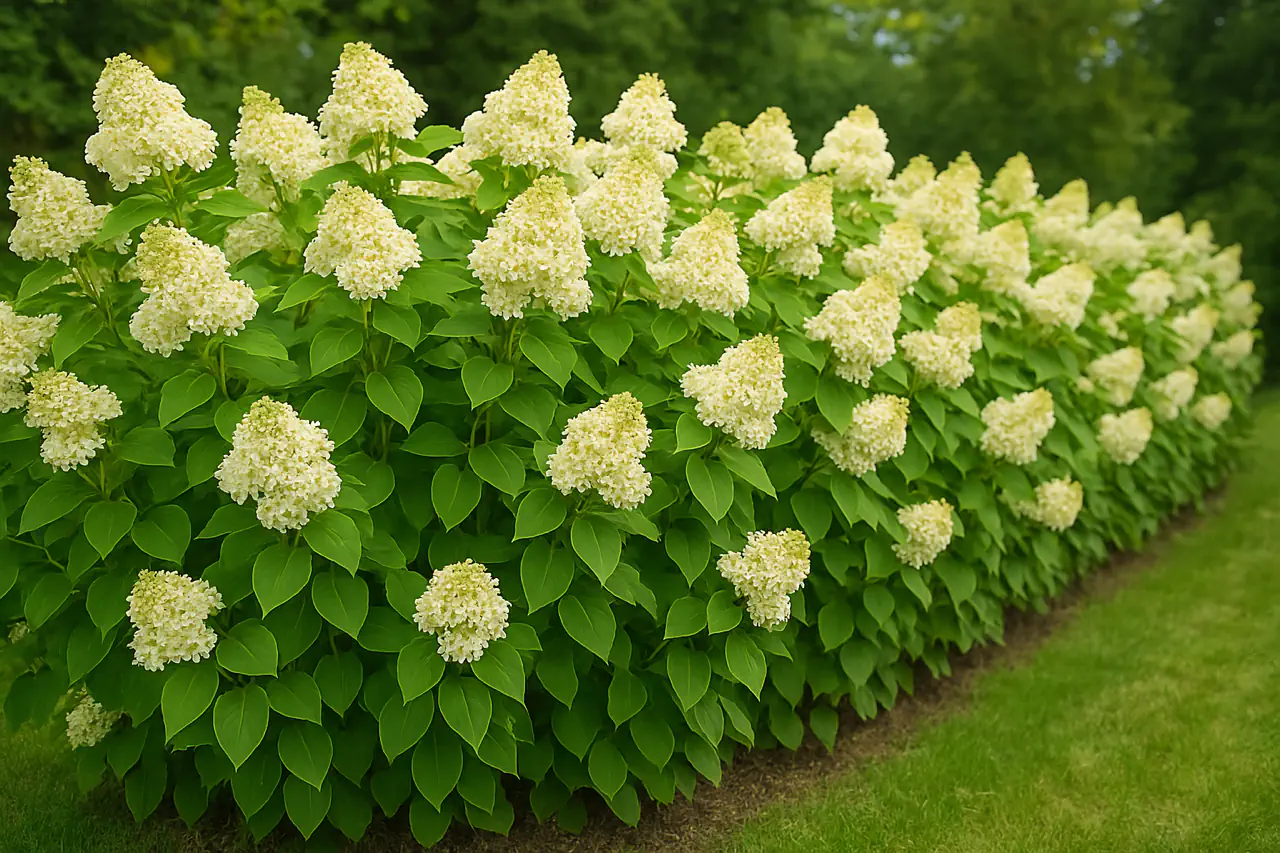
Which plants to choose for deciduous hedge?
Selecting appropriate hedge plants should start with determining what function the hedge should serve - ornamental, protective, or boundary? Depending on the expected height, plants can be divided into three basic groups: low, medium, and tall, which will help you plan the space and achieve the desired effect with professional landscape garden design.
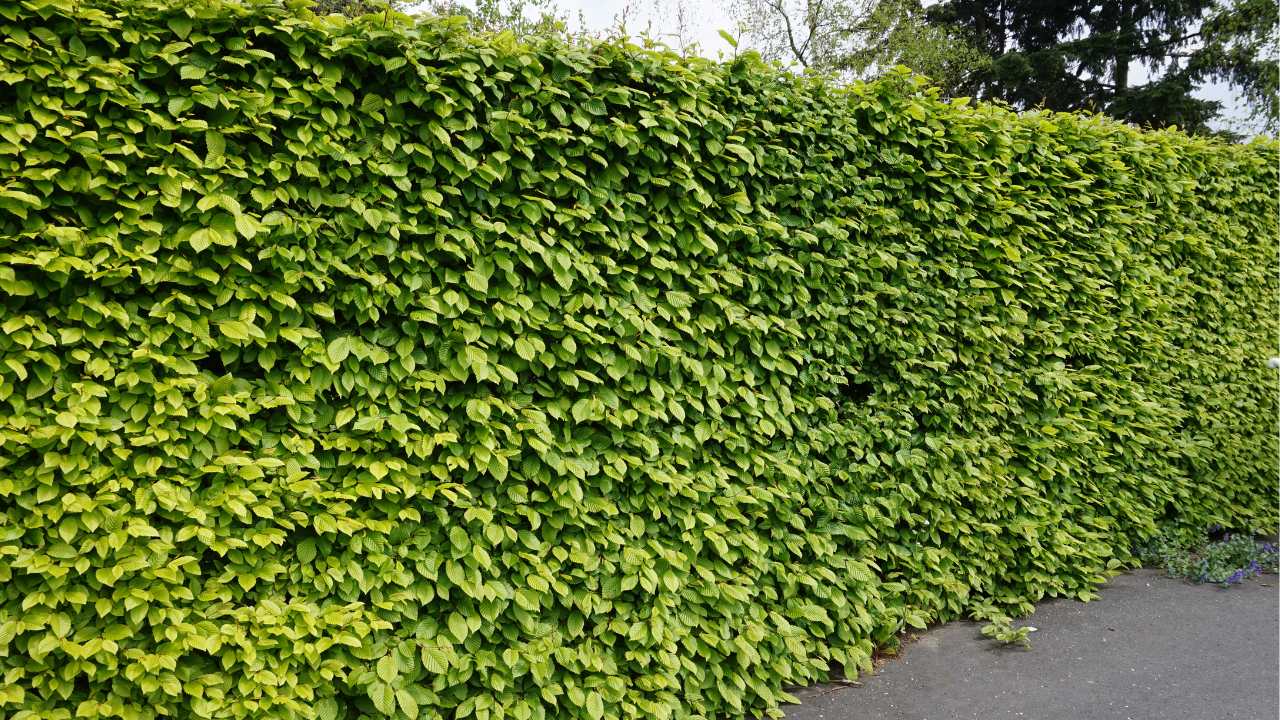
Low deciduous hedge plants
If you need a delicate border for pathways, flower beds, or recreational spaces, low-growing plants work perfectly. Border grass plants can complement traditional hedge plantings beautifully. Spiraea makes an exceptionally decorative hedge plant that delights with abundant flowering.
Alpine currant also works well, especially in shady places - it's resistant, dense, and creates a natural barrier. Consider serviceberries too - their small leaves and red berries in autumn catch the eye and give the garden character.
Medium deciduous hedge plants
For those seeking a compromise between screening and aesthetics, medium-height shrubs are an ideal choice. Privet hedge is a classic species - fast growth, easy shaping, and partial evergreen qualities make it extremely popular.
When planning your garden zones, consider how medium hedges can create natural divisions. Dogwood stands out with colorful stems in winter and decorative foliage in summer. Holly, though less commonly seen, adds elegance and tolerates pruning well.
Tall deciduous hedge plants
If the goal is to create a dense, tall wall of greenery for maximum garden privacy, proven deciduous trees are worth considering. Beech hedge stands out with density, beautiful leaf color, and the ability to maintain form for many years.
Hornbeam hedge is a plant that tolerates cutting excellently and even retains dried leaves in winter, increasing its screening value. Such hedges are ideal for creating backgrounds in landscaping near fences.
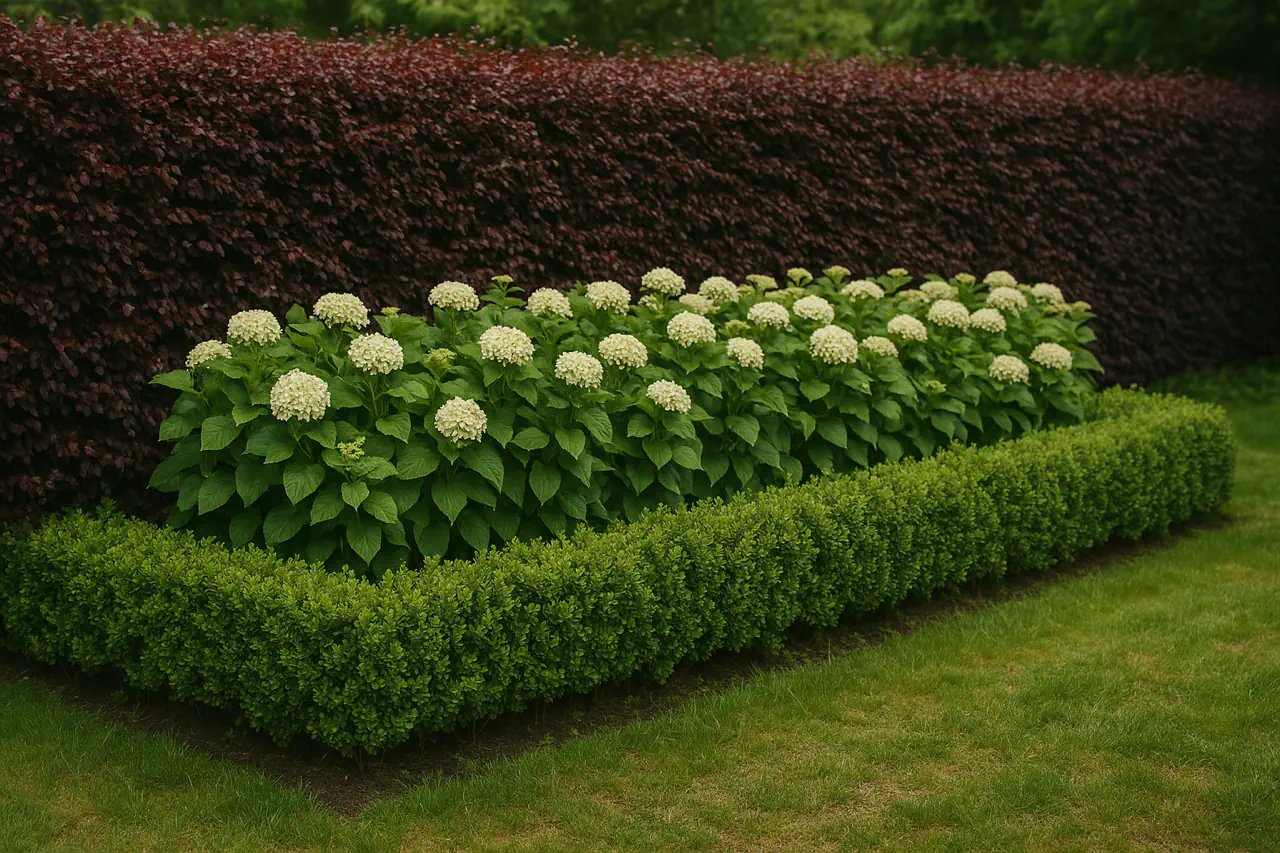
When choosing deciduous hedge plants, consider not only their height but also growth rate, maintenance requirements, and visual effect. Appropriate plant selection allows you to divide space into proper garden zones and separate yourself from neighbors' view. For comprehensive planning assistance, explore our garden design services to ensure optimal hedge placement and species selection.
How to care for deciduous hedge plants?
Caring for deciduous hedge plants isn't complicated - many of these species are considered easy to maintain, making them perfect for beginner gardeners. The key is proper site matching and systematic care, which is essential when you start garden from scratch.
- These plants grow well in average, moderately fertile soils, and their major advantage is drought tolerance - especially in older specimens. Understanding proper soil preparation is crucial for hedge establishment.
- Growing doesn't require special treatments - just ensure garden watering during longer periods without rainfall and fertilize the soil, especially with nitrogen fertilizers. For optimal soil conditions, consider using our soil calculator to determine the exact amount needed for your hedge project.
- It's worth caring for young shoots, particularly in the first years after planting - they respond well to spring and summer fertilizing, supporting vigorous growth and branching.
- Remember that most species drop leaves for winter, so in autumn, remove fallen leaves from the surroundings to limit disease development. Although deciduous plants that drop leaves for winter still provide a screening barrier for views.

Regular and simple care keeps the hedge in excellent condition without needing to spend many hours on garden maintenance. The key here is proper garden project planning so plants match the functions they should serve. To estimate maintenance costs, use our landscape pricing calculator for accurate budget planning.
Pruning deciduous hedge - how to trim deciduous hedge plants?
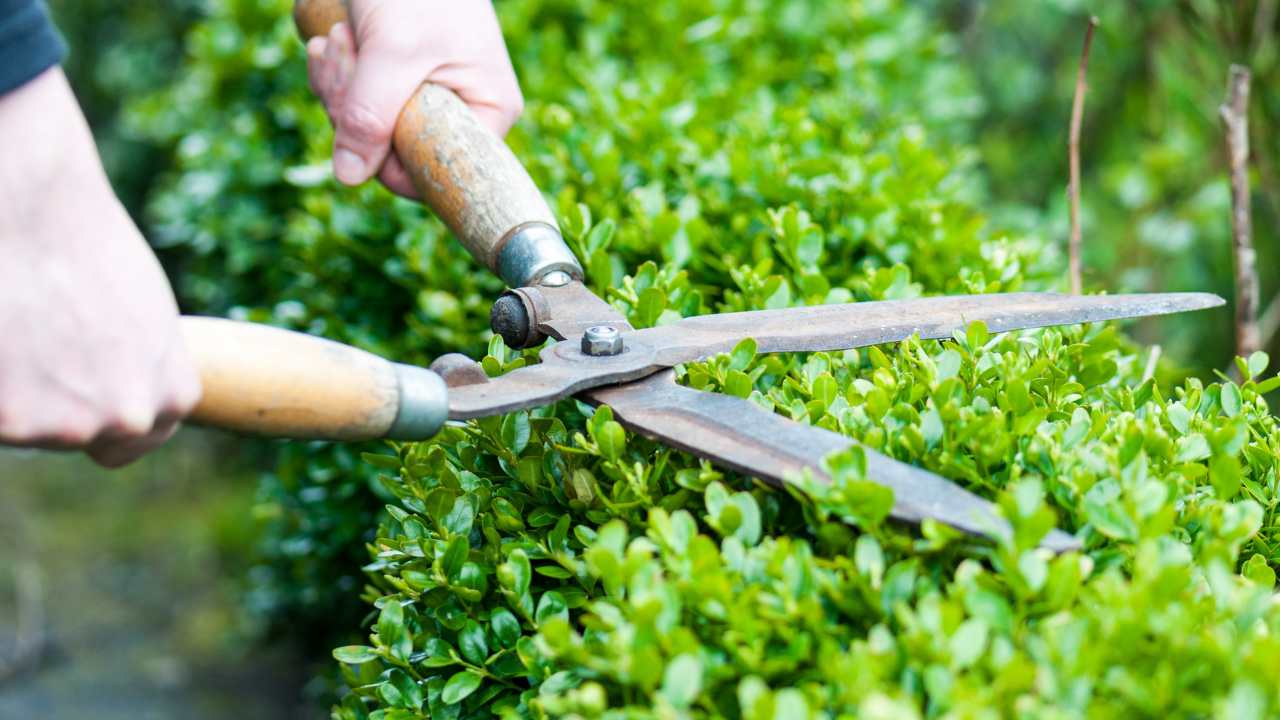
For deciduous hedge to be dense and healthy, regular pruning is necessary. This pruning stimulates plants to branch and helps maintain an attractive shape. The first pruning is particularly important, performed in early spring before buds develop. Learning proper techniques is part of understanding modern garden design principles.
- Shrubs planted in spring should be pruned right after planting, shortening shoots by 30-50%, depending on the sapling size and target hedge size
- Formal hedges should be pruned at least 3 times per season - spring, summer, and early autumn
- It's best to prune deciduous hedge on cloudy days to reduce evaporation and plant stress
Regular pruning ensures compact form, makes maintenance easier, and improves plant resistance to weather conditions. This way, they'll be a wonderful element of your home garden. For comprehensive guidance on hedge establishment, refer to our complete backyard design guide.
Planting hedge plants
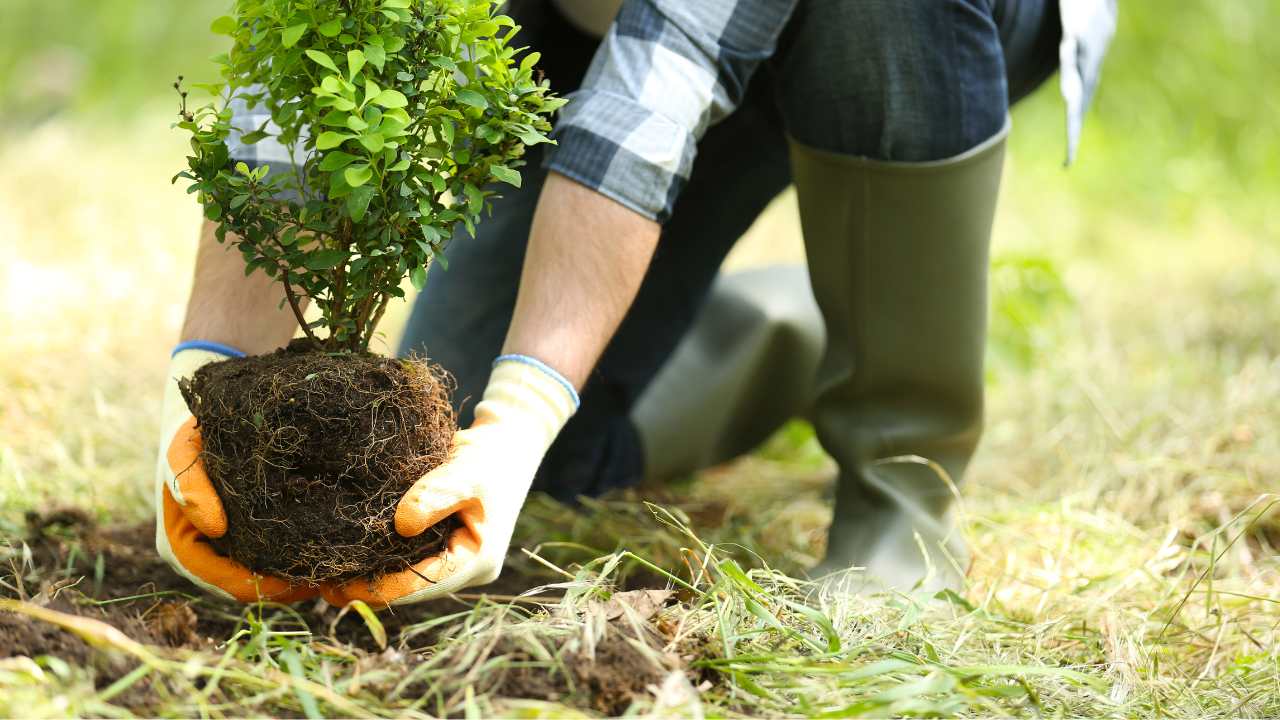
Establishing a hedge is an important stage in garden design that's worth planning well. If we want to create a dense hedge that will be both ornamental and an effective fence, creating a garden and planting project, proper planting, and later shaping are crucial. Professional landscape architecture services can ensure optimal results.
- Start by preparing the site - soils should be loosened and cleared of weeds
- Plants are best planted in early spring or autumn - they establish better then
- Choose healthy saplings, preferably bare-root, bought from a proven
- Plant them in a straight row, keeping them as low as possible, which will allow proper thickening in the future
- After planting, lightly trim the tops to stimulate plants to branch and start forming the future formal hedge from the beginning
- Depending on species and conditions, plants grow quickly and can reach up to 2 m height, creating effective screening
Carefully executed planting guarantees healthy growth and a beautiful, functional hedge for many years. Learn more about establishing gardens step by step from our comprehensive garden step-by-step guide. For soil preparation calculations, utilize our planter soil calculator to determine exact requirements.
Shrubs for deciduous hedge
Selecting appropriate shrubs is crucial for the aesthetics and functionality of every deciduous hedge. Among the most frequently chosen modern ornamental shrubs, you'll find plants that delight with appearance and are simultaneously easy to maintain.
- Boxwood - classic choice for low, formal hedges
- Spiraea - abundantly
- Forsythia - spring color accent with intensely yellow flowers
- Thunberg's barberry - decorative, with changing leaf coloration
- Common barberry - resistant and fast-growing, ideal for natural barriers
- Ninebark - effective, with colorful leaves and fast growth
- Small-leaf boxwood variety - dense, slow-growing, ideal for cutting
- Common boxwood - evergreen classic with elegant appearance
- Privet - fast growth, partial winter-green qualities and good cutting tolerance
- White dogwood - attractive year-round, especially thanks to colorful winter stems
- Common privet - fast-growing, easy to shape, creates dense, tall hedges
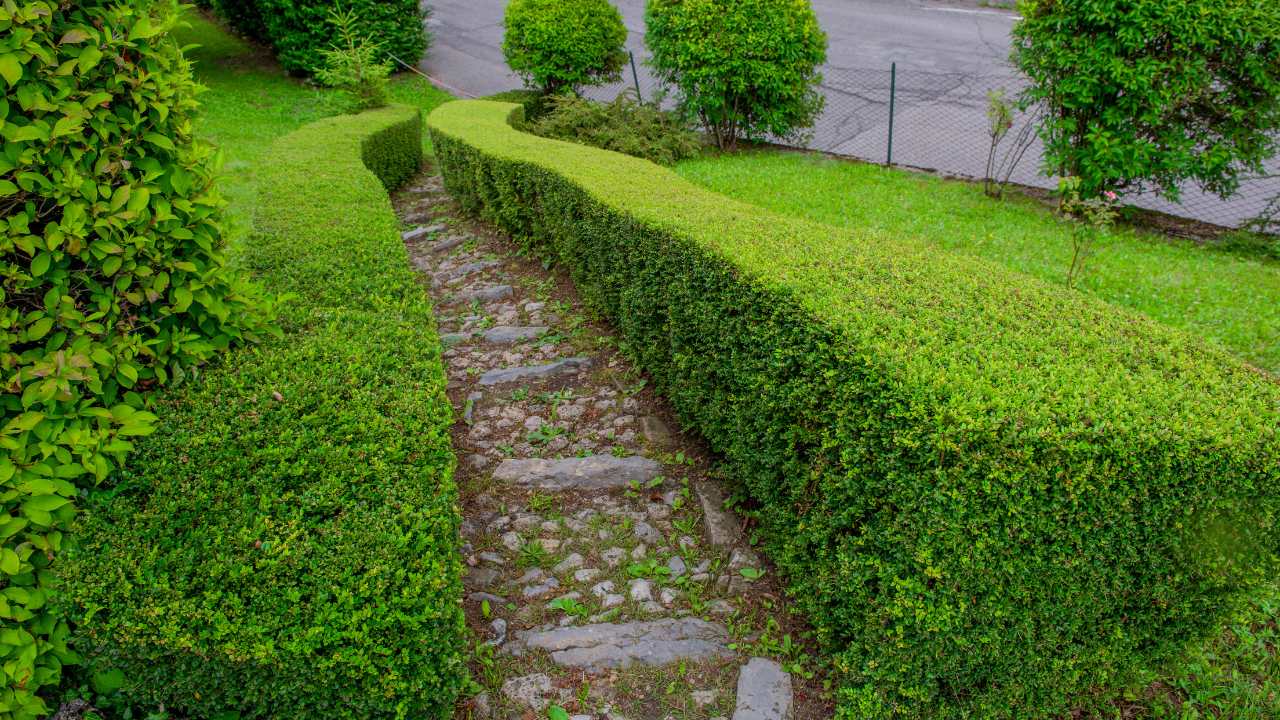
Below you'll find more recommended species with descriptions and basic information to help create an effective, durable, and natural hedge. For comparison with other hedge types, explore our guide to evergreen hedge plants to understand all your options.
Serviceberry Lamarck (Amelanchier lamarckii)
Upright, multi-stemmed shrub, sometimes growing as a small tree. Reaches 5-8 m height and 3-4 m width. Excellent for informal hedges and espaliers, grows well in sun or partial shade, in fertile, moderately moist soil - tolerates various pH levels.
Ottawa Barberry 'Silver Miles' (Berberis × ottawensis 'Silver Miles')
Wide, upright shrub with effective, dense habit. Reaches 2-3 m height and similar width. Works in formal and natural espaliers - grows in sun or partial shade, in moderately moist soil tolerant of pH variations.
Ottawa Barberry 'Superba' (Berberis × ottawensis 'Superba')
Spreading, wide-rounded shrub, reaching 3-5 m height and up to 4 m width. Suitable for formal or natural hedges and decorative espaliers. Has minimal soil requirements - grows well in sun or partial shade.
Box-leaf Barberry 'Nana' (Berberis buxifolia 'Nana')
Low, rounded and dense shrub, reaching about 0.5 m height and 0.8 m width. Ideal for low hedges and borders - thorny and very drought-resistant. Grows in sun or partial shade, in well-drained soil.
'Indian Summer' Barberry (Berberis 'Indian Summer')
Upright, dense shrub reaching 2-3 m height and similar width. Creates attractive, informal hedges and espaliers. Grows well in average soil, tolerates sun and partial shade.
Korean Barberry (Berberis koreana)
Thorny, upright shrub with dense shoots, reaching 1.5-2 m height and about 1.5 m width. Works as a thorny hedge or in ornamental espaliers. Grows best in sun or partial shade, in fertile and well-drained soil.
'Red Tears' Barberry (Berberis 'Red Tears')
Vigorously growing, spreading shrub with arching drooping shoots. Reaches 2-3 m height and width (about 2.5 m after 10 years). Creates picturesque, informal hedges - grows in sun or partial shade, in average soil resistant to drought.
Thunberg's Barberry (Berberis thunbergii)
Dense, dome-shaped shrub reaching 0.5-3 m height and 1-2 m width (depending on variety). Excellent for borders, espaliers and thorny formal or informal hedges. Grows in sun or partial shade, tolerates various soil types and is drought-resistant.

Small-leaf Boxwood 'Faulkner' (Buxus microphylla 'Faulkner')
Slow-growing, rounded and dense, evergreen shrub. Reaches about 1-1.2 m height and width. Ideal for low, formal hedges and borders - prefers sunny to shady locations, in fertile soil with neutral to alkaline pH.
Common Boxwood (Buxus sempervirens)
Compact shrub with variable habit - from rounded to columnar, depending on variety and pruning. Reaches 0.5-4 m height. Used in formal hedges and low borders. Grows in sun, partial shade and shade, best in calcareous and well-drained soil.
Flowering Quince (Chaenomeles sp.)
Spreading, thorny shrub reaching 0.5-2 m height and width (species dependent). Flowering, defensive hedge or low border. Grows in sun or light partial shade, tolerates drought and frost, feels good in fertile and slightly moist soil.
White Dogwood (Cornus alba)
Spreading, initially upright shrub, reaching 2-3 m height and width. Creates effective, informal hedges and espaliers - attractive also in winter thanks to colorful shoots. Grows best in sun or partial shade, in moist soil, tolerates periodic drought.
Bloodtwig Dogwood 'Compressa' (Cornus sanguinea 'Compressa')
Dwarf, upright shrub with narrow-columnar habit. Reaches 1-2 m height and about 0.5 m width. Works in low hedges and borders - grows in sun or partial shade, in average, moderately moist soil.
Common Hazel 'Aurea' (Corylus avellana 'Aurea')
Multi-stemmed, upright shrub with golden leaves, reaching 3-6 m height and width. Excellent for informal hedges and free espaliers. Grows best in sun or partial shade, in moist soil, but not picky about substrate type.
Filbert 'Purpurea' (Corylus maxima 'Purpurea')
Tall, upright shrub with decorative, purple leaves. Reaches 3-5 m height and 3-4 m width. Suitable for ornamental espaliers and informal hedges - prefers sunny or partial shade locations, in fertile and moderately moist soil.
Cotoneaster bullatus
Dense shrub with dome-shaped habit and arching curved shoots. Reaches 2-3 m height and width. Ideal for informal hedges and decorative espaliers - grows best in sun, in average and moderately moist soil.
Diels Cotoneaster (Cotoneaster dielsianus)
Loose, wide shrub with drooping branches, reaching 1-2 m height and width. Works in formal and natural flowering espaliers. Likes sunny locations and moderately fertile, moderately moist soils.
Spreading Cotoneaster (Cotoneaster divaricatus)
Spreading, densely branched shrub with spreading shoots. Reaches about 2 m height and width. Used in informal hedges and espaliers - grows best in sun or partial shade, in fertile and moderately moist soil.
Glossy Cotoneaster (Cotoneaster lucidus)
Compact, upright shrub with rigid, erect shoots. Reaches 2-3 m height and about 2 m width. One of the best plants for formal hedges and borders - resistant to drought and pollution, prefers sun or partial shade, well-drained soil.
'Ursynów' Cotoneaster (Cotoneaster 'Ursynów')
Low, evergreen shrub with arching spreading, prostrate shoots. Reaches 0.4-0.5 m height and 1.5-2 m width. Works as border and ground-covering hedge - likes sun or partial shade and well-drained, moderately moist soil.
Russian Olive (Elaeagnus angustifolia)
Widely spreading shrub or small tree with thorny branches. Reaches 3-5(-7) m height and 4-6 m width. Excellent for windbreak and defensive espaliers - grows in full sun, in poor, calcareous and dry soil - very hardy. Tree suitable for small gardens.
Border Forsythia (Forsythia × intermedia)
Shrub with erect shoots slightly drooping at ends. Reaches 2-3 m height and about 2 m width. Suitable for informal hedges and those pruned after flowering - requires sunny location and well-drained, moderately moist soil.
'Maluch' Forsythia (Forsythia 'Maluch')
Low, dense shrub with semi-spherical habit and thin, slightly drooping shoots. Reaches 1-1.2 m height and width. Ideal for low hedges and borders - likes sunny locations and tolerates various garden soils.
Green Forsythia 'Weber's Bronx' (Forsythia viridissima 'Weber's Bronx')
Dwarf, compact shrub with spreading habit. Reaches 0.3-0.5 m height and about 0.8 m width. Works as border or low hedge - prefers sunny locations and average, well-drained soil.
Garden Hydrangea (Hydrangea macrophylla)
Upright deciduous shrub with rounded habit, reaching 1-1.5 m height and width (up to 2 m in favorable conditions). Suitable for loose, informal flowering hedges of medium height and group plantings. Grows best in partial shade, in fertile, humus-rich and constantly moist soil with slightly acidic to neutral pH.
Meserve Holly (Ilex ×meserveae)
Evergreen, dense shrub with upright, conical habit, reaching 2-3 m height and about 2 m width. Recommended for medium-height, formal or natural hedges - also in evergreen espalier version. Prefers partial shade, though grows well in sun too, in fertile, well-drained and moderately moist soil.
English Holly (Ilex aquifolium)
Evergreen shrub or small tree with conical, compact habit. Reaches 2-5 m height and 2-3 m width, in favorable conditions can reach more. Ideal for defensive, evergreen hedges - formal or natural. Likes partial shade, tolerates shade, requires sheltered location and fertile, slightly acidic to neutral soil.
English Lavender (Lavandula angustifolia)
Low sub-shrub with compact, cushion-like habit, reaching 0.5-1 m height and width. Excellent for low, formal hedges and ornamental bed borders. Grows best in full sun, in light, well-drained and moderately dry soil with alkaline pH.
Common Privet (Ligustrum vulgare)
Upright, dense deciduous shrub reaching 2-3 m (when pruned) or up to 5 m (unpruned), width about 2 m. Classic hedge plant - tolerates cutting well and thickens quickly. Grows in sun or partial shade, in average soil - tolerates drought, frost and pollution.
Common Privet 'Atrovirens' (Ligustrum vulgare 'Atrovirens')
Columnar, very dense shrub 3-4 m height and 1.5-2 m width. Semi-evergreen variety, excellent for medium and tall hedges - formal or natural. Grows in sun and partial shade, tolerates poor, dry and heavy soils - very resistant to urban conditions.
Chinese Honeysuckle (Lonicera pileata)
Evergreen shrub with prostrate, spreading habit, reaching 0.5 m height and about 1 m width. Great for low borders and as ground cover plant. Grows in sun, partial shade, and even shade, in fertile, well-drained and moderately moist soil.
Tatarian Honeysuckle 'Arnold Red' (Lonicera tatarica 'Arnold Red')
Upright, eventually rounded-spreading shrub 2-3 m height (up to 4 m) and similar width. Works in informal, flowering hedges or as specimen. Tolerates sun and partial shade, light and moderately dry soils, acidic to alkaline pH.
Oregon Grape (Mahonia aquifolium)
Low, evergreen shrub with spreading, irregular habit and rigid shoots. Reaches 1-1.5 m height and width. Suitable for slow-growing, informal hedges and evergreen borders - grows best in partial shade, in humus-rich, slightly moist soil.
Mock Orange (Philadelphus sp.)
Upright shrub with dense, arching branches and rounded habit, reaches 2-3 m (up to 4 m). Popular for informal, naturalistic, flowering hedges - tolerates pruning after flowering well. Grows in sun and partial shade, in average and moderately moist soil.
Ninebark (Physocarpus opulifolius)
Dense, fast-growing shrub with upright, slightly drooping shoots. Reaches 2-3 m height and width. Ideal for formal or informal hedges of medium and tall height - creates effective "green walls". Grows in sun or partial shade, in any soil - tolerates drought, frost and pollution.
Shrubby Cinquefoil (Potentilla fruticosa)
Low, regular shrub with rounded habit, reaching 0.5-1 m (max. 1.5 m) height and width. Works excellently in low, formal or natural hedges - flowers long and tolerates cutting well. Prefers full sun and average, well-drained, moderately dry soil.
Cherry Plum (Prunus cerasifera)
Fast-growing shrub or small tree with wide, rounded crown and often thorny branches. Reaches 3-5 m (up to 8 m as tree) and 3-4 m width. Excellent for tall, formal or natural hedges, also as defensive barrier. Grows best in full sun, in average, moderately moist soil - hardy and undemanding.
Cherry Laurel (Prunus laurocerasus)
Evergreen, dense shrub with upright habit, older specimens are widely spreading. Reaches 2-4 m (sometimes up to 5 m) height and 2-3 m width. Used for formal, evergreen hedges and espaliers - also in loose groups. Likes partial shade, humus-rich, fertile and moderately moist soils.
Cherry Laurel 'Otto Luyken' (Prunus laurocerasus 'Otto Luyken')
Compact, low evergreen shrub with spreading habit, reaching 0.5-1 m height and 1-1.5 m width. Excellent for low, evergreen borders and as ground cover plant. Grows well in partial shade, sun and shade, in fertile and moderately moist soil.
Blackthorn (Prunus spinosa)
Dense, heavily branched shrub with irregular, spreading habit and thorny shoots. Reaches 2-3 m height and 3 m width. Ideal for defensive, informal or pruned hedges - tolerates cutting to 1-2 m well. Prefers sun and light, well-drained soil - very resistant to drought, frost and poor substrate.
Firethorn (Pyracantha sp.)
Evergreen, thorny shrub with rigid, spreading shoots. Reaches 2-3 m (sometimes 4 m) height and 1.5-2 m width. Creates dense, thorny hedges - formal or natural, also as defensive barrier. Likes sun and light partial shade, fertile, well-drained and moderately moist soils.
Alpine Currant 'Schmidt' (Ribes alpinum 'Schmidt')
Compact, heavily branched shrub with bushy habit. Reaches 1-1.5 m (max. 2 m) height and 1-2 m width. Excellent for dense, formal hedges of medium height - tolerates shade and difficult conditions. Grows well in average soil, tolerates drought and urban pollution.
Arguta Spirea (Spiraea ×arguta)
Fountain-like shrub with arching drooping shoots, reaching 1.5-2 m height and about 2 m width. Suitable for informal, flowering hedges of medium height - tolerates pruning after flowering well. Prefers full sun, light, warm and moderately moist soils.

Gray Spirea 'Grefsheim' (Spiraea ×cinerea 'Grefsheim')
Dense shrub with thin, drooping shoots and semi-spherical habit, reaching 1-2 m height and about 2 m width. Abundantly flowering variety - recommended for formal and informal low and medium hedges. Grows best in full sun, in well-drained and moderately moist soil.
Vanhoutte Spirea (Spiraea ×vanhouttei)
Vigorously growing shrub with wide, drooping habit - branches arch gracefully. Reaches 2-3 m height and width. Works in tall, flowering espaliers - also tolerates formal pruning after flowering. Grows in sun and partial shade, in average and moderately moist soil.
Vanhoutte Spirea 'Gold Fountain' (Spiraea ×vanhouttei 'Gold Fountain')
Medium-sized shrub with golden-yellow leaves and drooping shoots, reaches 1.5-2 m height and width. Ideal for medium, effective hedges - golden leaves create contrast with white flowers. Prefers full sun and well-drained, moderately moist soil.
Birchleaf Spirea (Spiraea betulifolia)
Low, clumping shrub with flat-rounded habit and dense structure. Reaches 0.5-1 m height and width. Excellent for low, frequently pruned hedges and borders. Grows in sun or partial shade, in average soil, best fertile and moderately moist.
Dense-flower Spirea (Spiraea densiflora)
Spreading shrub with flat-rounded habit, usually reaching about 0.8 m height. Ideal for low, informal hedges and borders, also looks good in flower beds. Grows in sun or partial shade, in moderately moist soil - tolerates various pH levels.
Douglas Spirea var. Menziesii (Spiraea douglasii var. menziesii)
Loose, upright shrub that spreads vigorously through runners. Reaches 1-2 m height, usually about 1.5 m. Recommended for informal, naturalistic hedges - especially in groups. Prefers sun or partial shade and moderately moist, average soil.
Japanese Spirea (Spiraea japonica)
Erect or slightly spreading shrub reaching 0.5-1 m. Creates low hedges - formal or free, excellent as flowering border. Grows best in full sun, in average, moderately moist soil - hardy to frost and drought.
Japanese Spirea 'Bullata' (Spiraea japonica 'Bullata')
Dwarf variety with compact, flat-rounded habit, reaching about 0.4 m height and width. Typical border plant - works excellently in small gardens. Likes sun or partial shade, fertile and moderately moist soils.
Japanese Spirea 'Golden Princess' (Spiraea japonica 'Golden Princess')
Low, compact shrub with semi-spherical habit and decorative, golden leaves. Reaches about 0.5 m height and 0.7 m width. Great for low hedges and borders - grows in sun, in well-drained, moderately moist soil.
Japanese Spirea 'Japanese Dwarf' (Spiraea japonica 'Japanese Dwarf')
Slow-growing, very low shrub with compact, flat-rounded habit. Reaches about 0.3 m height and 0.5 m width. Ideal for very low borders and as ground-covering plant - requires sunny or lightly shaded location and well-drained soil.
Japanese Spirea Magic Carpet 'Walbuma' (Spiraea japonica 'Walbuma')
Dwarf variety with compact, flat-rounded habit, reaching up to 0.5 m height and about 1 m width. Suitable for flowering borders and low hedges - also for containers and rock gardens. Likes sun, well-drained and moderately moist soils.
Nippon Spirea (Spiraea nipponica)
Rigid shrub with semi-spherical habit - during flowering shoots arch gracefully. Reaches 1-2 m height and 2-3 m width. Excellent for flowering espaliers - naturalistic, seasonal hedges. Grows in sun or light partial shade, in fertile and moderately moist soil.
Snowberry (Symphoricarpos sp.)
Dense shrub with upright, sometimes slightly drooping habit. Reaches 0.8-2 m (species dependent). Creates medium-tall hedges, formal or informal - very hardy and easy to cut. Tolerates shade, drought and pollution - grows in average soil.
Hungarian Lilac (Josiki) (Syringa josikaea)
Compact, upright shrub reaching 3-4 m height and 2-3 m width. Informal, tall flowering hedge - also as specimen or screening. Prefers sunny or lightly shaded location, fertile, moderately moist and well-drained soils.
Meyer's Lilac 'Palibin' (Syringa meyeri 'Palibin')
Dwarf, dense shrub with semi-spherical habit, reaching 1-1.5 m height and width. Ideal for low, informal hedges or ornamental borders along paths. Grows in sun and partial shade, in average and moderately moist soil.
Little-leaf Lilac 'Superba' (Syringa microphylla 'Superba')
Dense, semi-spherical shrub reaching 1-2 m height and similar width. Flowering plant for informal low and medium hedges - can be cut after flowering. Likes sun, fertile, moderately moist and well-drained soils.
Spreading Lilac 'Miss Kim' (Syringa patula 'Miss Kim')
Loose, wide shrub with erect, rigid shoots. Reaches 2-3 m height and width. Creates tall, flowering hedges with naturalistic character - suitable for parks and large gardens. Grows in sun or partial shade, in fertile, fresh and well-drained soil.
Common Lilac (Syringa vulgaris)
Branched, upright shrub reaching 3-4 m height and 2-3 m width. Suitable for tall, naturalistic hedges and free espaliers - often planted individually too. Requires sunny location, fertile, moist soil with neutral to alkaline pH.
Burkwood Viburnum (Viburnum ×burkwoodii)
Wide, slow-growing shrub with initially compact habit, whose young shoots droop under flower weight. Reaches 1-2 m height and width. Works in medium, informal hedges - partially evergreen, fragrant flowering. Likes sunny and sheltered locations, fertile, slightly acidic and moderately moist soils.
Wayfaring Tree (Viburnum lantana)
Short-stemmed, oval shrub with dense dome-shaped crown, reaching 2-3 m height and width. Excellent for tall, naturalistic hedges and landscape plantings. Prefers sun or partial shade and calcareous soils - handles dry and average conditions well.
European Cranberrybush (Viburnum opulus)
Spreading, irregular shrub with dense habit, reaching 3-4 m height and about 3 m width. Suitable for tall, flowering and fruiting hedges - great for inter-field and retention plantings. Grows in sun or partial shade, in fertile, well-drained, preferably moist soil.
Prague Viburnum 'Pragense' (Viburnum 'Pragense')
Evergreen, upright shrub with dense habit, reaching 2-3 m height and width. Creates tall, shapeable evergreen hedges - best cut after flowering. Grows in sun or partial shade, in fertile, moderately moist, slightly acidic to neutral soil.
Leatherleaf Viburnum (Viburnum rhytidophyllum)
Loose, evergreen shrub with rough shoots and exotic-looking leaves. Reaches 2-3 m height and width. Suitable for tall, informal evergreen hedges - requires sheltered location. Grows in partial shade, prefers fertile, constantly moderately moist and well-drained soils.
Common Periwinkle (Vinca minor)
Prostrate, evergreen sub-shrub ground cover, whose shoots spread along the ground, reaching 10-20 cm height. Ideal as ground-covering plant under shrubs and trees, also works in low borders. Grows best in shade or partial shade, in humus-rich, slightly moist and well-drained soil.
Weigela (Weigela sp.)
Spreading deciduous shrub with semi-spherical habit and drooping shoots. Reaches from 0.5 to 3 m (usually 1-2 m height and width - variety dependent). Creates medium-height, flowering, informal hedges - effective in espaliers. Grows best in sun or light partial shade, in fertile, slightly moist and well-drained soil.
Trees for deciduous hedge
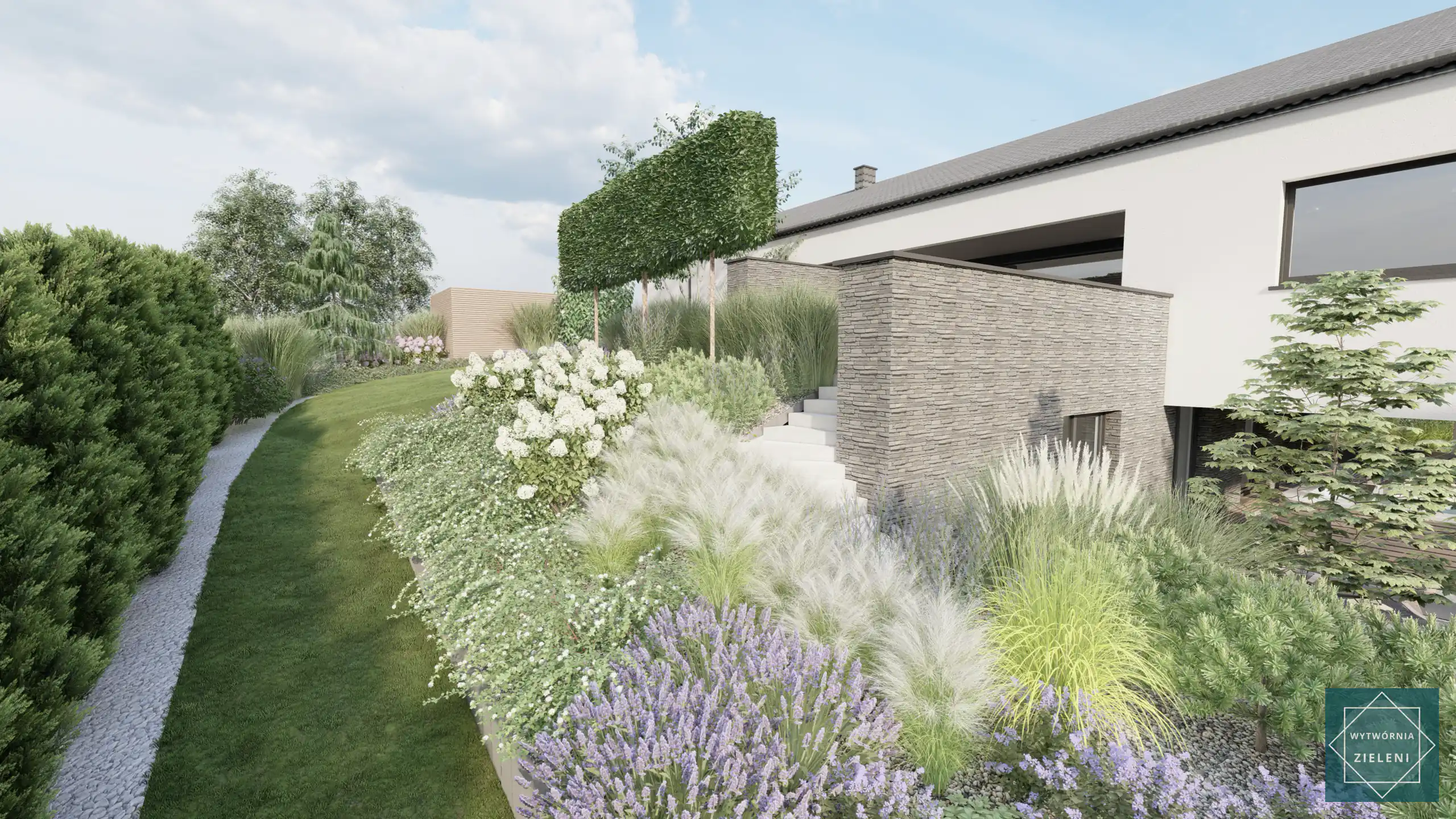
Although we most often choose deciduous shrubs for green fencing, some modern landscape trees also work excellently as tall, durable and effective hedges. Through regular cutting, they can be easily shaped, creating compact, elegant walls of greenery.
- Common hornbeam - classic among hedge trees; tolerates cutting excellently, retains dried leaves long and creates very dense hedges
- European beech - slower growing but extremely elegant; thickens excellently and remains ornamental in winter too
- Plum hedge (hybrid) - interesting alternative, grows fast and creates dense barrier
Although many people plant evergreen plants, deciduous forms have enormous aesthetic and ecological potential - they change seasonally, attract birds and compose well with naturalistic gardens. When planning mixed plantings, consider how different tall ornamental grasses can complement your hedge design.
Field Maple (Acer campestre)
Tree with oval, wide-conical habit, reaching 10-15 m height and 8-12 m width. Excellently suitable for formal hedges, and in standard form also for avenue espaliers. Likes sunny or partial shade locations and average, rather dry soil - doesn't tolerate flooding or full shade.
Norway Maple 'Columnare' (Acer platanoides 'Columnare')
Variety with columnar habit, eventually crown becomes somewhat wider and rounded. Reaches 10-15 m height and 3-4 m width. Works as avenue tree or in windbreak strips, grows best in sun and average, moderately moist soil.
Tatarian Maple (subsp. ginnala) (Acer tataricum subsp. ginnala)
Spreading, often multi-stemmed tree, reaching 6-10 m height and similar width (older specimens even up to 15 m). Suitable for formal and informal hedges, also as specimen in small gardens. Prefers sunny or partial shade locations and well-drained soil, tolerates drought and urban pollution.
Black Alder 'Pyramidalis' (Alnus glutinosa 'Pyramidalis')
Narrow-columnar variety with habit resembling Italian poplar. Reaches 15-20 m height and 3-5 m width. Ideal for park espaliers or as specimen in wetland areas - requires moist, acidic soil and sunny or partial shade location.
Silver Birch 'Fastigiata' (Betula pendula 'Fastigiata')
Tree with initially narrow-conical, eventually narrow-oval habit. Reaches 10-12 m height and 4 m width. Works well in espaliers and groups, prefers light, sandy and dry soils and sunny locations.
Silver Birch 'Obelisk' (Betula pendula 'Obelisk')
Very slender and narrow-columnar variety, narrower than 'Fastigiata'. Reaches 15-20 m height and 3-4 m width. Great for street espaliers and as specimen, grows best in sun, in poor, well-drained soils - tolerates drought and pollution well.
European Hornbeam (Carpinus betulus)
Dense tree with wide-conical crown, reaching 15-20 m height and 10-15 m width. Tolerates cutting excellently - ideal for formal hedges and espaliers. Grows in sun, partial shade, and shade, preferring fertile, fresh and moderately moist soils.
European Hornbeam 'Columnaris' (Carpinus betulus 'Columnaris')
Columnar variety eventually taking oval crown, reaching 8-10 m height and 2-3 m width. Suitable for espaliers and as specimen in smaller gardens. Grows well in sun and shade, in fresh, humus-rich and fertile soil.
European Hornbeam 'Fastigiata' (Carpinus betulus 'Fastigiata')
Columnar hornbeam with narrow-conical habit, eventually wider at top. Reaches 15 m height and 4 m width. Excellent for formal hedges and street espaliers, grows best in shade or sun, in fertile and calcareous soil.
European Hornbeam 'Frans Fontaine' (Carpinus betulus 'Frans Fontaine')
Very compact, columnar variety, reaching 10 m height and 3 m width. Recommended for narrow espaliers, windbreak strips and as specimen. Grows well in sun and shade, in fertile, fresh and moderately moist soil.
European Hornbeam 'Purpurea' (Carpinus betulus 'Purpurea')
Spreading hornbeam with purple foliage, reaching up to 10 m height and 6-7 m width. Used for formal hedges and colorful park compositions. Grows in sun or shade, in fertile, moderately moist soil - prefers neutral or alkaline pH.
American Tulip Tree 'Fastigiatum' (Liriodendron tulipifera 'Fastigiatum')
Columnar, eventually taking conical habit. Reaches 20-25 m height and about 6 m width. Works as avenue tree and specimen - requires sunny or partial shade location and fertile, moist soil with slightly acidic or neutral pH.
Lombardy Poplar (Populus nigra 'Italica')
Variety with very narrow, columnar habit, reaching 25-30 m height and 3-5 m width. Excellent for espaliers and as windbreak in informal hedge form. Likes sunny locations and average, rather moist soils.
Simon's Poplar 'Fastigiata' (Populus simonii 'Fastigiata')
Conical, narrow tree reaching about 15 m height and 5 m width. Used as natural espalier or informal screening hedge. Grows well in sun, in average soil - has minimal site requirements.
European Aspen 'Erecta' (Populus tremula 'Erecta')
Very narrow, columnar habit makes it work excellently in windbreak strips. Reaches 10-15 m height and 3-5 m width. Grows best in sun, in fertile, clay and moderately moist soil.
Choke Cherry 'Shubert' (Prunus virginiana 'Shubert')
Conical, loose form, reaching 4-6 m height and 3-4 m width. Creates effective informal shrub groups or specimens - leaves turn purple. Grows best in sun, in average, moderately moist soil - tolerates drought.
Callery Pear 'Chanticleer' (Pyrus calleryana 'Chanticleer')
Narrow-conical, initially columnar habit, ideal for cities. Reaches 8-12 m height and about 5 m width. Used in street espaliers and as specimen - likes sun and average soil, resistant to drought and pollution.
'Monument' Oak (Quercus 'Monument')
Compact, wide-columnar habit, reaching 10-15 m height and 3-5 m width. Works excellently as tall avenue espalier and as specimen. Grows best in sunny locations, in deep, fertile and moderately moist soil with slightly acidic or alkaline pH.
English Oak 'Fastigiata' (Quercus robur 'Fastigiata')
Narrow-columnar, slender oak 15-20 m height and about 4 m width. Ideal for single and double-row espaliers and as specimen. Requires sunny locations and deep, fertile, moderately moist soils.
English Oak 'Fastigiata Koster' (Quercus robur 'Fastigiata Koster')
Very narrow, columnar form reaching 15-20 m height and 3-4 m width. Works in espaliers or as single accent. Grows well in sun, in fertile, clay and moist soil - tolerates various pH levels.
European Mountain Ash 'Fastigiata' (Sorbus aucuparia 'Fastigiata')
Columnar, narrow habit, reaches 5-8 m height and 1.5-2.5 m width. Suitable for narrow espaliers and as specimen. Prefers sunny or partial shade locations and well-drained, average soil.
'Autumn Spire' Mountain Ash ('Flanrock') (Sorbus AUTUMN SPIRE 'Flanrock')
Narrow-columnar, dense variety reaching about 5 m height and 2 m width. Often used in street espaliers or as specimen. Grows well in sun, in average, moderately moist soil - tolerates drought.
Little-leaf Linden (Tilia cordata)
Young specimens have conical habit, eventually crown becomes wide-rounded and dense. Reaches 18-20 m height and 10-15 m width. Suitable for formal, tall hedges, single or double espaliers and as specimen. Grows well in sun and partial shade, in fertile, deep and moderately moist soil - doesn't tolerate drought or pollution.
Little-leaf Linden 'Greenspire' (Tilia cordata 'Greenspire')
Regular, elliptical crown and symmetrical habit make it excellent avenue tree. Reaches 10-15 m height and 5-10 m width. Used in espaliers and formal hedges, grows best in sun, in fertile, clay and moderately moist soil - doesn't tolerate drought or salt.
Large-leaf Linden (Tilia platyphyllos)
Tree with wide-conical, spreading and dome-shaped habit. Reaches 20-30 m height and about 15 m width. Used in wide, double espaliers and as specimen. Likes sun or partial shade and cool, moist and deep substrate.
Silver Linden 'Brabant' (Tilia tomentosa 'Brabant')
Tree with wide-conical, dense and uniform habit, reaching 15-20 m height and about 12 m width. Works excellently in single and double espaliers, also as specimen. Grows well in sun, in average, well-drained soil - shows great resistance to drought, heat and urban conditions.
Silver Linden 'Varsaviensis' (Tilia tomentosa 'Varsaviensis')
Narrow-conical, compact form with pyramidal habit, reaching 20-25 m height and 8-10 m width. Most often planted in street espaliers. Grows best in sunny location, in fertile, clay soil - tolerates drought and strong winds well, resistant to urban pollution.
Transform your garden with seasonal beauty
Creating a deciduous hedge offers unique advantages that evergreen alternatives simply cannot match. These dynamic garden features provide year-round interest through changing seasons - from spring's fresh green emergence to autumn's spectacular color displays.
By choosing appropriate deciduous hedge plants for your specific needs and following proper planting and care techniques, you'll establish a living boundary that enhances both privacy and beauty while supporting local wildlife.
Understanding garden design costs helps ensure your hedge project fits within budget while achieving professional results. For complex installations, consider consulting with a qualified landscaping contractor to ensure proper establishment and long-term success.

Ready to transform your outdoor space with a stunning deciduous hedge? Contact us for a professional garden design consultation and discover how expert planning can bring your landscaping vision to life.
Frequently asked questions
How to plant small-leaf boxwood varieties?
Small-leaf boxwood is best planted in spring or autumn, in a location sheltered from wind, in fertile and well-drained soil. Boxwood varieties should be planted spaced 25-30 cm apart to quickly achieve a dense hedge. For comprehensive planting guidance, check our garden design guide.
Is it worth shaping deciduous hedge?
Shaping deciduous hedge allows maintaining desired form and plant density. Regular cutting improves branching and affects garden aesthetics - cutting twice per season is recommended. Learn more about garden lighting planning to showcase your beautifully shaped hedges after dark.
Which deciduous shrubs are suitable for hedges?
The most frequently chosen deciduous shrubs for hedges include hornbeam, privet, beech, spiraea, dogwood and ninebark. They are resistant, easy to maintain and tolerate pruning well. These complement other garden design ideas beautifully.
How does evergreen hedge differ from deciduous?
Evergreen hedge retains leaves or needles throughout the year, providing screening in winter too, while deciduous drops leaves in autumn. Evergreens are usually slower growing but more decorative in winter. Consider fast growing grasses as complementary plantings.
How to plant hedge in garden?
When planting hedge, mark a straight line, properly prepare the substrate and maintain equal spacing between plants. After planting, water plants abundantly and apply mulch to limit weeds. For professional results, consider our landscape design examples.
Is beech a good tree for hedge?
European beech is an excellent choice for formal hedge - tolerates trimming well, thickens and creates elegant, durable screening. However, it requires fertile, fresh soil and regular watering. Use our garden water cost calculator to estimate irrigation expenses.
What advantages does hornbeam have as hedge plant?
Hornbeam thickens quickly and tolerates intensive cutting well, making it excellent for dense, tall hedges. It's also very resistant to urban conditions and grows well even in partial shade. Consider pairing with ornamental grasses for textural contrast.
Does spiraea work for formal hedge?
Spiraea can be used for low, flowering informal hedges, but some varieties tolerate cutting well and are suitable for shaping too. It flowers abundantly, giving the garden lightness. Explore small garden design ideas for creative spiraea applications.
Can holly be used for hedge?
Yes, holly is a popular plant for evergreen, decorative hedges. It requires sunny or partial shade location and tolerates cutting well - its spiky leaves additionally deter unwanted visitors. Learn about fence line landscaping for comprehensive boundary solutions.
What to know about planting European beech?
European beech grows slowly but creates very elegant hedges, especially in representative places. It requires fertile, moist soil and sunny or partial shade location. For detailed soil preparation, consult our soil improvement guide.

Wojciech Kazimierowicz – Author of the Article
Co-owner of Wytwórnia Zieleni and an expert in garden design and landscaping with over 13 years of experience. He specializes in creating modern, functional green spaces tailored to the budget and needs of homeowners.

Find Out How Much Your Garden Design Will Cost!
Take a quick quiz and discover the estimated cost of a custom garden design tailored to your needs. No strings attached – it takes just 2 minutes!


Wytwórnia Zieleni | Garden Design
KRS 0001107384 NIP 6452587627 REGON 528715049 St. Strzelców Bytomskich 51/1 42-600 Tarnowskie Gory, Poland
Resources
© Wytwórnia Zieleni 2026


