Front Yard Landscaping Ideas - How to Create Beautiful Curb Appeal
Dobra aranżacja ogrodu przed domem zaczyna się od analizy przestrzeni, funkcji i stylu budynku, a kończy na spójnym układzie ścieżek, nasadzeń i oświetlenia. Ten przewodnik jest dla osób, które chcą mieć reprezentacyjny front posesji, ale bez chaosu w roślinach i przypadkowych decyzji w nawierzchniach.
TL;DR
- Aranżacje ogrodu przed domem powinny łączyć reprezentacyjność z wygodną komunikacją do wejścia i bramy.
- Planowanie ogrodu przed domem zacznij od pomiarów, warunków gleby, nasłonecznienia i wiatru.
- Styl ogrodu przed domem dopasuj do architektury budynku, aby uzyskać spójny efekt wizualny.
- Rośliny przed domem dobieraj warstwowo i zostawiaj im miejsce na docelowy wzrost, żeby uniknąć przesadzania.
- Oświetlenie ogrodu przed domem poprawia bezpieczeństwo i podkreśla kompozycję po zmroku.
Published
14 May 2026
Share this article


 Copied
TOC
- Front Yard Landscaping Ideas
- Front Yard Landscaping Ideas - Why It's Worth It?
- Front Yard Landscaping Ideas - How to Do It Right?
- Front Yard Plant Arrangements - What to Pay Attention To?
- Modern Front Yard Landscaping
- Front Yard Ideas and Inspiration
- Transform Your Front Yard Into a Stunning Welcome
- What to Plant in Front of House – Photos from Finished Projects
- FAQ - Front Yard Landscaping Arrangements
- How to Plan Garden in Front of House Entrance?
- What's Best to Plant in Front of House in Modern Style?
- Front Yard in Countryside – Natural Inspiration
- How to Arrange Garden Plot at Single Family House?
- What Can Be Arranged in Front of House?
- Where to Look for Front Garden Inspiration?
- Can Front Yard Be Arranged Independently?
- Does Front Yard Arrangement Have to Be Expensive?
- Front Yard Arrangements – What to Choose?
- How to Arrange Front Yard at Single Family House?
- What Are Functional Front Arrangements?
Front Yard Landscaping Ideas
Your front yard landscaping is your home's first impression – it's what guests and neighbors see first. Unfortunately, many homeowners neglect this part of their residential landscape design, missing out on its potential. In this post, you'll find front yard design inspiration, ideas, and a gallery of arrangements that will help you create a stunning and stylish entrance to your home, tailored to your taste and building character.
What you'll learn:
- How to plan front yard landscaping step by step
- What to plant in front of your house
- Which plants and elements work best for front entrance landscaping
- Front yard landscaping ideas and inspiration
- How to design the landscape in front of your home entrance
Continue reading and get inspired by the best front yard design solutions and curb appeal ideas.

Front Yard Landscaping Ideas - Why It's Worth It?
Well-thought-out front yard landscaping adds significant charm and benefits to your property. Proper landscape design for your front entrance is crucial for your home's overall appeal and curb appeal. Here are several reasons why it's worth investing in your front yard design:
- Aesthetics and Curb Appeal – Front yard landscaping is the first thing guests and passersby see. Well-designed landscape design examples increase the visual value of your entire property and create a lasting first impression.
- Efficient Communication – Proper placement of pathways, driveways, and entrances makes daily use of the space easier and improves safety through thoughtful garden planning.
- Effective Space Utilization – Even a small front yard can be planned to be both decorative and practical using small garden ideas.
- Meeting Functional Needs – Space for trash bins, mailbox, bike rack, or flower beds with weather-resistant plants allows you to adapt your garden to daily life.
- Harmony with Home Architecture – Front yard landscaping complements your building's style and can highlight its character through modern garden design principles.

Front Yard Landscaping Ideas - How to Do It Right?
To properly execute front yard landscaping ideas, you need to go through several stages that will help you create a functional and aesthetic space step by step, tailored to your needs, site conditions, and budget. This approach significantly facilitates planning and later implementation of the work.
1. Front Yard Analysis
Before you start landscaping your garden, planting vegetation, and laying pathways, carefully analyze the space in front of your home that you want to design.
- Measure the area – this will help you determine how much space you have for zones, pathways, flower beds, or small architecture
- Check soil conditions – some plants need fertile soil through proper soil preparation, others grow better in dry substrate
- Pay attention to sunlight and wind – some plants better tolerate shade, others require full sun based on thorough soil analysis
- Match garden style to home architecture – a modern building works well with minimalist landscaping following design fundamentals, while a rustic house requires a more natural plant arrangement
Check our garden implementations - you'll find plenty of front yard ideas, inspiration, and examples of front yards on plots of various shapes and sizes.

2. Determining Front Yard Function
Once you've measured your plot, consider what functions your front yard landscaping should serve. Answers to the following questions will help you create a thoughtful concept for space management:
- What functional elements must be included in the front area?
- Do you want the garden to be representative, emphasizing the house's appearance?
- Or do you want a friendly place to relax, with benches and a relaxation zone?
- Are you thinking about a functional garden where you'll plant herbs or vegetables through vegetable garden design?
- Do you need pathways, flower beds, or hedges that will facilitate space arrangement?
Also check our post about garden zoning – it will help you better understand how to functionally divide space in your front yard.

A comprehensive Bristol residential project features curved block paving with structured evergreen beds, creating elegant arrival sequences for family homes.
3. Choosing Garden Style
Garden style is crucial because it affects not only the space's aesthetics but also its functionality and atmosphere. Choosing the right style depends on individual preferences, environmental conditions, and the property's character.
Here are several popular options that can serve as inspiration:
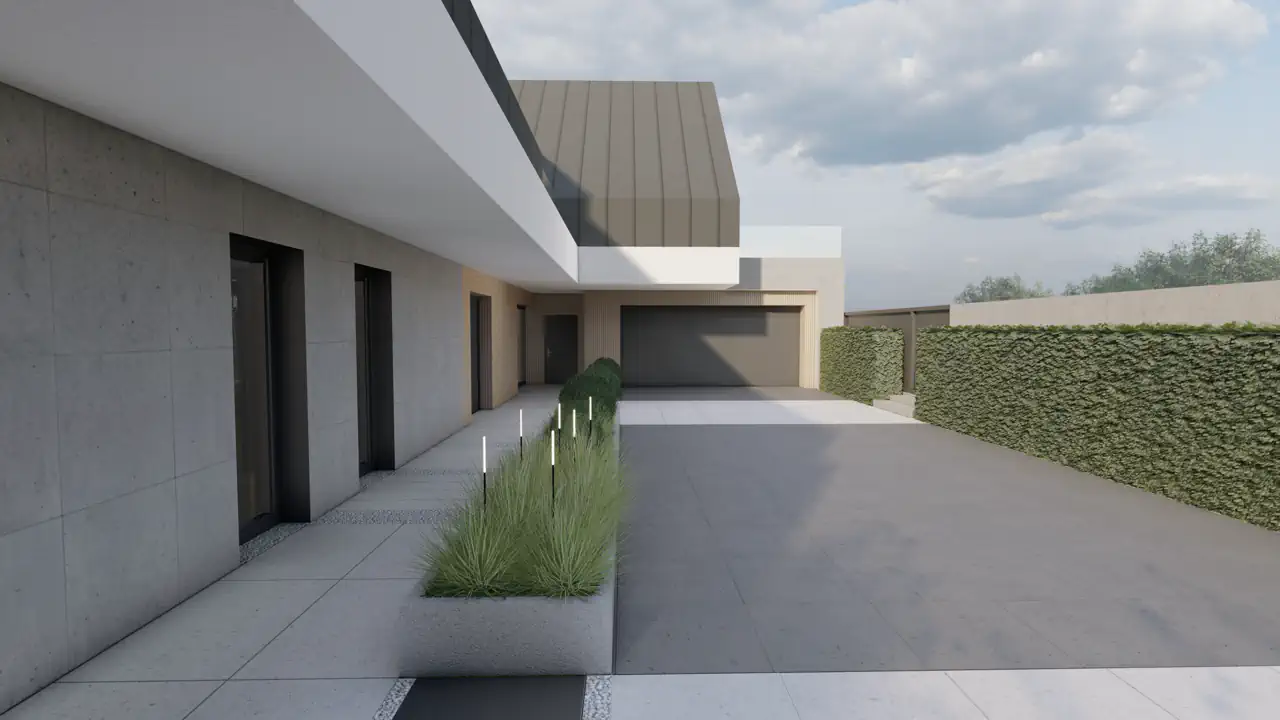
- Modern – minimalist forms, geometric shapes, ornamental grasses, paving stones with modern plantings
- Cottage – loose, natural composition with flowers, shrubs, and fruit trees
- Classic – symmetry, boxwood, roses, elegant fountains
- English style – green lawns, ornamental borders, and flowering beds
4. Designing Pathway and Driveway Layout
Garden pathways and driveways play a key role in organizing front yard space – they facilitate movement, define zones, indicate places for flower bed design, and give the arrangement a cohesive and orderly character. Use our paving cost calculator to budget for these installations. The most commonly chosen materials in this part of the garden are:
- Paving Stones – durable, weather-resistant, and available in various shapes and colors, allowing great freedom in arrangement.
- Large Format Concrete Slabs – modern and practical solution for front yard arrangements. They create elegant, minimalist surfaces and work great with contemporary architecture.
- Natural Stone – elegant, timeless material that works wonderfully with classic and rustic gardens.
- Wooden Panels – used on pedestrian pathways, excellent for natural and modern style gardens, giving a warm, friendly character, though they require proper treatment.
- Garden Gravels and Natural Aggregates – decorative crushed stone that serves both aesthetic and practical functions. They work great as filling for flower beds, paths, and driveways, limiting weed growth and facilitating water drainage through proper drainage solutions.

5. Plant Selection - What to Plant in Front of House?
When we have the front layout planned, the next step is selecting vegetation. A modern front garden also means carefully planned front plantings that give the space a unique style and emphasize its character. There are several options worth implementing. 👇

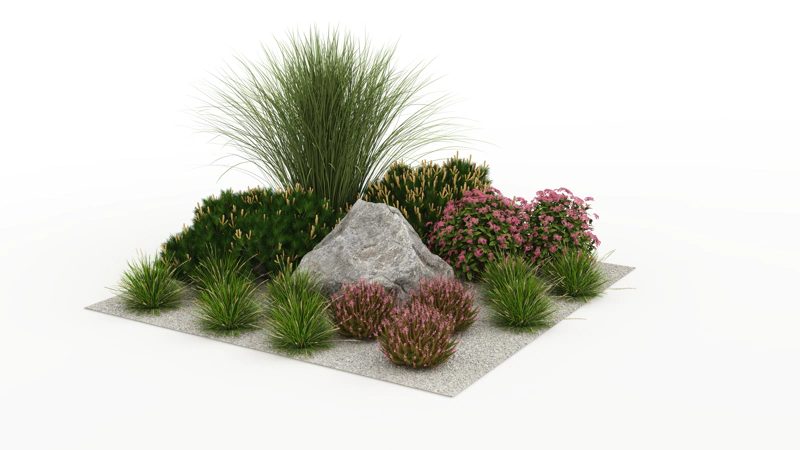
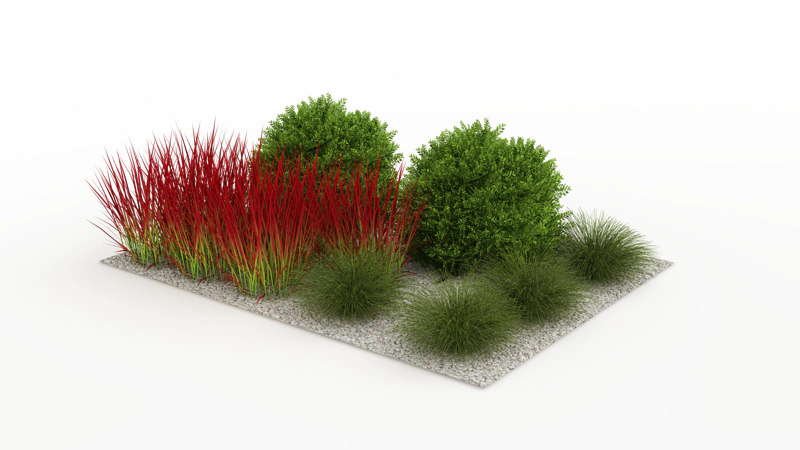
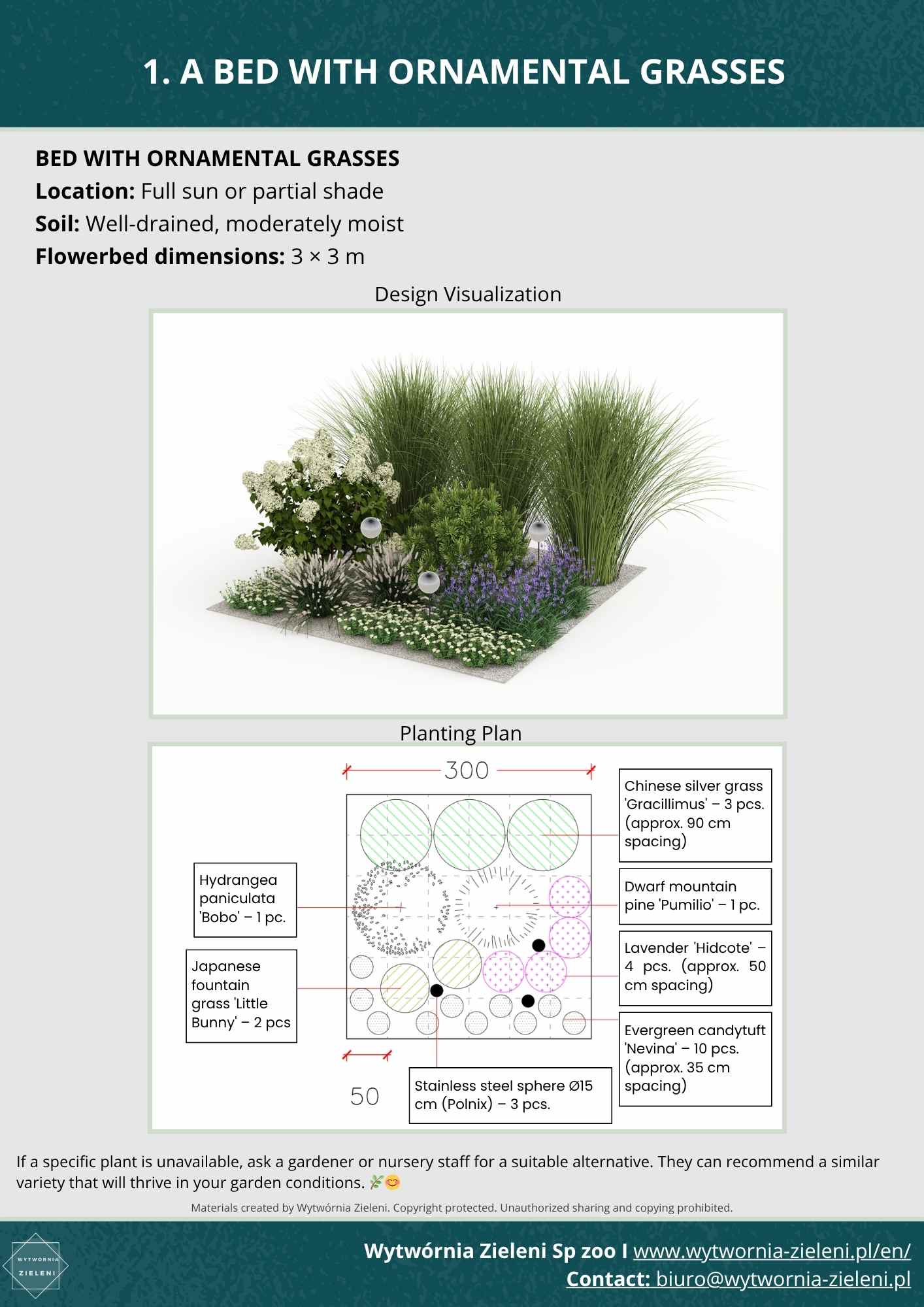
- Ornamental Grasses – belong to the middle tier of vegetation and excellently fill space between lower perennials and taller shrubs. They add lightness and movement to the garden, especially when moved by wind, particularly effective when used as grass hedges.
- Perennials – belong to the lower and middle planting tiers. Their main advantage is perenniality – after planting, they can decorate the garden for many seasons without needing annual renewal.
- Ornamental Shrubs – these are basic elements of middle and upper composition tiers through selecting ornamental shrubs. They give the garden form and structure, defining sight lines and dividing space into zones. They can be used as background for lower plants or as elements organizing the composition.
- Trees – these are the highest tier of greenery and the element of greatest compositional significance. In front yard landscaping, landscape trees serve as screening, shade source, and vertical accent that balances low flower beds.
- Climbing Plants – belong to vertical plants that don't take much horizontal space but excellently utilize vertical space through selecting climbing plants. They constitute a flexible vegetation tier that can be used wherever space economy and decorative effect at height count.
When arranging your front yard and fence area, it's worth paying attention to plants' climatic requirements, ease of care, and their appearance in different seasons. For a beginner, this can be challenging, so proper garden project planning significantly facilitates the entire process.
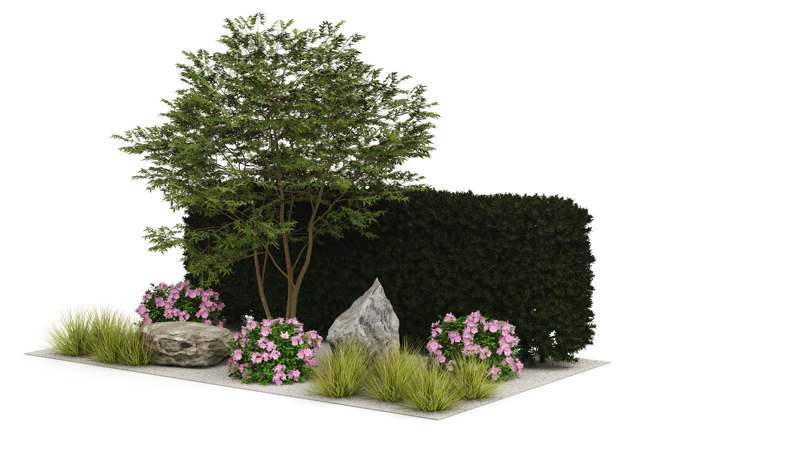
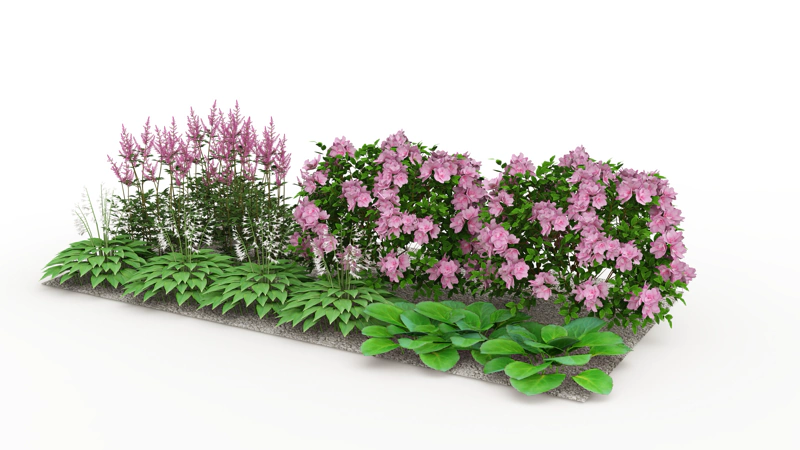
A good solution is also ready-made border projects – inexpensive, practical, and helpful in planning plantings. Below you'll find garden arrangement proposals that you can boldly use in your own garden. 👇
6. Front Yard Lighting
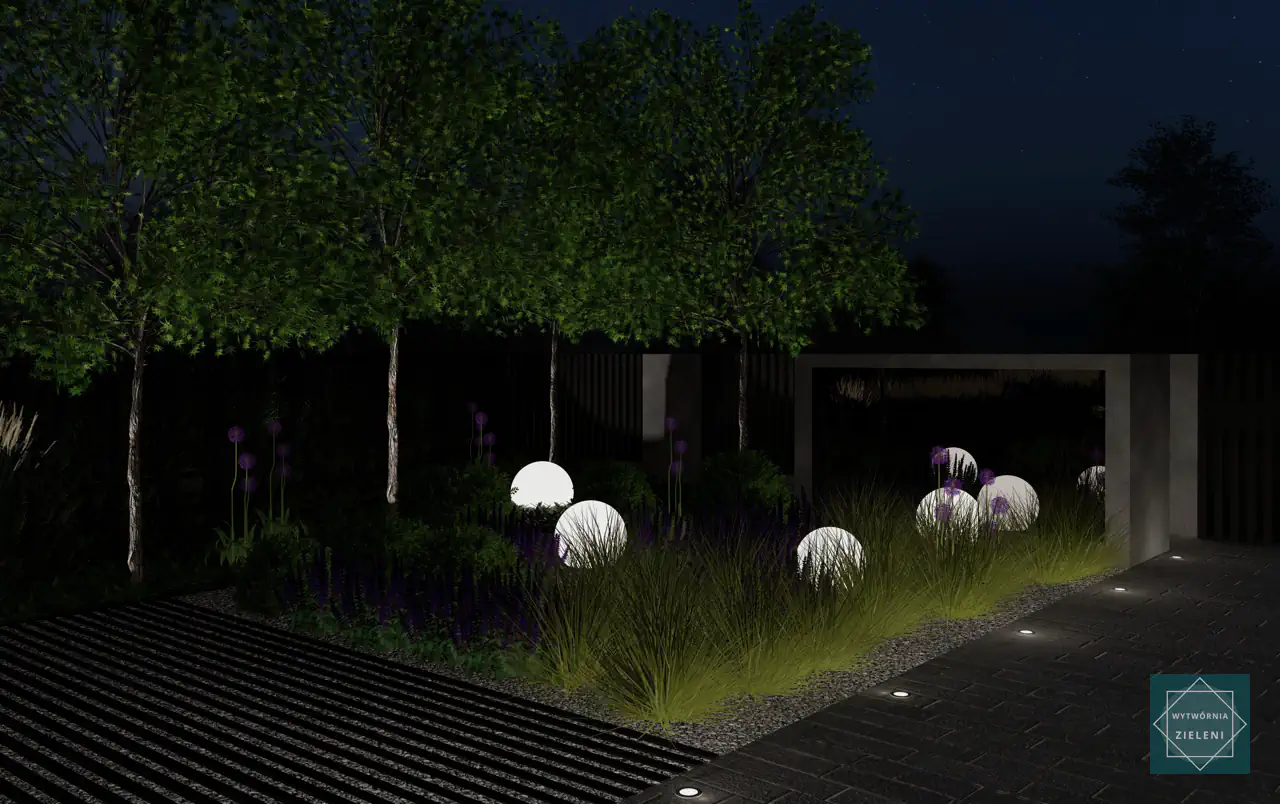
Garden lighting planning is an important element of garden design and serves a dual function – on one hand, it highlights the garden's charm after dark, on the other, it ensures safety by facilitating movement in darkness through proper outdoor electrical installation. The most commonly used solutions in the front part of the garden are:
- In-ground Lights (spot lights) – mounted in surface, discretely highlighting paths, driveways, and flower bed edges
- Directional Lamps (spotlights) – allow spot lighting of trees, elevation, or small architecture elements
- Lighting Posts – low light sources for illuminating paths and entrance, practical and elegant
- Garden Lanterns – taller lamps, often in classic form, ideal for lighting larger spaces or entrance zone
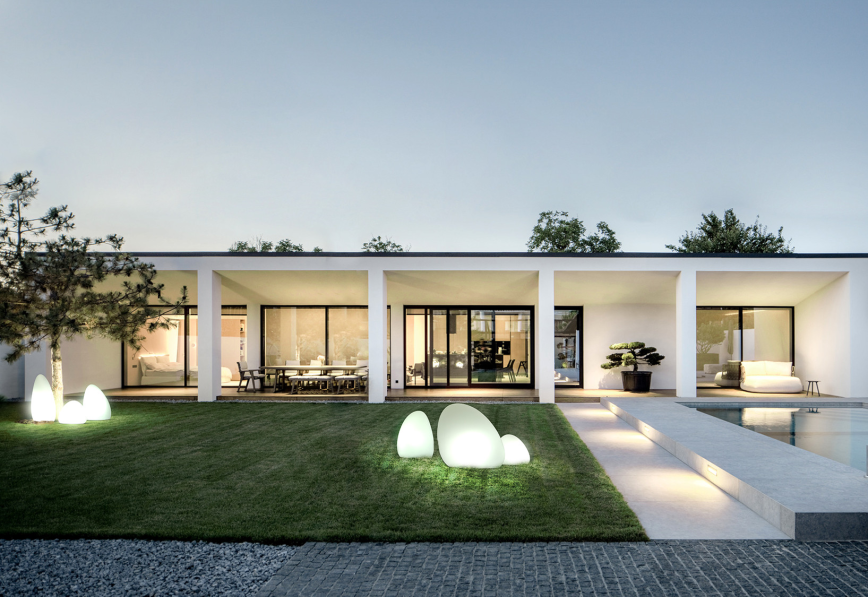
- Ambient Lighting – string lights, lanterns, or light spheres create atmospheric ambiance and work great with benches, pergolas, or ornamental vegetation
Well-planned pathways and garden lighting design make the garden a functional, safe, and beautiful place both during the day and after dark.
7. Modern Front Yard Landscaping - Decorative Elements
Besides plants, pathways, and lighting, it's worth adding decorations that will give your front garden character. Small architecture elements significantly enrich the garden and give it a complete and attractive appearance.
- Decorative Screens – serve as partition and decoration simultaneously; work great as background for plants or screening unsightly elements
- Garden Ornaments – sculptures, spheres, metal details, or figurines can emphasize garden style and introduce interesting visual accents
- Garden Bench – provides a place to rest and looks good in the entrance zone or by a flower bed
- Swing – modern one- or two-person models perfectly complement relaxation zones and add lightness to the garden, creating entertainment areas
- Coffee Table – in set with bench or chair allows creating an intimate corner at the entrance or patio arrangement
- Decorative Boxes and Planters (e.g., box or herb rack) – functional and aesthetic, especially in functional character gardens
- Edging and Low Decorative Walls – organize space, separate flower beds, and give the whole a distinctive, polished look
Each of these elements can not only enrich garden arrangement but also increase comfort of front yard use. Many examples of decorative elements can be found in our design examples and on the blog - gardening advice.
Front Yard Plant Arrangements - What to Pay Attention To?
Plant selection and placement is a key stage in front yard landscaping that affects its aesthetics and durability. For plants to develop well and create a cohesive composition, it's worth following several principles:
- Consider Plant Requirements – before planting, check light, moisture, and soil needs of individual species using evergreen plants guides. Shade-loving plants should be placed in sheltered locations, and those preferring sun – in open spaces.
- Maintain Proper Spacing – planting plants too close together can lead to their weakening, limited access to nutrients, and increased susceptibility to diseases. Pay attention to plants' target size and leave them room for free growth.
- Create Plant Layers – place tall plants at the back of flower beds or in the central part of the garden, medium ones in the middle zone, and lowest ones closer to paths. This way, the garden will look natural and harmonious.
- Group Planting – to achieve decorative effect, it's worth planting plants in groups of several specimens of the same species instead of individually. Such arrangement makes the garden look more organized and effective.
- Color Selection – flowering plants are worth combining so their colors harmoniously compose or contrast, creating interesting visual effects.
- Consider Seasonality – choose plants that bloom in different seasons following a proper planting schedule so the garden delights with its appearance throughout the season. It's worth combining perennials, ornamental shrubs, and hedge plants that will maintain composition structure even in winter.
Remember that proper plant placement is not only a matter of aesthetics but also health and garden longevity. Thoughtful arrangement will avoid frequent transplanting and ensure harmonious development of plant composition.

Modern Front Yard Landscaping
Choosing a modern style for front yard landscaping combines thoughtful design, functionality, and aesthetic simplicity. A modern garden has many advantages that make it eagerly chosen by homeowners:
- Easy Maintenance – limited number of plant species and simple compositional forms make the garden not require time-consuming treatments through proper garden maintenance
- Cohesive Appearance – geometric lines, repetitive materials, and harmonious color scheme give space an organized, elegant character
- Functionality – every element has its place and purpose – paths, flower beds, small architecture create comfortable, logical space
- Good Match with Modern Architecture – garden constitutes natural extension of building mass, emphasizing its style and character
- Timelessness – simplicity and minimalism make arrangement not go out of fashion and remain attractive for many years

When designing a modern garden, we often use solutions such as:
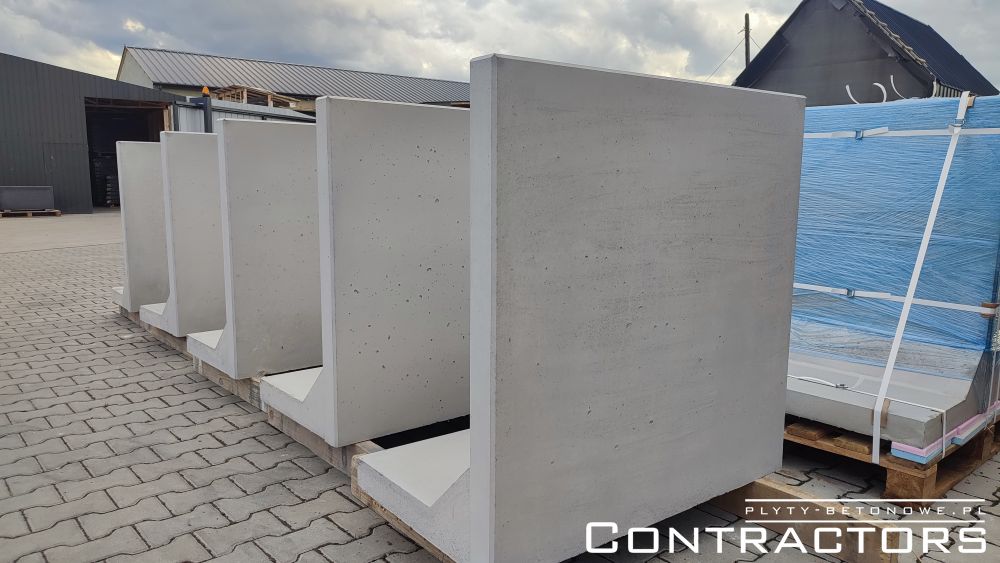
Architectural Concrete
Examples of this type of solutions include companies like Contractors. This manufacturer makes concrete elements in various forms:
- Large format slabs
- Monumental stairs
- Concrete benches
- Garden concrete planters
- Palisades
- L-shaped retaining elements
Small Architecture Elements from Various Materials
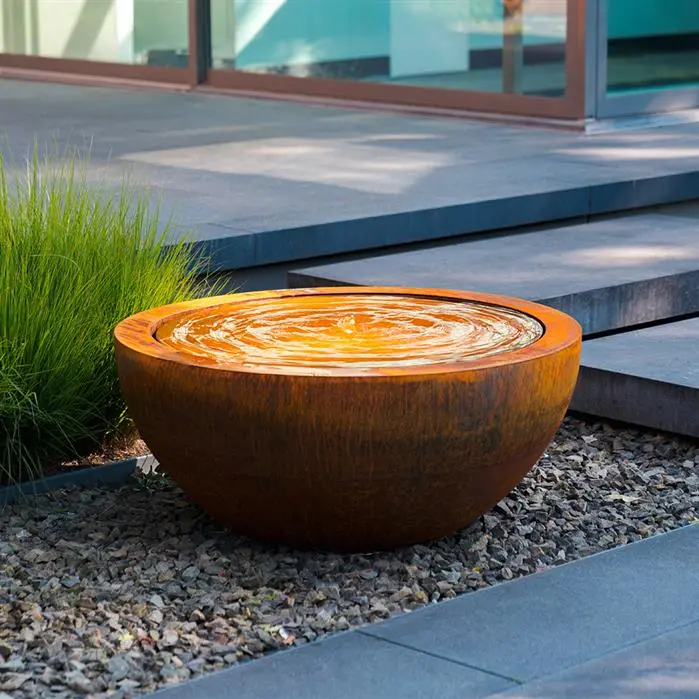
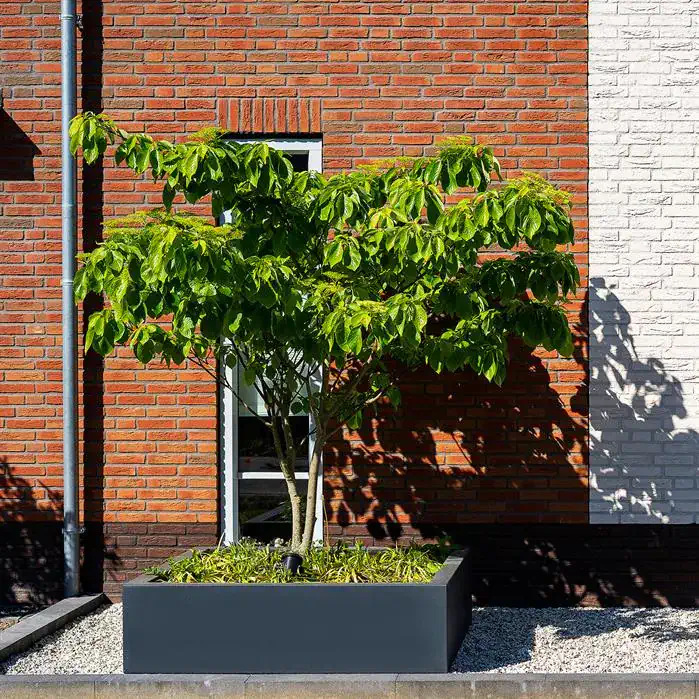
Corten steel, aluminum, fiberglass, coated steel. These types of elements that enrich your property's front appearance include:
- Garden planters
- Screens
- Walls and retaining elements
- Fire pits
- Water tables
- Fountains
Aesthetic Lamps and Modern Lighting
Proper illumination makes your garden's front part look attractive also at night. Directional lamps, in-ground fixtures, or standing lamps in various shapes – we describe these types of elements in detail in our article on how to plan garden lighting.
Front Yard Ideas and Inspiration
Small Front Yard Ideas – Inspiration for Narrow Spaces
Front yard landscaping in a townhouse can be a real challenge, but thanks to our gallery of modern gardens, you'll find the best ideas for a functional garden through creative terrace design. Our implementations show how to create a narrow garden with exceptional design. Such arrangement is an ideal solution for row houses. Residential garden inspiration can come from many sources, but the most comes from observing real examples.

Below is a description of several inspirations and solutions used in front yard of a townhouse. The garden is located in Tarnowskie Góry and has an area of 150m2.
Modern Garden Lamps – Cumulus Nowodvorski spherical lamps in 3 different sizes. On the driveway, permeable geocrate filled with granite gravel was used, guaranteeing excellent water permeability. The whole was harmoniously combined with Polbruk Magna concrete slabs in medium format, creating functional and aesthetic surface.
Plants used in this arrangement include:
- Catmint 'Faassenii' (Nepeta × faassenii)
- Narrow-leaved Lavender (Lavandula angustifolia)
- Woodland Sage 'Caradonna' (Salvia nemorosa 'Caradonna')
- Chinese Silver Grass 'Silberfeder' (Miscanthus sinensis 'Silberfeder')
Minimalist plantings are the quintessence of style. In your garden, it's worth including potted plants that emphasize the modern character of space. A narrow front yard can be equally functional and beautiful as larger projects. See our post about flowering hedge plants to gain more inspiration.

Single Family Home Front Yard – Arrangements
A small front yard for a single-family home is a space where appearance combines with practicality. Surface covered with paving stones, plants in raised planters, and properly selected plantings create beautiful and functional space.

Full description of the small front yard visible in photos can be read in our post dedicated to this garden implementation in Łódź with area of 800m2. In the garden presented above, we used the following plant species:
- Panicle Hydrangea (Hydrangea paniculata)
- Thunberg's Barberry (Berberis thunbergii)
- Japanese Spirea (Spiraea japonica)
- Japanese Fountain Grass (Pennisetum alopecuroides)
- Chinese Silver Grass (Miscanthus sinensis)
Want more examples of grasses you can use in your front yard? See our post about tall grasses to find more inspiration for your space.
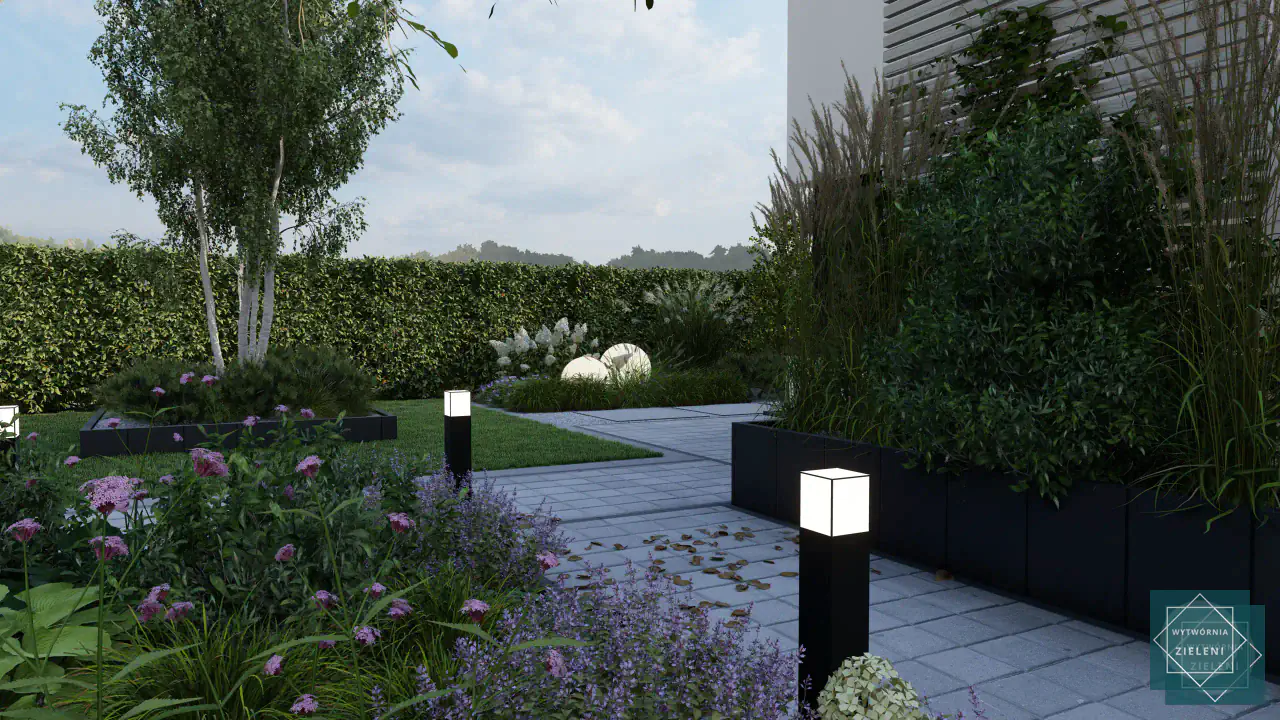
Get inspired by our projects in the garden implementation gallery and create a garden that will be a true property decoration.
Front Yard Ideas – See Photos and Arrangements

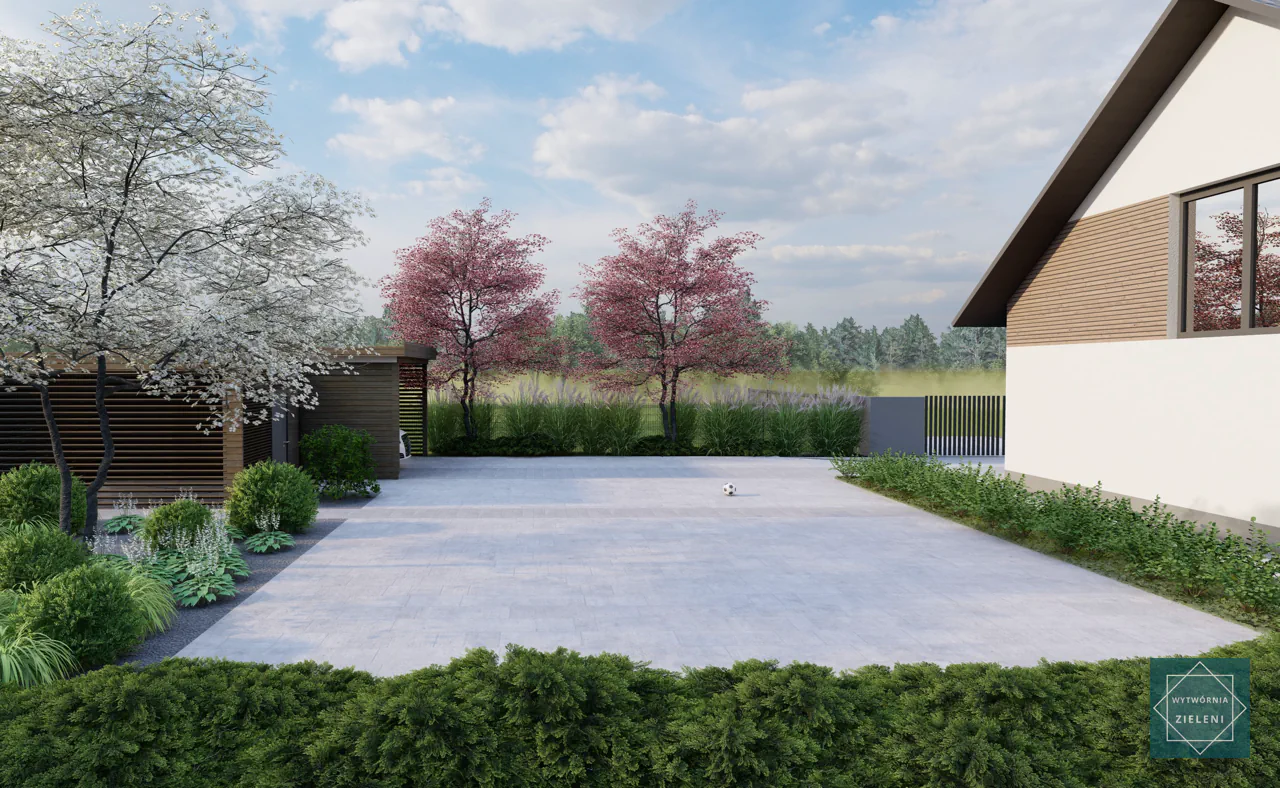
Medium front yard allows using creative solutions such as Polbruk Urbanika paving stones in melange color, garage roofing connected to house, and minimalist character plantings.
Visible in front yard visualization, used plants include:
- Giant Allium – Allium giganteum
- Siebold's Hosta – Hosta sieboldiana
- Brunnera – Brunnera macrophylla
- Chinese Silver Grass – Miscanthus sinensis
- Sea Thrift – Armeria maritima
- Patagonian Verbena – Verbena bonariensis
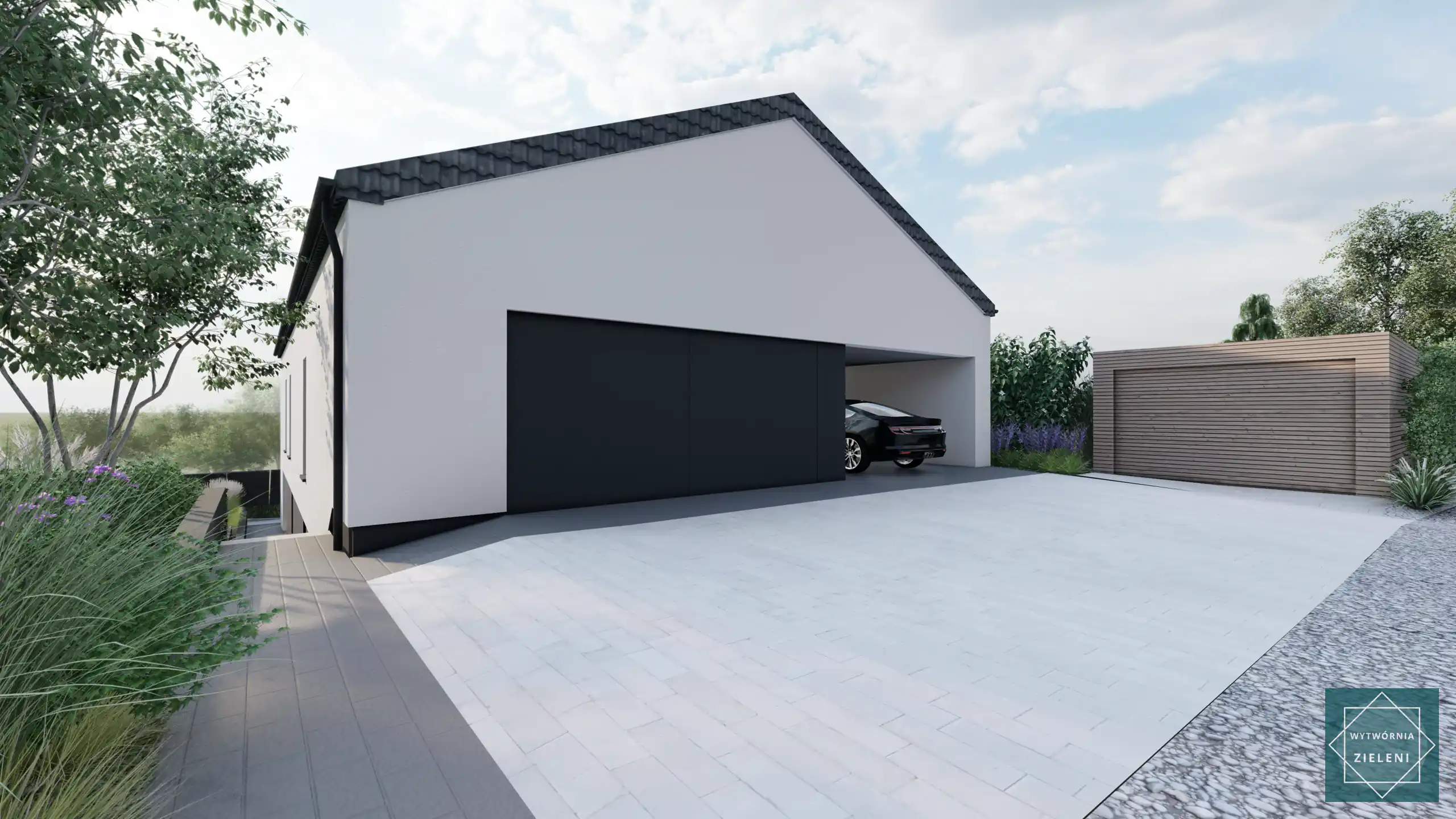
In the case of Belgium Garden with area of 1400m2, greenery was placed mainly on sides of driveway, thus emphasizing the modern character of space. To the right of entrance is a tool shed that complements the arrangement of garden behind house. The driveway features in-ground lamps from Italian producer LLD.
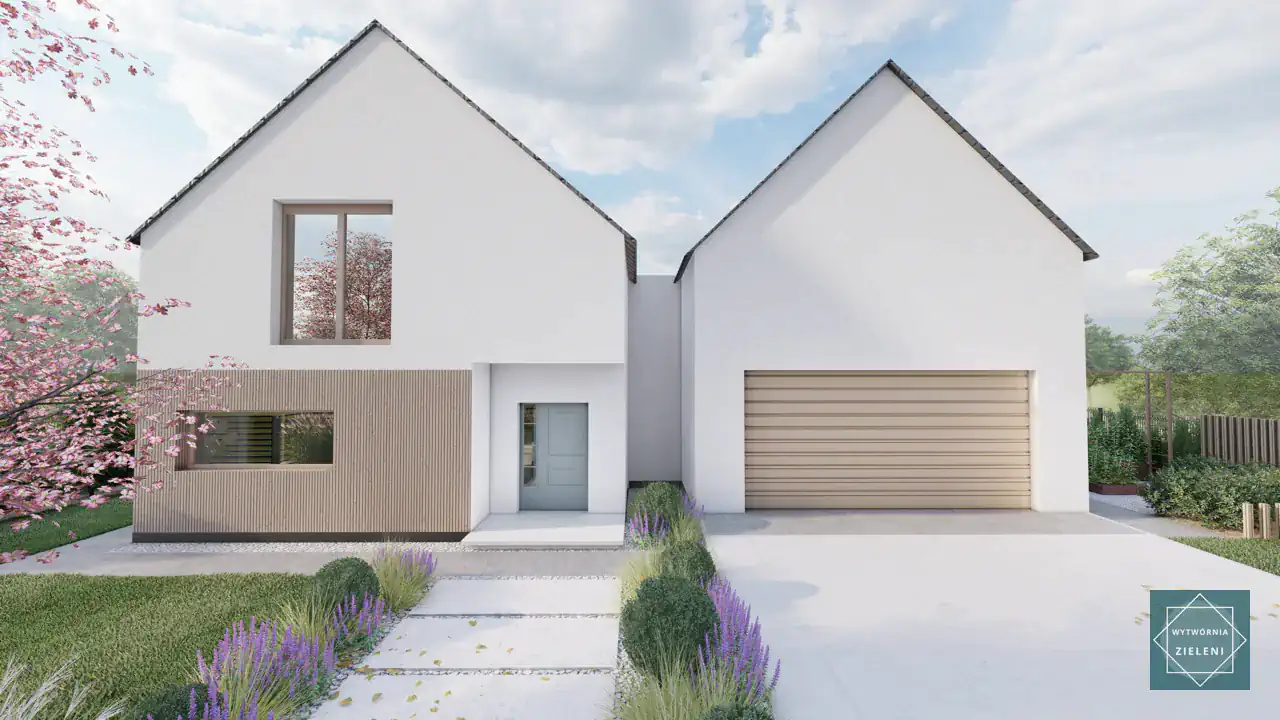
Another example is Piła Garden with area of 1050m2, which you can see in the above visualization. Many interesting solutions and elements were used in it.
- Path leading to house made of Contractors concrete slabs
- Stylish plantings planned on both sides of path including: woodland sage (Salvia nemorosa), evergreen boxwood (Buxus sempervirens), catmint (Nepeta faassenii), and hakone grass (Hakonechloa macra)
- Driveway and paths made of Polbruk Commix pavers in beige and brown shades
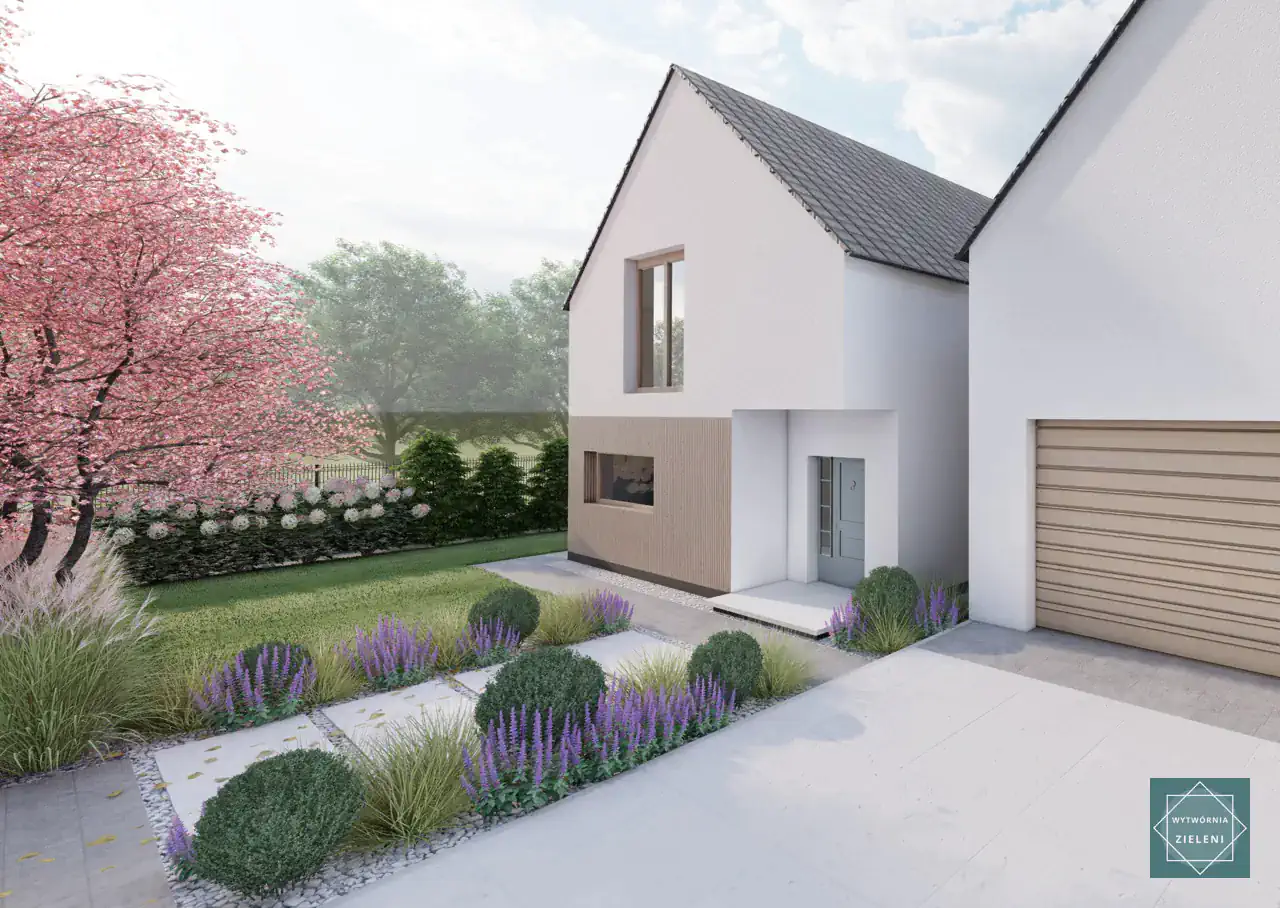
Garden design in this case enables full utilization of space potential, ensuring both aesthetics and functionality. In medium-sized gardens, you can use various types of evergreen trees such as:
- Katsura Tree (Cercidiphyllum japonicum)
- Paperbark Maple (Acer griseum)
- Intermediate Magnolia 'Satisfaction' (Magnolia × soulangeana 'Satisfaction')
- American Sweetgum (Liquidambar styraciflua)
- Flowering Almond (Prunus triloba)
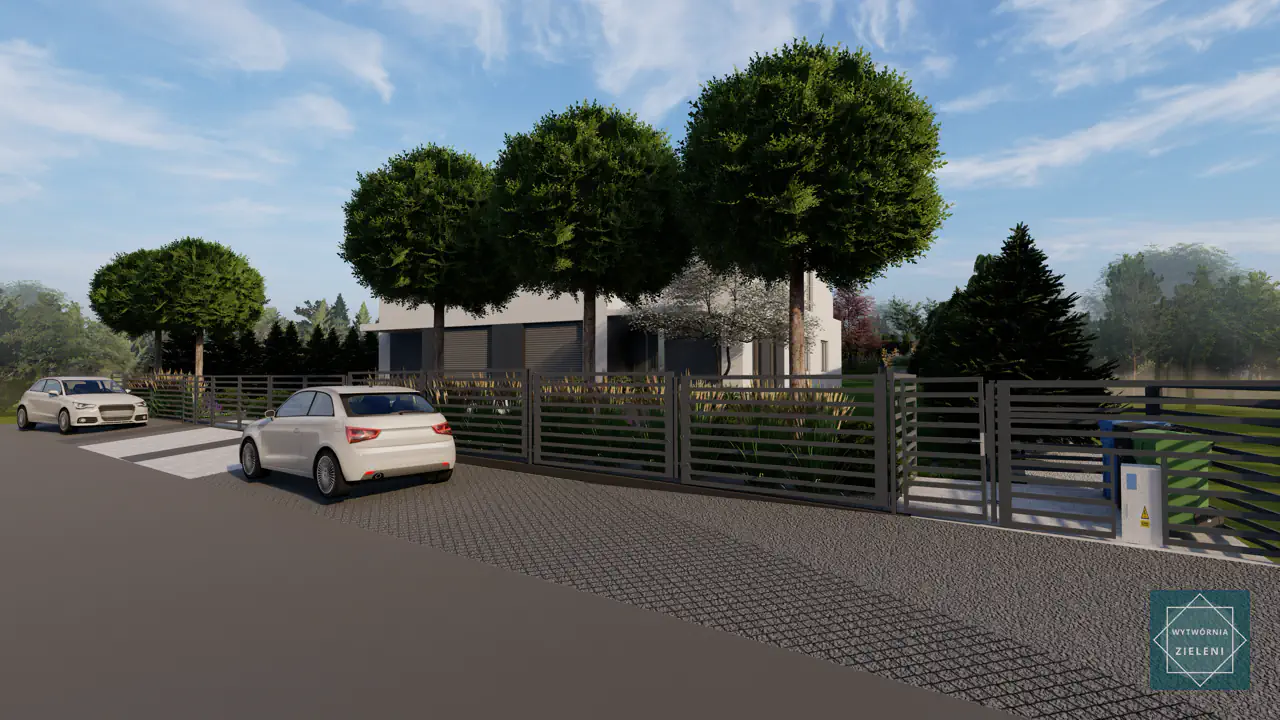
Front Yard with Stones Ideas
Large garden on big plot gives great scope for landscape architect through professional garden visualizations. This type of space usually allows using larger plant groups, which enables creating cohesive and effective composition.

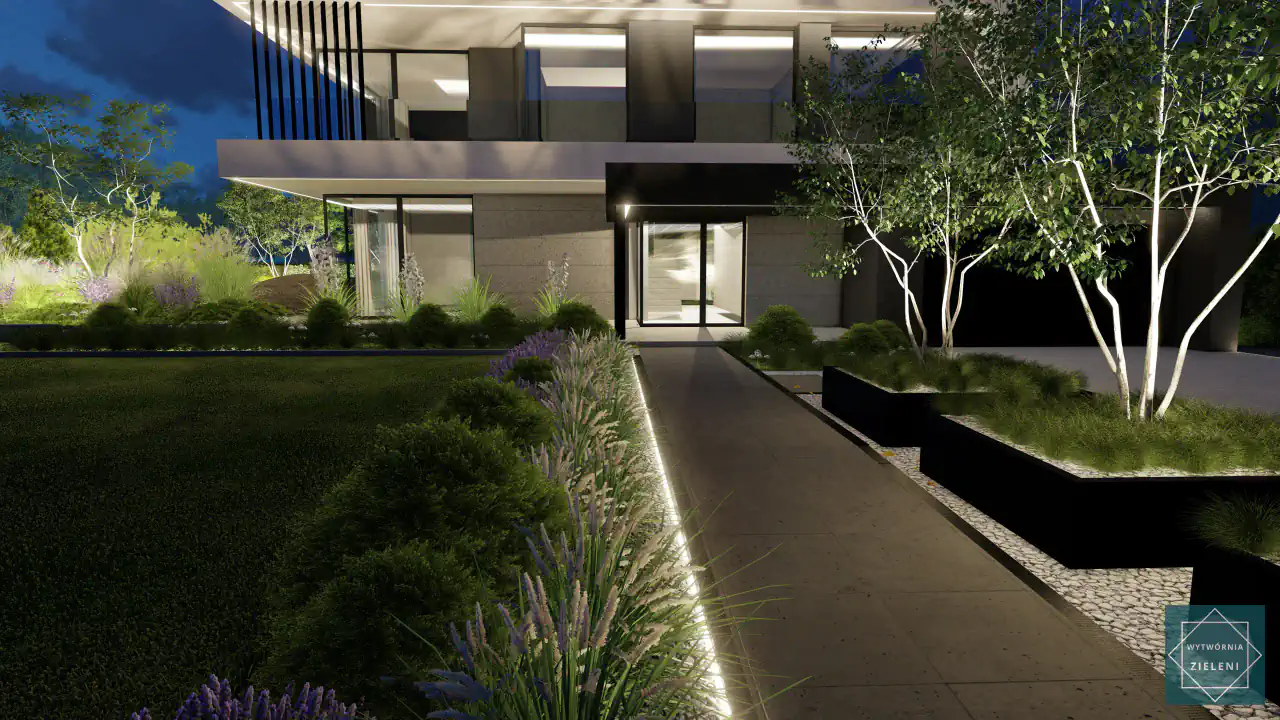
Białystok Garden Project 2500m2 – many interesting solutions were used on front such as:
- Path to house made of Contractors concrete slabs in graphite color
- Driveway made of Polbruk Ideo pavers in gray melange colors
- Raised Adezz planters made of painted aluminum that add elegance to space
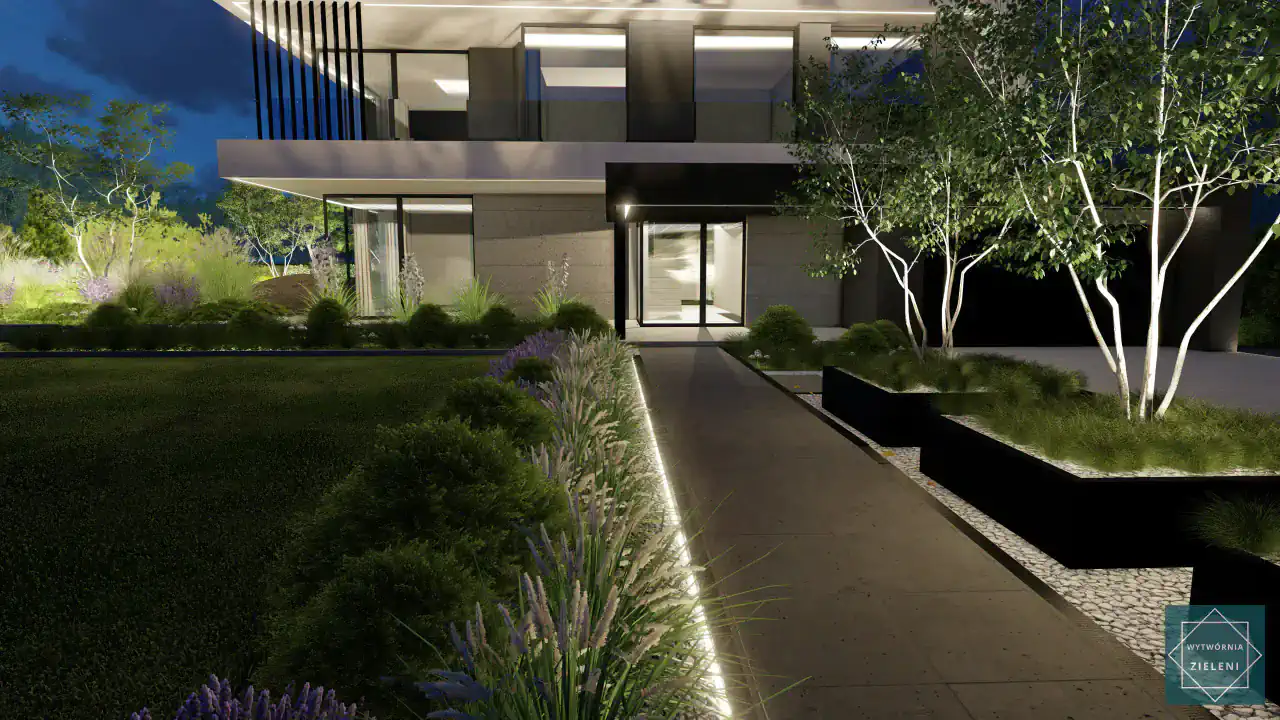
- Path lit at night by KingLED LED strips, creating atmospheric lighting
Front garden at night gains new life thanks to applied lighting Landscape lighting and nighttime curb appeal
Accompanying stylish plantings include:
- Mountain Pine (Pinus mugo var. pumilio)
- Japanese Fountain Grass (Pennisetum alopecuroides)
- Kousa Dogwood (Cornus kousa)
- Lavender – Lavandula angustifolia
- Green Fescue – Festuca

Shrubs are extremely versatile plants that are foundation of many garden compositions. Thanks to diversity of shapes, sizes, and applications, they can be easily adapted to every style, garden projects – from classic to modern structures, adding space charm and harmony. See our post about shrubs for modern gardens to gain more inspiration.

Surfaces in large gardens are usually covered with medium or large format concrete slabs. Alternative is simple pavers in uniform color or melange type color. Thanks to such solutions, you get dream garden that is beautiful and practical. Good example of such development is Warsaw Garden Project 3000m2.
Front yard ideas can include large lawn, raised flower beds, garden architecture elements, spacious plantings, or pergola. Such interior and garden design allows creating unique, personalized space. Take a look at our Bydgoszcz garden project with area of 3500m2.

Irregular Plot – Front Yards
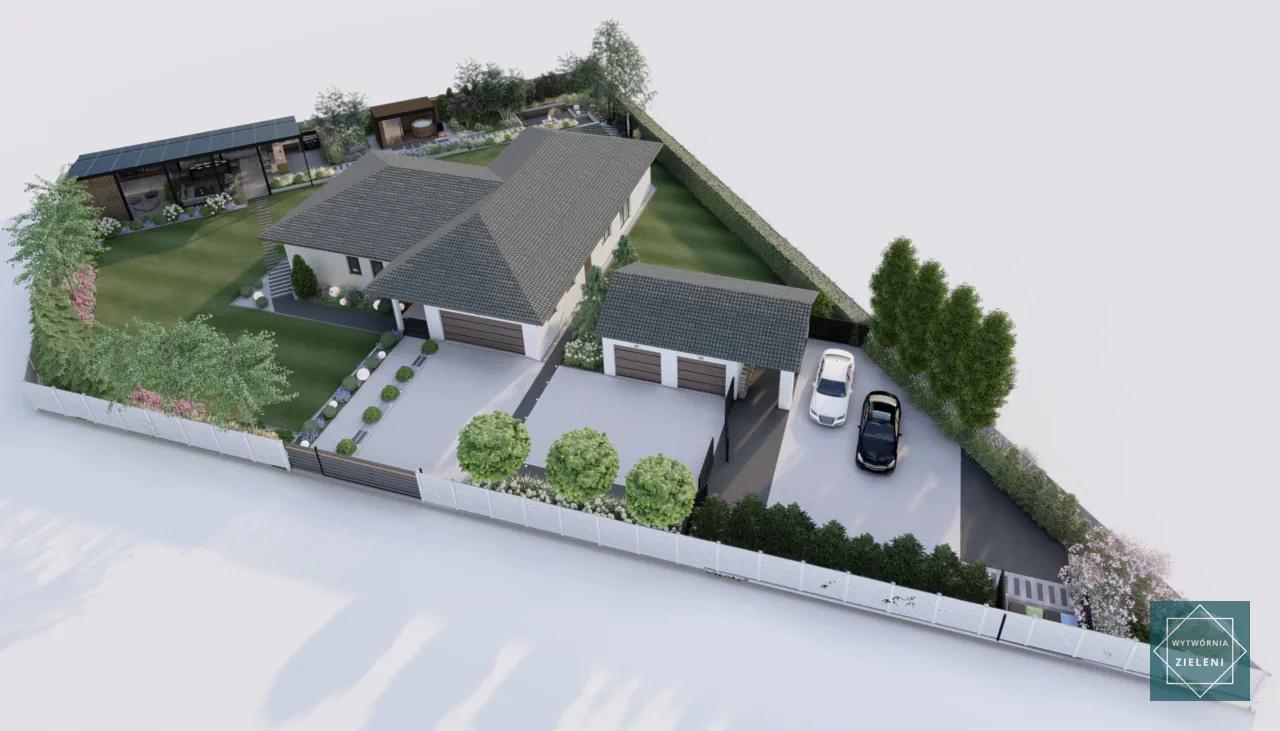
Front yards on irregular plots are a challenge that requires garden design with attention to detail. It's worth choosing plants and plantings that will emphasize unique space layout.
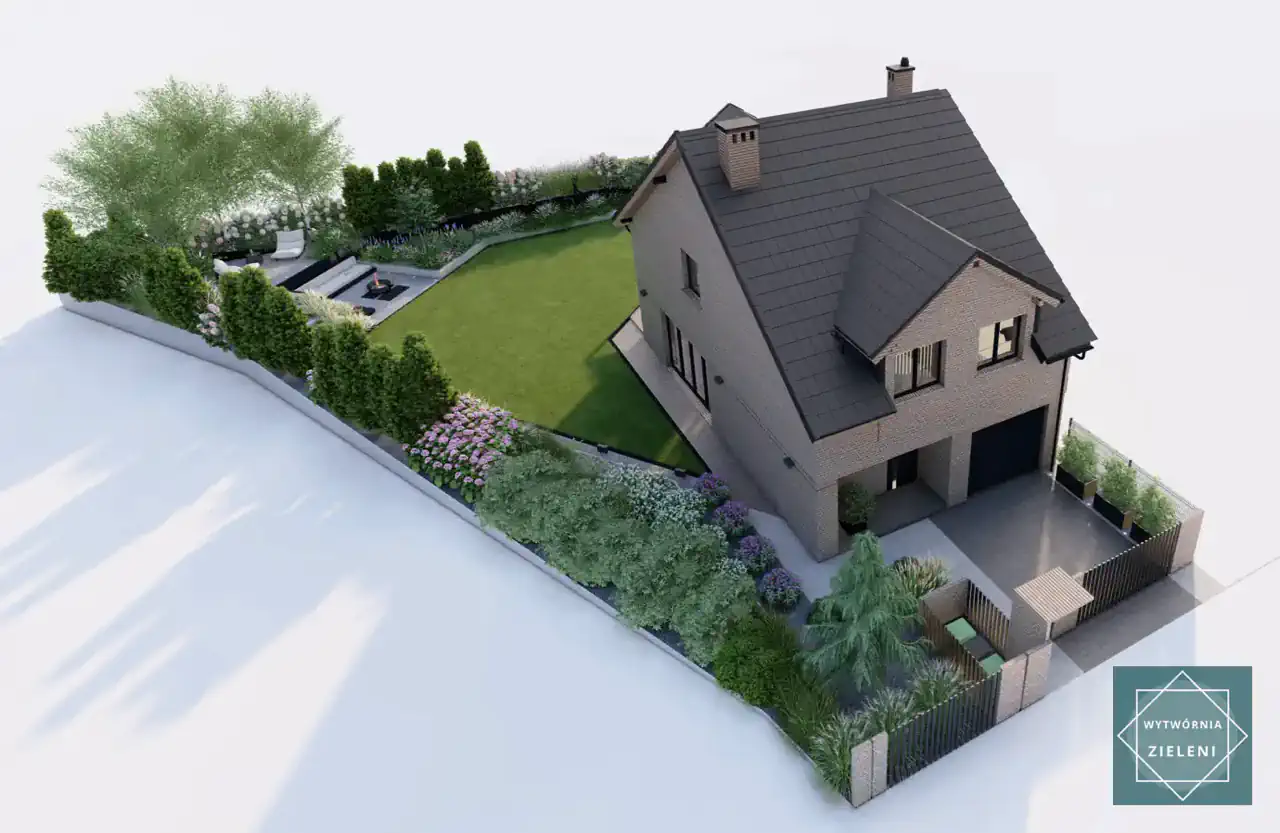
Landscape architecture studio will help plan arrangement that uses your plot's full potential. Our project also includes garden lighting, so your garden will be decorative also after dark.
Rectangular Flower Bed in Front of House
Very often used is rectangular flower bed in front of house – this is classic solution that works great in modern gardens. This type of flower bed can be flush with paver surface or raised up as in case of above visualizations.

Hydrangeas, properly planned plantings, and functional surfaces allow creating arrangement design that will be both aesthetic and practical.

Transform Your Front Yard Into a Stunning Welcome
Creating an impressive front yard requires thoughtful planning, proper plant selection, and understanding of design principles that enhance your home's curb appeal. From pathway design to lighting installation, every element contributes to your property's overall charm and functionality.

Ready to create a front yard that makes a lasting impression? Get a professional garden design consultation and discover how expert planning can transform your home's entrance into a beautiful, welcoming space.
What to Plant in Front of House – Photos from Finished Projects
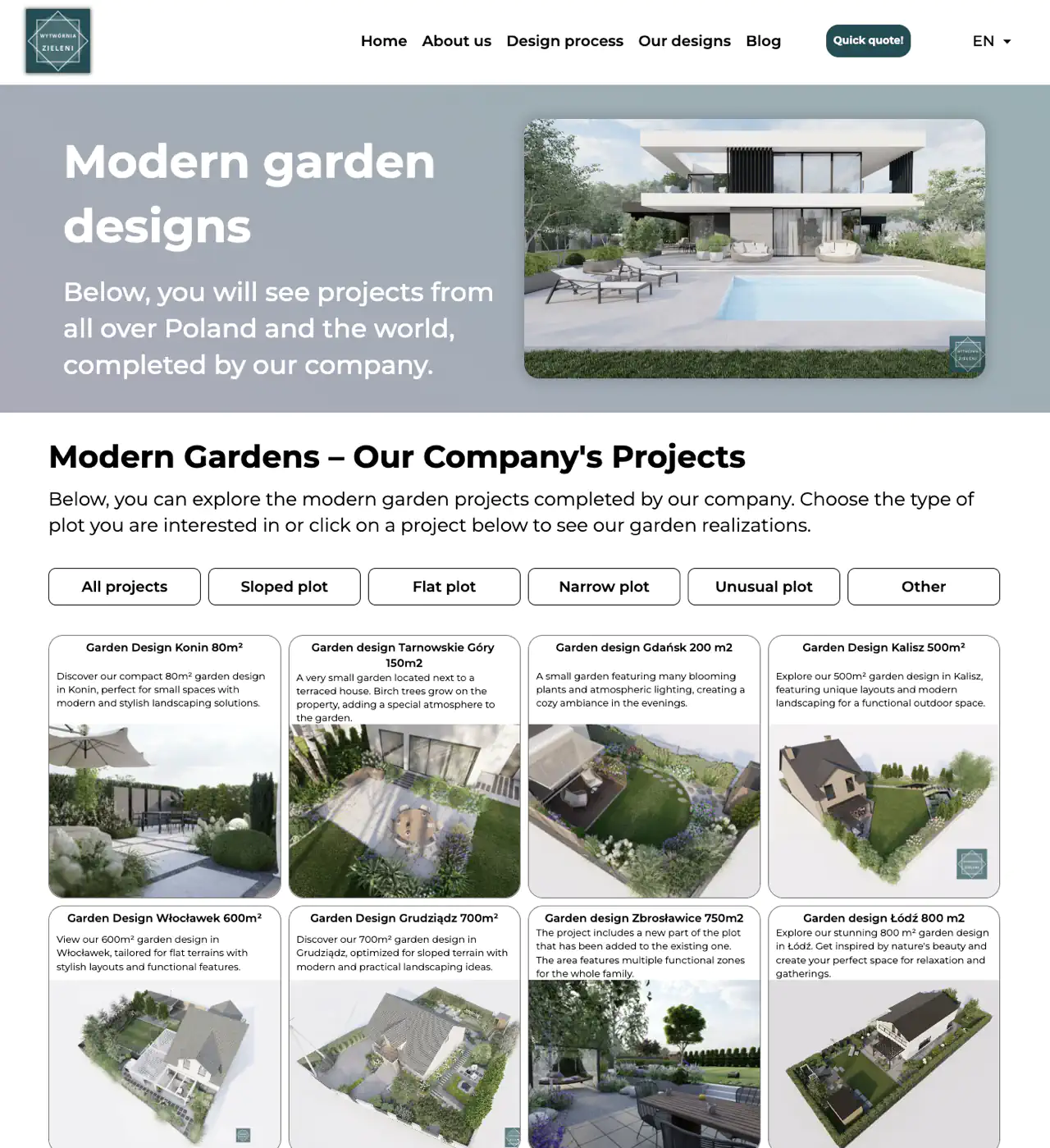
In our garden photo gallery, you'll find best ideas and inspiration for front yards. Photos from Green Creation show how to create beautiful garden with modern design. Get inspired on Pinterest and Instagram and create dream garden!
FAQ - Front Yard Landscaping Arrangements
How to Plan Garden in Front of House Entrance?
Garden in front of house entrance should meet several key assumptions:
- Be representative since it's house's calling card
- Ensure functionality – enable comfortable movement
- Contain clear path leading to front door
- Use low plantings that don't obscure door or visibility
- Be equipped with lighting that improves safety and aesthetics after dark
What's Best to Plant in Front of House in Modern Style?
In modern arrangements, front yard shrubs with geometric forms work well, like boxwood or ornamental grasses. Modern front flower bed with limited color palette and large amount of structural greenery also looks good.
Front Yard in Countryside – Natural Inspiration
Country front yard is worth arranging in free style, using native plant species, fruit shrubs, and meadow flowers. Natural inspiration drawn from country gardens creates friendly, idyllic space that fits well into house surroundings.
How to Arrange Garden Plot at Single Family House?
Garden plot at single family house is worth dividing into zones: recreational, functional, and ornamental through proper outdoor dining area planning. Single family house garden arrangements often include patios, lawns, and convenient access routes.
What Can Be Arranged in Front of House?
In front of house, you can design paths, flower beds, hedge, or place for bench. Even small space can serve decorative and practical function.
Where to Look for Front Garden Inspiration?
Front garden inspiration is worth drawing from showcase garden implementations, plant manufacturer catalogs, and local projects adapted to Polish climate conditions.
Can Front Yard Be Arranged Independently?
Yes, front yard can be arranged yourself, especially if design is simple and doesn't require irrigation systems installation or earthwork.
Does Front Yard Arrangement Have to Be Expensive?
Front yard arrangement doesn't have to be expensive – proper plant and material selection allows creating aesthetic effect even with small budget using our garden cost calculator. It's worth focusing on standard solutions available in building markets; often you can buy effective small architecture elements at very bargain prices.
Front Yard Arrangements – What to Choose?
Front yard arrangements – often chosen are symmetrical flower beds, simple lawn with plantings along path, and small groups of ornamental plants in front of windows.
How to Arrange Front Yard at Single Family House?
Front yard at single family house should combine aesthetics with functionality. It's worth ensuring:
- Entrance visibility – space in front of door should be well-lit and not obscured by vegetation
- Convenient access to gate – path should be straight, paved, and weather-resistant
- Aesthetic hiding of trash area – e.g., behind pergola, hedge, or openwork fencing
- Clear space division – e.g., flower beds along path, lawn in center, point plantings on sides
- Consistency with building architecture – plant and material selection worth matching to house style
What Are Functional Front Arrangements?
Functional front arrangements should consider:
- Clear communication – convenient and logically led paths
- Easy-maintenance plants – weather-resistant, not requiring frequent trimming
- Elements improving aesthetics – like flower beds, edging, lighting, or decorative planters
- Practical zones – e.g., place for trash, bike rack, or mailbox
- Minimalism and order – simple, organized composition increases space clarity

Wojciech Kazimierowicz – Author of the Article
Co-owner of Wytwórnia Zieleni and an expert in garden design and landscaping with over 13 years of experience. He specializes in creating modern, functional green spaces tailored to the budget and needs of homeowners.

Find Out How Much Your Garden Design Will Cost!
Take a quick quiz and discover the estimated cost of a custom garden design tailored to your needs. No strings attached – it takes just 2 minutes!


Wytwórnia Zieleni | Garden Design
KRS 0001107384 NIP 6452587627 REGON 528715049 St. Strzelców Bytomskich 51/1 42-600 Tarnowskie Gory, Poland
Resources
© Wytwórnia Zieleni 2026


